Skip to content
Wood Pellets for Home Heating Explained
When the temperature drops, the quality of your fuel starts to matter very quickly. Wood pellets for home heating appeal to households that want consistent heat, cleaner handling and a straightforward way to keep a stove or pellet appliance running efficiently through the colder months.
For many UK buyers, the attraction is practical rather than fashionable. Pellets are compact, easy to stack, and far less variable than poor-quality loose logs or damp bagged fuel. If you are trying to avoid wasted heat, excess ash and the frustration of unreliable local supply, they can be a sensible option.
What makes wood pellets for home heating different?
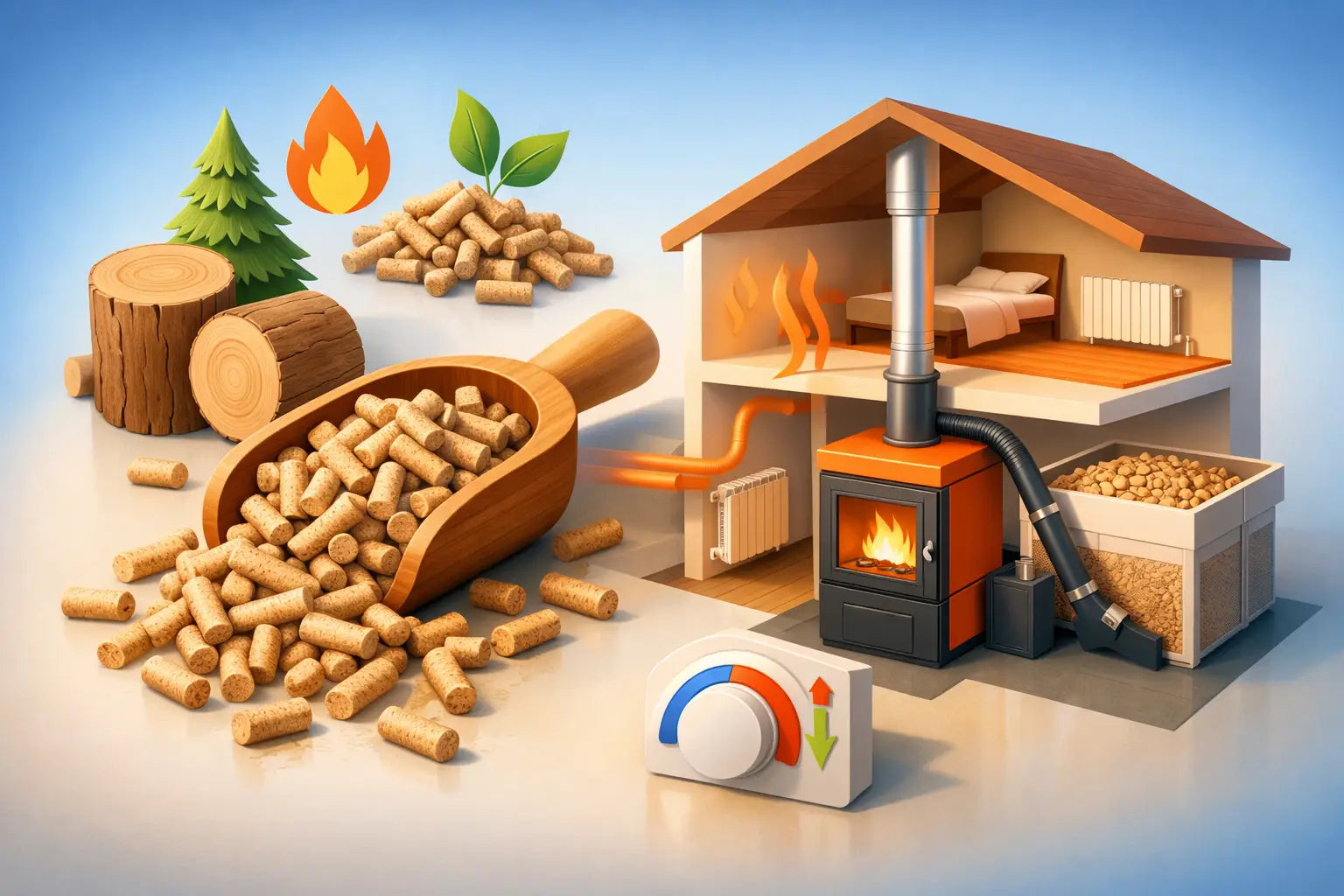
Wood pellets are manufactured from compressed sawdust and other untreated wood residues. Because they are made to a consistent size and low moisture level, they burn in a more controlled way than many forms of traditional solid fuel. That consistency is the main reason they are used in pellet stoves, pellet boilers and some biomass heating systems.
The difference is not just convenience. Uniform fuel tends to produce more predictable heat output, which helps with appliance performance and day-to-day planning. You are not dealing with the same level of variation you often get from poorly stored logs, where one batch burns cleanly and the next hisses, smokes and underperforms.
That said, pellets are not a direct replacement for every heating setup. If you have a standard log burner designed for split firewood, you should always check the appliance guidance before using any alternative fuel. Pellets work best in systems built or approved for them.
Why households choose pellets
One of the strongest advantages is efficiency. Because pellets are dry and densely compressed, a good-quality product can deliver reliable heat from a relatively small storage footprint. That matters if you do not have space for bulky fuel stacks in a garage, shed or outbuilding.
Clean handling is another benefit. Compared with loose coal, wet logs or low-grade bagged firewood, pellets are generally easier to move and store neatly. For households that want less mess around the hearth or utility area, this can make a noticeable difference over a full heating season.
There is also the question of predictable supply. Buying a properly specified pellet product from an established fuel retailer is usually simpler than relying on whatever happens to be available locally when cold weather arrives. For buyers who prefer to stock up in advance, packaged pellets make planning easier.
Efficiency depends on fuel quality
Not all pellets perform the same, and the gap between a good batch and a poor one is wider than many buyers expect. Low-quality pellets can break apart more easily, create excess dust, burn less efficiently and leave more ash behind. That affects both heat output and the amount of maintenance your appliance needs.
Moisture content matters here, just as it does with logs. Dry fuel burns more effectively and wastes less energy driving off water. Consistent pellet density matters too, because it helps maintain a steadier burn. If pellets crumble in the bag or contain a lot of fines, that is usually a sign the product or its handling has not been up to standard.
For home users, the practical test is simple. Good pellets should store well, feed properly in the appliance and produce dependable heat without leaving you constantly cleaning out avoidable residue.
Storage matters more than many people think
Pellets are convenient, but they do need to be kept dry. Once they absorb moisture, they can swell, break down and become unusable. In other words, they are low-maintenance only if you handle them properly from the start.
A dry shed, garage or covered storage area is usually suitable, provided the bags are protected from ground moisture and not left exposed to the weather. It is sensible to keep them raised off bare concrete where possible and away from any obvious source of damp. If a bag tears, use that fuel first rather than leaving it to deteriorate.
This is one area where reliable packaging and delivery standards make a real difference. Fuel that arrives in good condition and is easy to move into storage quickly will stay in better shape for longer.
Are wood pellets cost-effective?
That depends on what you are comparing them with and how your heating system is set up. Pellets can offer strong value where the appliance is designed to burn them efficiently and where buyers want a balance of convenience, control and clean performance. They may be less attractive if you already have access to very competitively priced, properly dried logs and a stove that performs well with them.
The wider point is that price per bag is only part of the picture. You also need to consider heat output, waste, storage efficiency and the time spent dealing with messy or unreliable fuel. A cheaper product that burns poorly or creates avoidable maintenance is not necessarily better value.
For many households, the best approach is to look at usable heat and ease of use over the season rather than chasing the lowest headline price. That usually leads to better buying decisions.
Choosing the right wood pellets for home heating
If you are buying pellets for regular domestic use, the safest approach is to focus on specification and supplier reliability rather than marketing claims. You want fuel that is dry, consistent and suited to your appliance, backed by clear product information and dependable delivery.
It helps to check the bag size, total order weight and whether the product is intended for domestic heating use rather than a less demanding application. If you are ordering in volume, clear pricing and straightforward delivery terms matter just as much as the pellet itself. Households planning winter stock generally want to know exactly what is arriving, how it is packed and how quickly it will be delivered.
This is where an established supplier earns its place. Candowe’s wider approach to heating fuel is built around dependable quality, transparent ordering and practical delivery, which is exactly what pellet buyers tend to need when they are planning ahead rather than making a rushed purchase in bad weather.
Pellets compared with logs and briquettes
Logs still suit many homes, especially where the priority is flame picture, traditional stove use and flexible fuel loading. Premium kiln-dried logs can perform very well, but they take up more room and require more manual handling than pellets. Their quality also depends heavily on moisture content, species and storage.
Briquettes sit somewhere between the two. They are compact, dense and often convenient for stove users who want a long, controlled burn from a manufactured fuel. For some households, briquettes are the better fit because they work with existing appliances without the need for a dedicated pellet system.
Pellets come into their own when convenience, consistency and appliance compatibility line up. They are not automatically the best answer for every property, but they are a very strong option for buyers who value clean storage, efficient burning and predictable results.
Common mistakes to avoid
The first is assuming all wood fuel is interchangeable. It is not. Always match the fuel to the appliance. Using the wrong product can reduce performance and may create safety or maintenance issues.
The second is underestimating storage. Even premium pellets will deteriorate if they are left in damp conditions. A careful purchase can be undermined by poor storage within days.
The third is buying too late in the season. When cold weather is already in full swing, households are more likely to accept limited choice or inconsistent supply. Planning earlier usually gives you better control over both stock levels and value.
Is pellet heating right for your home?
If you want fuel that is compact, straightforward to store and consistent in use, pellets are worth serious consideration. They are especially well suited to homes with compatible appliances and to buyers who prefer a cleaner, more controlled heating routine.
If your setup is built around a traditional log burner and you enjoy the flexibility of kiln-dried firewood, pellets may not be the natural choice. In that case, another dry solid fuel could be more practical. The best heating fuel is not the one with the most claims attached to it. It is the one that fits your appliance, your storage space and the way you actually heat your home.
A good winter fuel plan should make life easier, not more complicated. If wood pellets give you the right balance of efficiency, cleanliness and convenience, they are a dependable option worth getting in place before the next cold spell arrives.