Skip to content
Summer Pizza Oven Logs for Better Outdoor Cooking
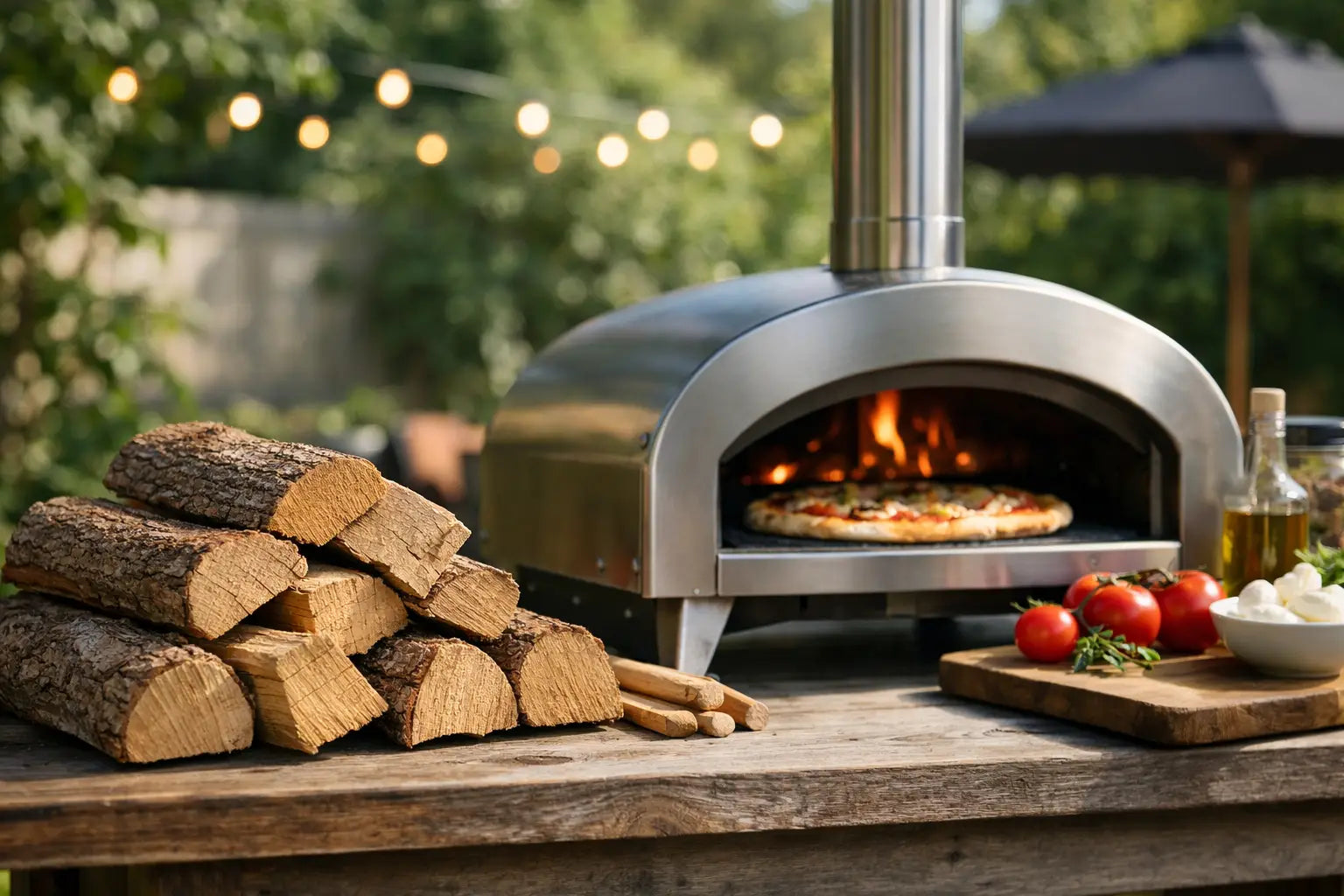
A pizza oven can be ready for cooking in under an hour, or it can spend that hour producing smoke, weak flames and uneven heat. The difference is often the fuel. Choosing the right summer pizza oven logs gives you a cleaner fire, faster heat-up and more control when it is time to cook.
For UK households using a wood-fired oven in the garden, dry hardwood is the practical choice. It burns hotter and more predictably than damp, unseasoned wood, helping you build the heat needed for crisp pizza bases without continually feeding an unreliable fire.
Why dry logs matter in a pizza oven
A pizza oven needs intense heat. For Neapolitan-style pizza, the cooking floor and dome must become properly hot, while the live flame continues to heat the top of the pizza. Damp logs make this harder because much of their energy is used to boil off water before the wood can burn efficiently.
That wasted energy shows up as a slow start, extra smoke and blackened deposits around the oven entrance. It can also leave you adding more fuel than expected. Kiln-dried logs with a moisture content below 20% are ready to burn, so more of the fuel's energy is available as useful heat.
Dry fuel is especially helpful in summer. Outdoor cooking often happens at short notice: friends are arriving, dough is proving and the oven needs to be ready before the evening cools. Properly dried logs remove the uncertainty of using wood that has been sitting outside or left over from winter.
What wood is best for summer pizza oven logs?
The best choice depends on your oven size, how quickly you want to reach temperature and whether you are cooking one course or hosting a longer session. Most pizza oven owners will get the best results from clean, kiln-dried hardwood logs that are sized to fit the firebox comfortably.
Birch for a quick, lively start
Birch is a useful option when you want a fast, bright flame. It catches well with good kindling and helps bring a small or medium pizza oven up to heat without a lengthy struggle. Its clean-burning qualities make it a sensible choice for a spontaneous midweek pizza night.
Because birch burns more quickly than denser hardwoods, it may need topping up more often during an extended cook. It works particularly well as part of a mixed load: use it to establish the fire, then add a denser log to hold heat.
Ash for dependable all-round performance
Ash is widely valued as a straightforward firewood for cooking and heating. When kiln dried, it lights reliably, produces a strong flame and delivers steady heat without being difficult to manage. For many domestic pizza ovens, ash provides the balance between quick heat-up and a consistent cooking fire.
If you are still learning how your oven responds, ash can make temperature control more forgiving. You can add smaller pieces as needed rather than creating an oversized fire that pushes the oven beyond the temperature required for your food.
Oak and hornbeam for longer cooking sessions
Oak and hornbeam are denser hardwoods. They offer a longer burn and strong heat output once properly established, making them well suited to larger ovens, family gatherings and menus that continue beyond pizza. Think roasted vegetables, flatbreads, baked fish or slow-cooked dishes after the main event.
The trade-off is that these woods generally benefit from a good bed of embers and a lively initial fire. They are not always the fastest option for lighting from cold, particularly in chunky pieces. Start with kindling and quicker-burning wood, then introduce oak or hornbeam once the oven is drawing well.
Alder for a controlled cooking fire
Alder is another practical hardwood that burns cleanly and can be easier to manage in compact outdoor ovens. It is a good choice where you want responsive flame control rather than the prolonged burn of very dense logs. As with any species, the key is not simply the name of the wood but the quality of drying and the suitability of the log size.
Log size matters as much as wood type
A log that is ideal for a large stove may be awkward in a compact pizza oven. Oversized pieces restrict airflow, take longer to catch and can make it difficult to position the fire to one side once you are ready to cook.
Before ordering, check your oven manufacturer's recommended log length and firebox dimensions. Shorter, consistently cut logs are easier to arrange and let you build the fire in stages. You should be able to add fuel without forcing logs against the oven door or blocking the opening.
For most cooking sessions, it helps to have a mixture of smaller pieces for lighting and medium logs for maintaining heat. Splitting a large log with an axe is possible, but buying a practical size from the start is safer, cleaner and more convenient.
How to build a cleaner pizza oven fire
Start with dry kindling and a small amount of easily lit hardwood in the centre of the oven. Keep the door open as instructed by the manufacturer so the fire receives enough oxygen. Once the initial flame is established, add two or three logs gradually rather than loading the oven all at once.
As the dome heats, move the developing fire towards the side or back of the oven with an appropriate metal tool. This creates space for cooking while maintaining the live flame that gives pizza its characteristic top heat. Add one smaller log at a time when the flame begins to fall, allowing each piece to catch before adding more.
The right fire is not necessarily the biggest one. A roaring pile of wood can make the oven difficult to control, scorch toppings and waste fuel. A compact, active flame with glowing embers beneath it is usually more useful than excessive volume.
Avoid fuel that can spoil the cook
Only burn clean, untreated wood that is intended for solid-fuel use. Painted timber, varnished offcuts, old fence panels, pallets, chipboard and MDF can release unpleasant or harmful fumes when burned. They also create excessive ash and residues that have no place in a food oven.
House coal, smokeless fuel and briquettes are not automatic substitutes for logs in a pizza oven. Some ovens are designed specifically for wood, and other fuels can affect flavour, airflow and safe operation. Follow the oven manufacturer's guidance rather than assuming any solid fuel is suitable.
Wood collected from the garden can appear free, but freshly cut branches are usually too wet to burn well. Even naturally fallen timber may have absorbed moisture from the ground. If you cannot confirm its species, dryness and cleanliness, it is not worth risking a smoky cooking session.
Store pizza oven logs properly through summer
Summer rain, overnight dew and poor ventilation can quickly undo the benefit of buying dry fuel. Store your logs above ground on a pallet, rack or dry base, with air able to move around the stack. A covered log store is ideal, but a waterproof cover over the top of the pile can also work if the sides remain open.
Do not seal logs in an airtight plastic container or wrap the whole stack tightly. Moisture needs somewhere to escape, and restricted airflow can encourage mould. Keep your everyday supply close to the oven in a dry log basket or box, but do not store it where sparks or heat could reach it.
Buying enough for several summer cooks can save last-minute fuel runs, particularly if you regularly entertain. A larger crate offers good value for frequent use, while net bags and fire-box packs can suit occasional pizza nights or homes with limited storage. Comparing the loose volume and log length helps you choose a format that matches both your oven and the space available.
Candowe supplies premium kiln-dried firewood in practical formats, with Ready to Burn certified options and delivery across most mainland UK postcodes. That means you can plan your outdoor cooking fuel with the same care as your ingredients, rather than hoping a damp pile of logs will cooperate.
A well-fired pizza oven makes cooking outdoors feel uncomplicated: dry logs, a controlled flame and enough time for the oven to do its job. Keep a suitable stack stored properly, and your next clear summer evening can be a cooking opportunity rather than a fuel problem.