Skip to content
How to Choose Firewood for Fireplace Use
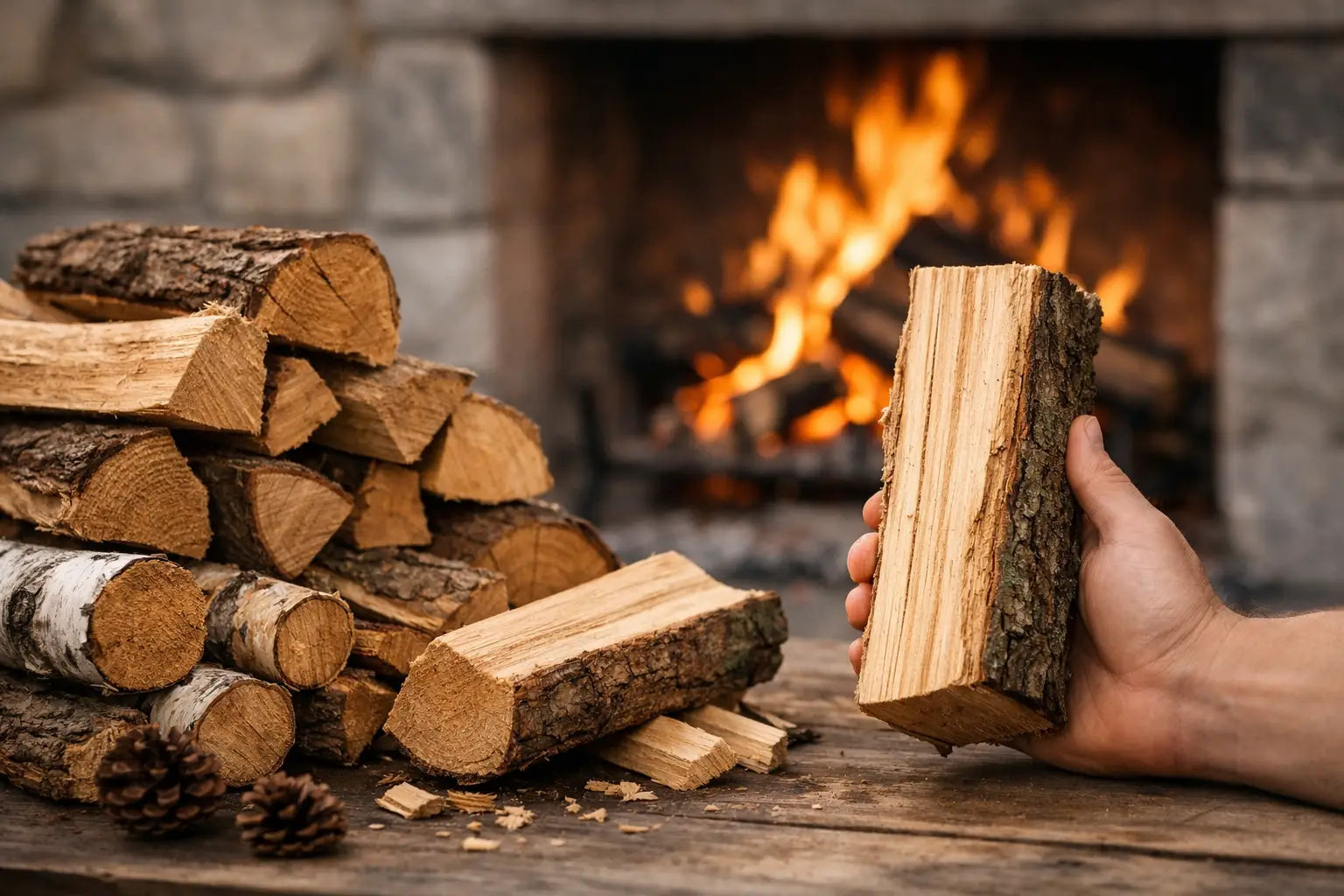
A fireplace can look ready for a fire long before the fuel is. Logs that appear dry may still contain enough moisture to hiss, smoke and leave the room feeling colder than expected. Choosing the right firewood for fireplace use means looking beyond the size of the pile and buying wood that is dry, correctly sized and suited to the way you heat your home.
For most households, kiln-dried hardwood logs offer the most dependable result. They light more readily, produce a steady flame and create less smoke than unseasoned or poorly stored wood. That makes the fire easier to manage, helps keep the glass and chimney cleaner, and ensures more of what you pay for is turned into useful heat.
Why dry firewood makes such a difference
The moisture content of a log has a direct effect on how it burns. When wood is wet, much of the fire's energy is used to evaporate water before the log can provide meaningful heat. You may notice blackened fireplace surrounds, excessive smoke, crackling that sounds more like steaming, and a fire that needs frequent attention.
Ready to Burn certified logs have a moisture content below 20%. This is the practical benchmark for clean, efficient domestic burning. Kiln drying removes excess moisture in a controlled process, so the logs arrive ready to use rather than needing months, or even years, of seasoning at home.
This matters particularly for an open fireplace. Compared with a modern wood-burning stove, an open fire sends a larger proportion of its heat up the chimney. Starting with dry, high-quality logs helps you get the best performance from a less efficient heating arrangement while reducing visible smoke and unnecessary waste.
The best firewood for fireplace heat and flame
There is no single best species for every fire. The right choice depends on whether you value a bright flame, a long burn, easy lighting or a balance of all three. For regular fireplace use, hardwoods are usually the sensible option because their denser structure generally provides a longer, steadier burn than softwood.
Birch: quick to light and attractive in an open fire
Birch is a popular choice for fireplaces because it catches well and produces a lively, bright flame. Its bark can assist when lighting a fire, although kindling and a natural firelighter still make the process more reliable. Birch burns at a good pace, making it well suited to an evening fire where warmth and appearance are equally important.
Because it burns faster than denser hardwoods, birch may need topping up more often. It is a practical choice for smaller fires, occasional use and households that want a dependable log without building a very large fire.
Ash: dependable all-round firewood
Ash is valued for its consistent burn, good heat output and straightforward handling. Properly kiln-dried ash lights easily and provides a stable flame, making it a strong all-round option for both fireplaces and stoves. It is often a sensible choice if you want one type of log that performs reliably through the heating season.
Oak and hornbeam: longer-lasting heat
Oak and hornbeam are dense hardwoods that reward a well-established fire. They burn more slowly and can provide lasting heat, making them particularly useful when you want the fire to continue through a long evening. Their density also means they benefit from dry kindling and smaller logs underneath to create a hot base before larger pieces are added.
A dense log is not automatically better for every situation. If you only want a short, decorative fire, quicker-burning birch may be more convenient. For extended use, however, oak or hornbeam can reduce the number of times you need to refuel.
Alder: a useful choice for a gentler fire
Alder is lighter than oak or hornbeam and burns with a pleasant, manageable flame. It can suit fireplaces where you want responsive heat without the longer burn time of very dense logs. As with every species, the key is that it is properly dried and stored well after delivery.
Get the log size right for your fireplace
Before ordering firewood, measure the width, depth and height of your fireplace grate or fire basket. A log should sit securely without protruding into the room or forcing you to overfill the fire. Smaller logs are easier to arrange and catch quickly; larger logs are best added once a strong bed of embers has formed.
For many domestic fireplaces, logs around 25 cm are a convenient size, but your appliance or grate should always guide the decision. Avoid splitting or forcing oversized logs indoors if you can. Buying correctly sized firewood is safer, cleaner and more convenient.
It also helps to think about how quickly you use fuel. Nets, bags and fire-box packs suit households with limited storage or occasional fires. Crates and larger palletised formats can offer better value per cubic metre for regular users, provided there is a dry, accessible place to keep them. Compare loose volume, log size and price per cubic metre rather than judging value by the number of bags alone.
How to build a cleaner fireplace fire
Dry logs perform best when the fire is built with enough airflow. Start with a clean grate and remove excess ash, leaving only a thin layer if it helps protect the base of your fire basket. Place dry kindling over a natural firelighter, then add a few small logs with gaps between them.
Once the kindling is burning strongly, add larger pieces gradually. A common mistake is loading too many logs at the start. That restricts airflow, slows ignition and can create more smoke. A smaller fire built well will usually burn more effectively than a large pile of logs struggling to catch.
Never burn treated timber, painted wood, chipboard, MDF, household rubbish or damp garden waste. These materials can release harmful pollutants and leave damaging deposits in the chimney. Use fuel intended for domestic solid-fuel heating and follow the manufacturer's guidance for your fireplace, stove or grate.
Storing firewood for fireplace use after delivery
Even premium kiln-dried wood needs protecting once it reaches your home. Store logs outside under cover, raised off the ground and with air able to circulate around the stack. A purpose-built log store, covered side shelter or dry garage can work well. The goal is to keep rain off while avoiding a sealed, damp environment.
Do not wrap logs tightly in a tarpaulin that reaches the ground. Moisture can become trapped beneath it, undoing the benefit of buying dry fuel. If you bring logs indoors, keep only a small supply close to the fireplace. This gives them time to warm through and keeps your living space tidy without storing large quantities beside a heat source.
For bulk deliveries, plan the route from the kerbside to your storage area before ordering. Check access widths, gates, steps and slopes, especially if you are receiving a crate or pallet. A little preparation makes delivery day far easier and helps keep the fuel dry from the outset.
Choosing fuel with confidence
The lowest-priced logs are not always the best value. Wet wood can look inexpensive until you account for weaker heat, faster use, additional smoke and the time spent trying to keep it burning. Clear moisture information, certified dry wood and transparent volume details give you a more useful basis for comparison.
Candowe supplies kiln-dried, Ready to Burn firewood in a range of hardwood species and pack sizes, helping households choose fuel that fits both their fireplace and their storage space. Free delivery across most mainland UK postcodes can also make stocking up before colder weather more straightforward.
A good fireplace fire should not be a battle with smoke, damp logs or constant relighting. Start with dry wood, match the species and log size to the way you use your fire, and keep the next load protected from the weather. The result is simple: more warmth, a cleaner burn and a fireplace that is ready when you want it.