Skip to content
What to Check When Buying Firewood Logs for Sale
A stove can look well stocked and still disappoint if the logs are damp, poorly sized or sold in a misleading quantity. When comparing firewood logs for sale, the best purchase is not simply the cheapest bag or crate. It is dry, certified fuel in a clearly stated volume, suited to your appliance and delivered in a format you can store properly.
For householders relying on a log burner, open fire or stove for regular warmth, buying the right wood means easier lighting, a cleaner glass door, less smoke and more useful heat from every load. It also removes the uncertainty of buying unseasoned logs that may need months of drying before they are ready to burn.
Why moisture content comes first
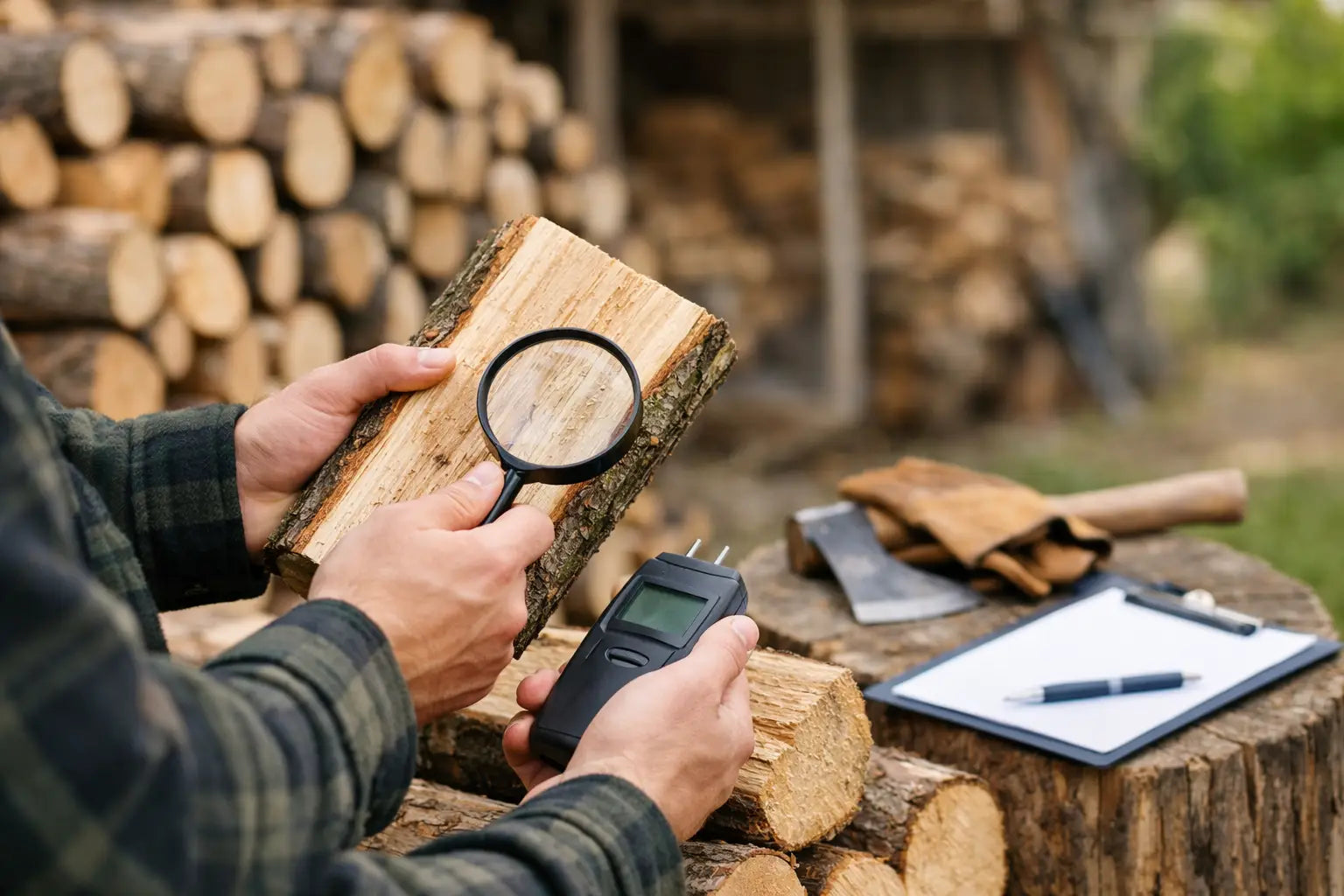
The moisture level of firewood has a direct effect on how it performs. Freshly cut wood holds a high amount of water. Burning it forces your fire to spend energy driving off that moisture rather than heating your room. The result is often hissing logs, slow flame development, heavy smoke and deposits in the flue.
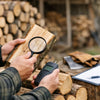
Look for kiln-dried logs with a moisture content below 20%. Ready to Burn certification gives useful reassurance that the wood has been tested to meet the required standard for domestic use. Properly dried logs light more readily, burn with a lively flame and produce less smoke and residue than wet wood.
This is particularly relevant in built-up areas and Smoke Control Areas, where clean fuel and correct stove operation matter. Dry wood does not make an unsuitable appliance compliant, so always check the rules that apply locally and follow your stove manufacturer's guidance. But it is the sensible starting point for a more efficient, lower-maintenance fire.
Firewood logs for sale: compare volume, not appearances
A small net can be convenient for a weekend, but it is rarely the most economical way to heat a home throughout winter. Conversely, a large crate offers better value per cubic metre but needs a dry, accessible storage space. The right format depends on how frequently you burn and how much room you have.
When comparing suppliers, check whether the stated quantity is a bag size, crate dimensions, loose volume or stacked volume. These measurements are not interchangeable. A generous-looking bag may contain far less fuel than a clearly priced crate, while tightly packed logs can appear to offer more than loosely filled ones.
Transparent volumetric pricing makes a meaningful comparison possible. It lets you weigh the upfront cost against the amount of usable fuel you are actually receiving, rather than relying on product photographs alone. For regular stove users, buying a larger volume before colder weather often offers better value and avoids urgent, expensive top-up purchases.
Choose a format that suits your household
Net bags and fire-box packs are useful where storage is limited, for occasional fires or as an easy top-up beside the stove. They are also straightforward to carry from a porch or shed to the hearth.
Crates and palletised loads suit households that burn wood several times a week or use a stove as a serious supplementary heat source. They reduce the frequency of ordering and normally provide a lower cost per unit of volume. Before ordering, consider where the delivery can be left and whether you can move logs from the drop-off point without difficulty.
A good supplier should make these details clear before checkout, including product volume, log length where relevant, delivery arrangements and any included extras such as kindling. That clarity is part of value, not an optional extra.
Select the wood species for the way you burn
All properly kiln-dried hardwood logs can provide dependable heat, but each species has its own burning character. There is no single best choice for every appliance or household.
Birch is popular because it catches well and gives an attractive, bright flame. It is an excellent option for getting a fire established and for customers who want easy everyday use. As it can burn more quickly than denser hardwoods, it may be best paired with a denser wood for longer evening fires.
Ash is widely valued for its steady, reliable performance. It lights well when dry and gives a good balance of flame, heat and burn time, making it a practical all-round choice for many stoves.
Oak and hornbeam are denser hardwoods that tend to offer a longer, slower burn. They are well suited to maintaining heat in a stove once a good bed of embers is established. Their density means they are often better as a later-stage fuel than as the only wood used to light a fire.
Alder is a useful, clean-burning option with a generally quicker burn profile. It can suit shorter fires, shoulder seasons or households that prefer to build and refresh a fire more often rather than maintain a long, slow burn.
The species matters, but dryness and storage matter more. A crate of properly dried alder will usually outperform damp oak. For a balanced approach, many stove owners use easy-lighting logs with kindling at the start, then add denser hardwood once the firebox is hot.
Check log size against your stove
Logs that are too long for the firebox are inconvenient at best and unsafe at worst. Measure the usable width and depth of your stove before ordering, allowing room for airflow around the fuel. Do not assume that all domestic logs are cut to the same length.
Smaller logs are easier to arrange and may be useful in compact stoves. Larger pieces can be more suitable for bigger appliances and longer burns. If you are buying for a business, holiday let or several properties, standardising log size can also make fuel handling easier for staff and guests.
Kindling should not be overlooked. Dry kindling speeds up lighting and reduces the temptation to overload the stove with larger logs before the fire is established. Using a few small pieces, adequate airflow and suitable firelighters is generally more effective than adding excessive fuel at the start.
Store your delivery to protect its quality
Kiln drying gets logs ready to burn, but poor storage can undo that work. Keep firewood raised off the ground, protected from rain and open to airflow. A covered log store, sheltered side wall or well-ventilated shed is usually suitable.
Avoid wrapping a full wood pile tightly in plastic. Trapped moisture can encourage mould and prevent the timber from breathing. Cover the top of the stack while leaving the sides as open as practical. Bringing a small basket indoors a day or two before use is fine, but storing large volumes beside a stove is not advisable.
If you order a crate, plan the location before delivery day. Choose firm, level ground with a clear route for the pallet. Deliveries are convenient, but access restrictions, steep steps, gravel and narrow gates can affect where a heavy load can be placed.
Buy with delivery and timing in mind
Fuel is easiest to buy when you are not already down to your last few logs. Ordering ahead gives you time to stack the delivery properly and choose the format that offers the best value, rather than settling for whatever is immediately available locally.
For most homes, an autumn stock check is practical: assess what remains, estimate how often the stove will be used, and order enough to cover a meaningful part of the colder months. Your usage will vary with insulation, room size, appliance efficiency and whether the stove is used for atmosphere or as regular heating.
Candowe supplies Ready to Burn kiln-dried logs in several species and formats, with clear product information, free delivery across most mainland UK postcodes and fulfilment typically within 3-4 business days. That makes it easier to order according to your actual storage capacity and expected use, rather than buying fuel a bag at a time.
A better fire starts before the match is struck
The most satisfying stove fires are planned from the fuel outward: dry logs, the right size for the appliance, enough kindling, sensible storage and a quantity that represents genuine value. Choose quality firewood before the first cold spell, and you can spend winter enjoying dependable heat rather than trying to make unsuitable logs burn.