Skip to content
How to Choose Firewood Species for Your Stove
A stove filled with poorly chosen logs can feel disappointing fast: weak heat, smoky glass, frequent refuelling and more ash than expected. Knowing how to choose firewood species helps you match the wood to the way you actually heat your home, whether that means a quick weekday fire, a long evening burn or dependable warmth from a room heater.
The best species is not always the hardest wood or the one with the biggest name. Dryness, log size, appliance type and storage all matter. Start with certified kiln-dried logs below 20% moisture content, then choose a species that gives you the balance of heat, flame and convenience you need.
How to Choose Firewood Species for Your Home
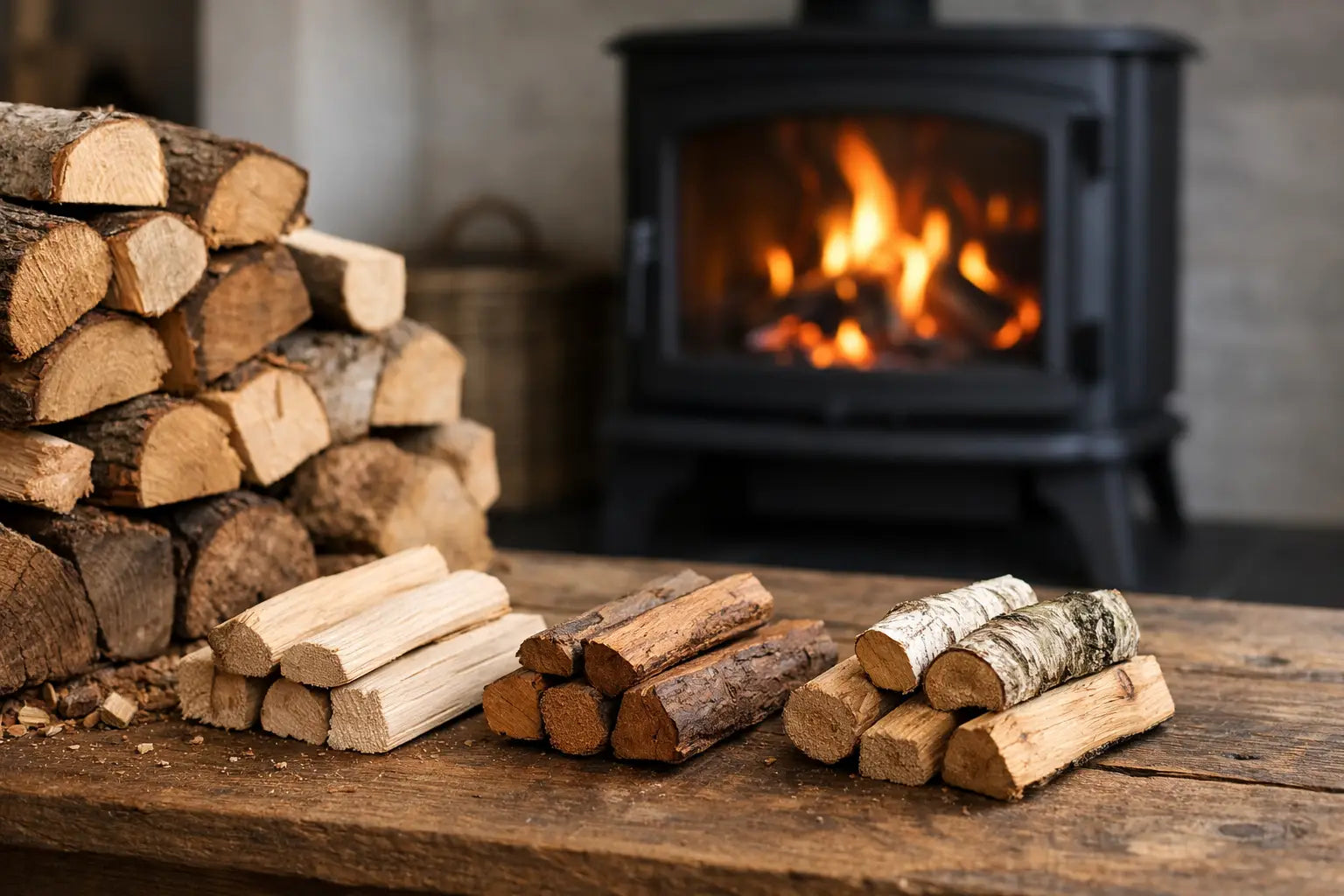
For most UK households, hardwood is the sensible starting point. Hardwoods are generally denser than softwoods, so they tend to burn more slowly and produce more heat per log. Ash, oak, birch and hornbeam are popular choices for log burners and open fires because they provide a reliable, substantial fire when properly dried.
That said, there is no single best option for every situation. Birch is easy to light and gives an attractive flame, making it useful when you want the fire established quickly. Oak burns slowly and steadily but benefits from a well-established fire because its density means it can be slower to catch. Hornbeam is a high-density option for a long, hot burn, while ash provides a dependable all-round performance that suits regular stove use.
Alder sits at the lighter end of the hardwood range. It lights readily, burns cleanly and is a practical choice for shorter fires, smaller appliances or customers who prefer easier handling. It may burn through more quickly than oak or hornbeam, but that is not a fault. It is simply a different burn profile.
The right decision comes down to when you use your fire, how much heat you require and whether you value quick lighting or maximum burn duration.
Start With Moisture Content, Not the Species Name
Even the finest firewood species will perform badly if it is wet. High-moisture logs use much of the fire's energy to evaporate water before producing useful heat. They can be difficult to light, create excess smoke and leave more deposits in your flue or chimney.
For domestic use in England, Ready to Burn certified wood fuel gives reassurance that logs supplied in smaller volumes meet the required moisture standard of 20% or less. Kiln-dried firewood offers the same practical benefit: it arrives ready to use, rather than needing months or years of drying in your garden.
This matters particularly with dense species. Oak and hornbeam can be excellent fuel, but only once they are sufficiently dry. A dry birch log will usually outperform a wet oak log every time. When comparing products, look beyond labels such as “seasoned” and check for a clear moisture specification and recognised Ready to Burn certification.
Match the Wood to Your Appliance
A modern wood-burning stove is designed to burn dry logs efficiently with controlled airflow. Dense hardwood logs are often well suited to this setting because the stove can make good use of their long, steady heat output. Ash, oak and hornbeam are strong choices for keeping a stove running through an evening, especially once the firebox is up to temperature.
For an open fireplace, flame appearance and ease of lighting can matter more. Birch creates a bright, lively flame and its bark can help it catch well. Ash also works reliably in an open fire, offering good heat without being overly difficult to light. The downside is that open fires lose more heat to the chimney than stoves, so even premium logs will not offer the same heating efficiency as a closed appliance.
Smaller stoves need appropriately sized logs. Large, dense logs can restrict airflow or make it harder to manage the fire if the firebox is compact. Check your appliance manufacturer’s guidance, measure the usable firebox width and choose log lengths that leave room around the fuel. Splitting very large pieces can also make lighting and control easier.
Consider Heat Output and Burn Time Together
Firewood is often judged by heat alone, but burn time is just as useful. A wood that burns slowly can reduce the need for frequent refuelling, which is valuable on cold evenings and for households relying on a stove as a meaningful supplementary heat source.
Oak and hornbeam are among the denser options commonly chosen for long-lasting heat. They are good candidates when you want fewer interruptions and a steady bed of embers. Ash offers a strong middle ground: good heat, straightforward lighting and dependable burn behaviour. Birch gives useful warmth but normally burns faster, so it is ideal for getting started or enjoying a shorter fire rather than stretching a load of logs as far as possible.
A practical approach is to use more than one species. Start a fire with kindling and a readily lighting wood such as birch or alder, then add ash, oak or hornbeam once the stove is hot. This provides quick ignition without sacrificing the longer burn you want later in the evening.
Choose Logs That Suit Your Routine
The best firewood also needs to fit the way you buy, store and carry it. Net bags and fire-box packs are convenient for occasional users, smaller households and people who want clean, manageable quantities close to the stove. Crates and larger deliveries can offer better value per cubic metre for regular burners with suitable storage space.
When comparing prices, use the stated loose volume or price per cubic metre where available. A crate can look expensive beside a small bag, but it may contain considerably more usable fuel. Transparent volumetric information makes it easier to estimate how long an order will last and compare like with like.
Think about handling too. Hornbeam and oak are dense, which is useful in the stove but means a basket of logs can be heavier to carry. Birch and alder can be more comfortable for frequent top-ups. For many households, convenience is not a minor detail: fuel that is easy to store and bring indoors is more likely to be used efficiently.
Do Not Overlook Flame, Ash and Cleanliness
A bright flame can make a real difference in a living room fireplace, while a long ember bed may be more valuable in a stove used for heat. Birch is often chosen for its attractive flame. Ash provides a balanced fire that many regular stove users find easy to live with. Oak and hornbeam are valued more for their sustained heat and slower consumption.
All dry wood produces ash, but clean-burning performance depends heavily on moisture content and correct stove operation. Avoid starving a fire of air for long periods in an attempt to make logs last. This can lead to incomplete combustion, blackened glass and deposits in the flue. Build a hot fire with dry fuel, follow your appliance instructions and arrange regular chimney sweeping by a qualified professional.
Softwood should not be dismissed entirely. Properly dried softwood can be useful as kindling or for a quick, lively fire, but it generally burns faster than hardwood and requires more frequent refuelling. For regular home heating, it is usually better used alongside denser hardwood rather than as the main fuel.
Store Every Species Properly
Kiln-dried logs need protecting after delivery. Store them off the ground, under cover and where air can circulate around the sides. A log store with a roof and open front or sides is ideal. Avoid wrapping logs tightly in plastic or placing them directly against a damp wall, as trapped moisture can undo the benefit of buying dry fuel.
Bring a small supply indoors only when needed. Keeping a basket by the stove is convenient, but storing a whole winter’s supply in a warm room can create unnecessary mess and take up valuable space. Check logs periodically for signs that the storage area is damp, particularly after prolonged rain.
A Practical Choice for Most Households
If you want a straightforward answer, choose certified dry hardwood and tailor the species to the job. Ash is a reliable all-rounder. Birch is excellent for easy lighting and a lively flame. Alder suits shorter, easy-to-manage fires. Oak and hornbeam are well suited to long, steady heat once the fire is established.
Candowe supplies Ready to Burn kiln-dried options in practical formats, allowing households to choose both the species and quantity that suit their appliance and storage space. The key is to buy dry, compare volume clearly and avoid paying for water disguised as firewood.
A well-run fire should feel simple: dry logs, enough airflow and a species that suits the moment. Choose for your stove and your routine, rather than chasing a single “best” wood, and every load will work harder for your home.