Skip to content
Summer Fire Pit Logs: What Burns Best in Britain?
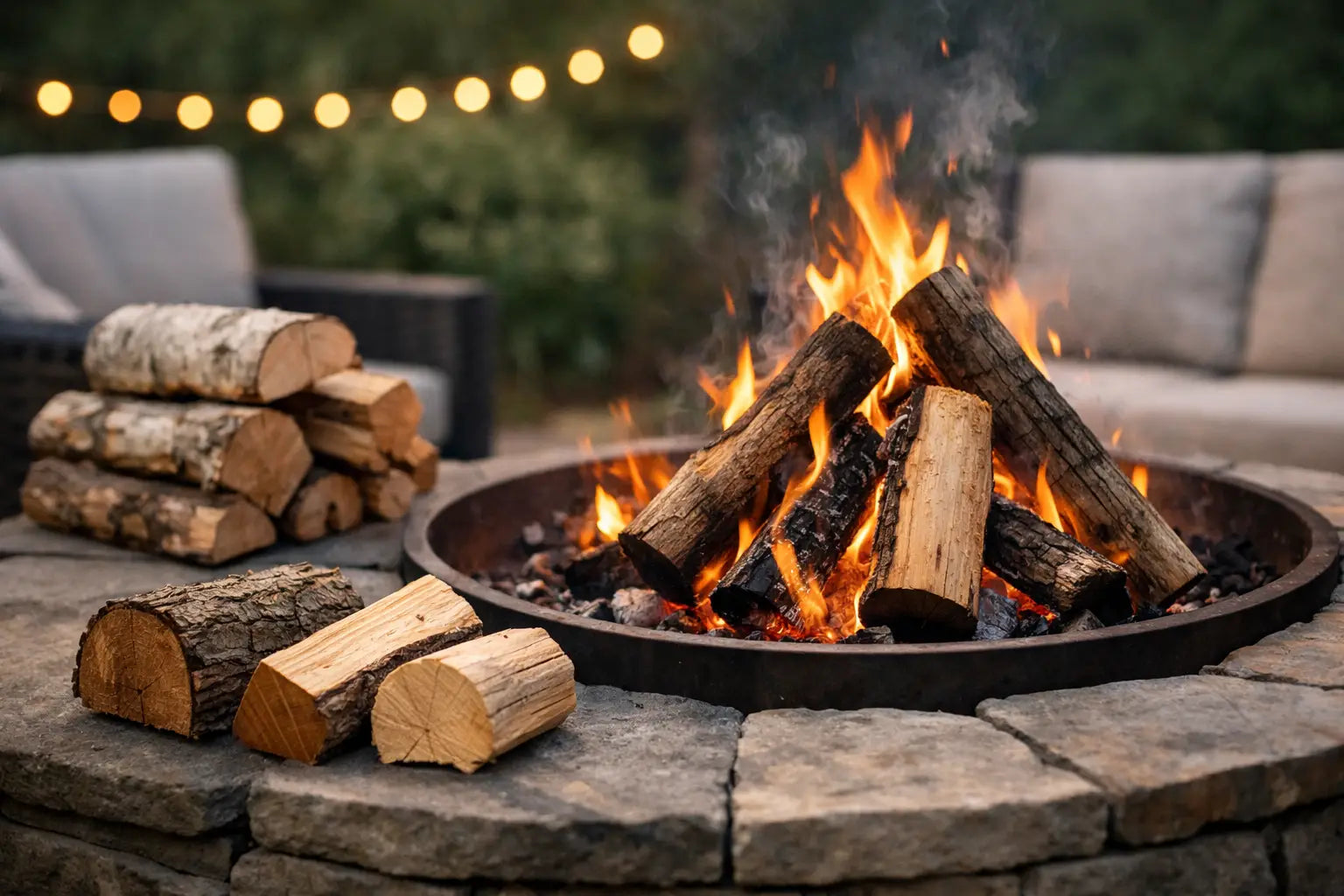
A fire pit should be easy to enjoy: a steady flame, less smoke drifting across the garden and no repeated struggle to get damp wood going. The right summer fire pit logs make that possible, whether you are hosting friends on a warm evening or taking the chill off after sunset.
For outdoor fires, dry fuel matters just as much as it does in a stove. Kiln-dried logs with a moisture content below 20% light more reliably, produce more useful heat and create less smoke than unseasoned wood. They are also cleaner to handle and far easier to store for the weeks ahead.
Why dry logs matter for a summer fire pit
It is tempting to assume any spare wood will do in an open fire pit. In practice, freshly cut or poorly stored logs carry a high level of moisture. Before that wood can burn properly, the fire must first boil off the water inside it. The result is a weak flame, excessive smoke, blackened fire-pit surfaces and far more effort than an evening outdoors should require.
Kiln-dried logs are dried in controlled conditions before delivery, so they arrive ready to use. A lower moisture content means more of the log’s energy becomes heat rather than steam. You will usually need fewer logs to maintain a good fire, and guests are less likely to spend the evening moving away from the smoke.
For domestic wood fuel sold in smaller volumes, Ready to Burn certification provides useful reassurance that the logs meet the required moisture standard. It is a practical quality marker, particularly when buying online rather than seeing the wood before delivery.
The best summer fire pit logs for different evenings
There is no single best species for every fire pit. Your choice should reflect the size of the fire, how long you want it to run and whether quick lighting or long-lasting heat is the priority.
Birch for quick lighting and a bright flame
Birch is a popular choice for relaxed summer use because it catches well and creates an attractive, lively flame. Its bark helps it light quickly when paired with dry kindling, making it suitable for smaller fire pits and shorter evenings.
Birch generally burns faster than denser hardwoods, so it is not always the most economical option for a fire that will continue for several hours. It works particularly well as the starting fuel, followed by a slower-burning hardwood once the fire has established.
Ash for dependable all-round performance
Ash is valued for its consistent burn and useful heat output. It lights readily when dry, gives a steady flame and suits most fire-pit sizes. If you prefer one dependable log type that can cover everything from an early evening barbecue to a later gathering, ash is a sound choice.
Its balanced performance also makes ash a practical option for households that use the same fuel across an outdoor fire pit, wood burner or open fireplace.
Oak and hornbeam for longer burns
Oak and hornbeam are dense hardwoods that burn more slowly and provide sustained heat. They are well suited to larger fire pits, cooler nights and occasions where you do not want to keep refuelling the fire every half hour.
The trade-off is that dense logs benefit from a properly established bed of embers. Start with kindling and a few easier-lighting logs, then add oak or hornbeam once the fire is burning confidently. Using large dense logs from the outset can slow lighting and create unnecessary smoke.
Alder for a gentler outdoor fire
Alder burns more quickly and with a pleasant flame, making it useful where you want a modest fire rather than intense heat. It is a sensible choice for compact fire bowls or quieter summer evenings when the fire is there for atmosphere and comfort, not as the main source of warmth.
How much wood should you buy?
The right quantity depends on how often you use the fire pit, its size and the type of logs you choose. A small fire bowl used once or twice a month may only need a few net bags or fire-box packs. These formats are easy to carry, keep tidy and store close to the patio.
If you expect regular use throughout spring and summer, larger log packs or crates can offer better value per cubic metre. They also reduce the risk of running short when a spell of dry weather brings more opportunities to sit outside. Check the stated loose volume rather than relying on the number of bags alone, as transparent volumetric information makes like-for-like comparisons much easier.
Do not overbuy simply because summer storage looks straightforward. Logs need protection from rain and ground moisture, as well as enough airflow to remain dry. Buy the quantity you can store properly, then top up when needed.
Storing summer fire pit logs properly
Even premium kiln-dried wood can lose its advantage if it is left exposed to British summer rain. Keep logs raised off the ground on a pallet, rack or purpose-built log store. This prevents moisture rising from paving, soil or grass and allows air to move underneath the stack.
A covered top is essential, but fully wrapping the stack in a tarpaulin is not ideal. Trapped humidity can encourage mould and condensation. Protect the top and most exposed side while leaving the front or sides open for ventilation.
Store your main supply away from the fire pit, not beside it. A small basket or log holder near the seating area is convenient for the evening, but a larger stack should remain a safe distance from flames, sparks and hot ash. Bring across only the wood you expect to use.
Building a cleaner, more reliable fire
Start with dry kindling arranged loosely so air can circulate. Place one or two small kiln-dried logs above it, leaving gaps rather than packing the fire pit tightly. Use a suitable firelighter if required, then allow the initial fuel to establish before adding larger logs.
Once there is a glowing bed of embers, add logs gradually. Overloading a fire pit cuts off airflow and can create a smoky, reluctant fire. A couple of correctly sized logs will burn more effectively than a high pile of mixed wood.
Avoid burning treated timber, painted wood, old furniture, fencing, pallet wood or household rubbish. These materials may release unpleasant or harmful fumes and can leave damaging residues in your fire pit. Clean, untreated, dry firewood is the right fuel for a controlled outdoor fire.
Choosing log size for your fire pit
Log length matters. A log that is too long for the bowl may overhang the edge, making it harder to manage safely and increasing the chance of sparks reaching nearby surfaces. Measure the internal width of your fire pit before ordering, then choose logs that fit comfortably inside with room for airflow.
Smaller logs are often easier to arrange in compact pits and are useful for controlled, shorter fires. Larger split logs suit wider fire pits and chimineas that can accommodate them safely. If your fire pit has a mesh lid or spark guard, make sure the logs sit below it without forcing the guard out of position.
Fire pit safety for gardens and patios
Position the fire pit on a stable, non-combustible surface with clear space around it. Keep it away from fences, sheds, overhanging branches, garden furniture and washing lines. Decking needs particular care: check that the fire pit manufacturer permits use on timber decking and use an appropriate heat shield where necessary.
Never leave the fire unattended, especially when children or pets are in the garden. Keep water, sand or a suitable fire extinguisher nearby, and use a spark guard where your fire pit is designed for one. When the evening ends, stop adding fuel early enough for the remaining logs to burn down. Ash can stay hot for many hours, so leave it to cool completely before disposal.
Consider your neighbours, too. Even dry logs produce some smoke during lighting and refuelling. Choose a calm evening where possible, keep the fire modest and avoid positioning it where smoke will travel directly towards adjoining gardens or open windows.
Make every log work harder
A well-run summer fire is not about building the biggest flames. It is about using dry, correctly sized logs and adding fuel at the right pace. Birch or alder can get the evening started quickly, while ash, oak or hornbeam can extend the burn when the temperature drops.
With properly stored kiln-dried logs ready to hand, your fire pit becomes a simple part of outdoor living rather than a source of smoke, mess and wasted fuel. Choose the wood to match the fire you want to build, then let a small, clean-burning flame do its job.