Skip to content
Oak Crates of Logs Near Me: What to Check
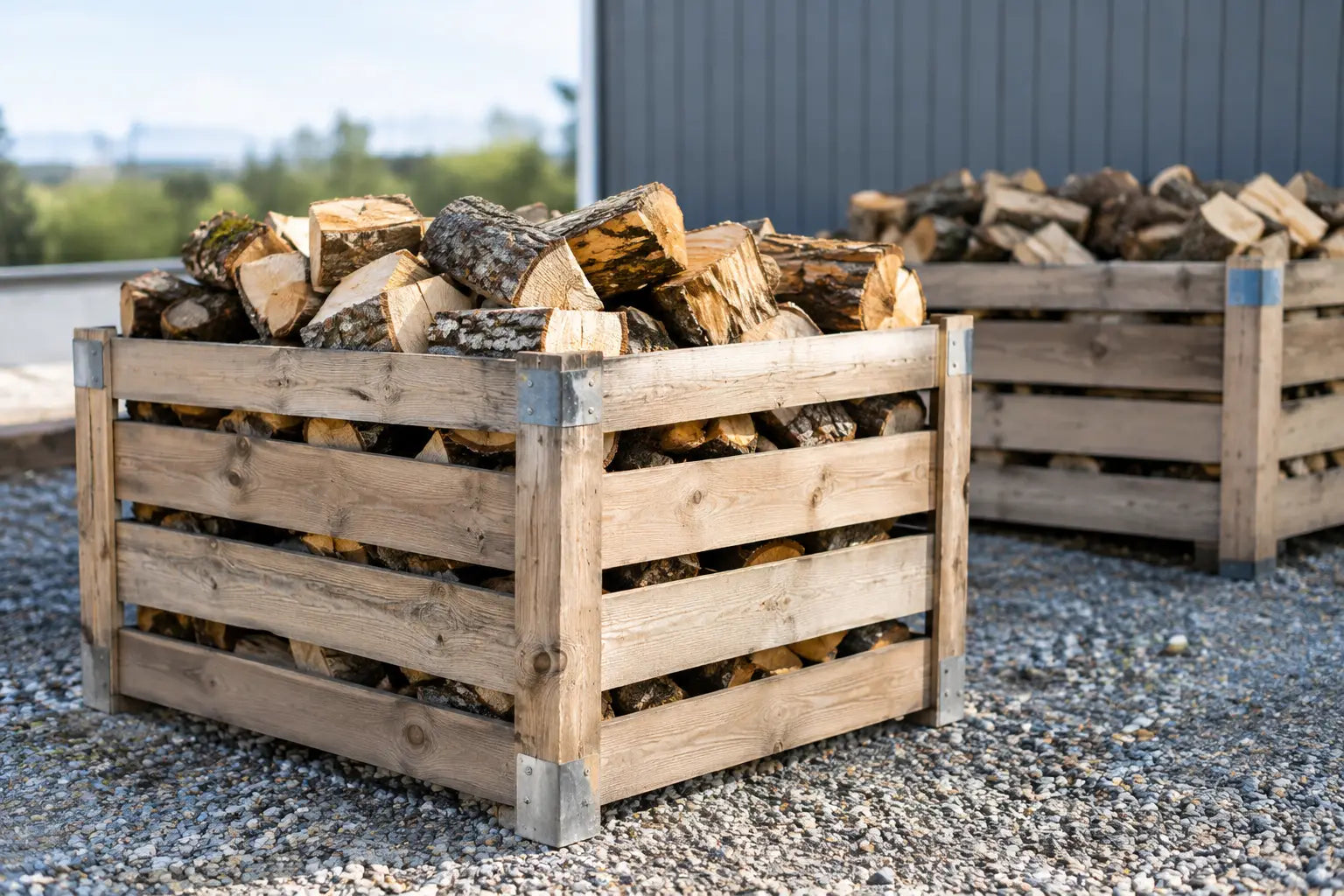
A crate of oak logs can look like a straightforward purchase until it arrives damp, undersized or difficult to store. When you search for oak crates of logs near me, the real question is not simply who has stock nearby. It is whether the logs will burn cleanly, provide worthwhile heat and arrive in a format that makes sense for your stove and household.
Oak is a premium hardwood with a long, steady burn. It suits households that want to buy in volume, reduce the frequency of reordering and keep a dependable fuel supply ready for colder weeks. However, oak only performs at its best when it has been properly dried and clearly sold by volume.
Why choose oak logs in a crate?
Oak is a dense hardwood, so it generally burns more slowly than lighter woods. Once your stove or fire is established, it can provide sustained heat and good-lasting embers. That makes it a practical choice for wood burners used regularly during autumn and winter, as well as open fires where a longer burn is valued.
The trade-off is that oak can be slower to catch than woods such as birch or alder. It is usually best used with dry kindling and a small amount of faster-lighting firewood when starting a fire. Once the firebox is hot, oak becomes an efficient, dependable main fuel.
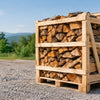
Buying in a crate also removes much of the uncertainty that comes with loose, informal firewood purchases. A proper crate gives you a defined quantity, helps you compare prices fairly and provides a manageable delivery format for larger orders. For households with regular heating needs, it is often better value than repeatedly buying small bags.
Oak crates of logs near me: focus on delivery, not distance
Local availability matters, but it should not be the only factor in your decision. A supplier five miles away is not necessarily the better option if the wood is unseasoned, the volume is unclear or delivery is unreliable. For most buyers, a dependable nationwide delivery service is more useful than a vague claim that logs are local.
Check the delivery area, expected lead time and where the pallet will be placed. Crated logs are normally delivered on a pallet by lorry, so the driver will need reasonable access to a safe, hard-standing point. A steep drive, loose gravel, narrow lane or steps may affect where the crate can be left. Planning this before ordering avoids disappointment on delivery day.
Candowe supplies premium kiln-dried fuel with free delivery across most mainland UK postcodes, helping customers buy quality logs without relying on inconsistent local stock. For a bulk order, clear delivery information can be every bit as valuable as proximity.
The moisture content matters more than the label
The word “seasoned” is often used loosely. It does not guarantee that logs are dry enough to burn efficiently now. For domestic use in England, firewood sold in volumes under two cubic metres must meet the Ready to Burn standard, meaning moisture content is below 20 per cent. Even where the rules do not apply in exactly the same way to a larger load, that level remains a sensible benchmark for good stove fuel.
Kiln-dried oak with moisture below 20 per cent lights more readily, produces more useful heat and creates less smoke than wet wood. It also helps reduce soot and tar deposits in your flue. Burning wet logs wastes energy because much of the fire's heat is used to drive out water rather than warm your room.
Look for a clear statement of moisture content and Ready to Burn certification where applicable. If a seller cannot explain how dry the logs are, or relies only on phrases such as “well seasoned”, it is difficult to judge the value of the fuel. Cheap logs that struggle to burn are rarely a saving.
Compare crate sizes by volume
A crate can mean different things to different suppliers. Some are sold by external crate dimensions, others by loose-fill volume, and some descriptions can make a part-filled crate appear more generous than it is. Before comparing prices, establish the actual volume of logs you are buying.
A useful listing should state the crate dimensions or loose volume in cubic metres, along with an indication of log length. This lets you work out whether the fuel suits your appliance and whether there is enough space in your log store. It also gives you a fairer basis for comparing oak against ash, hornbeam or mixed hardwood options.
Do not assume that a heavier crate is always better value. Oak is naturally dense, and wood weight changes with moisture level. Dry logs may weigh less than wet ones, yet deliver far more usable heat. Volume, dryness and species together are a better guide than weight alone.
Check log length before you order
Measure the width and depth of your stove's firebox, then allow room for airflow around the logs. Standard split logs are suitable for many domestic appliances, but larger pieces can be inconvenient in compact stoves. A supplier should make approximate log lengths clear so you are not left splitting logs or struggling to close the stove door.
Log size also affects how you use the fuel. Smaller splits tend to establish a fire more quickly, while larger oak pieces are useful for maintaining heat once a bed of embers is formed. There is no single best size - it depends on your appliance and whether you are lighting an occasional fire or heating with wood most days.
Inspect quality signals before buying
A good crate of kiln-dried oak should contain clean, split firewood rather than random offcuts, excessive bark or a large amount of loose debris. Natural variation in shape is normal, but the overall product should be consistent enough to stack and burn easily.
When reviewing an online listing, look beyond the headline price. The most useful details are the wood species, moisture specification, Ready to Burn status, stated volume, log dimensions, delivery terms and any included extras such as kindling. These facts make the cost understandable and help you avoid paying separately for essentials needed to light the fire.
Sustainable sourcing is another worthwhile consideration. Firewood is a renewable heating fuel when forests are managed responsibly, but its environmental benefit depends on responsible sourcing and efficient burning. Dry, certified logs produce less visible smoke and use the stored energy in the wood more effectively.
Make space for the crate before it arrives
Oak crates are convenient for delivery, but the logs still need correct storage once opened. Choose a location close enough to the house to make daily use easy, while keeping the wood protected from persistent rain and rising damp. An airy log store, garage edge or covered side area can work well.
Keep logs raised off bare ground and allow airflow around the stack. A waterproof cover over the top is helpful, but avoid wrapping the whole pile tightly in plastic. Moisture needs a route out, especially during damp British weather. If possible, bring a few days' supply indoors or into a dry porch before use so surface damp does not affect lighting.
Do not place a full crate where it obstructs access, drainage or a shared path. Oak is heavy, and moving a large volume of logs by hand after delivery is inconvenient. Decide where it will live before the pallet reaches your property.
How much oak should you buy?
Your required quantity depends on how often you use the stove, the insulation of your home, the size of the room and whether wood is supplementary or primary heat. A household that lights a stove only at weekends may find a smaller crate lasts well through a season. A rural home using a log burner most evenings will need considerably more.
If you are trying oak for the first time, a medium-sized crate can be a sensible starting point. You can see how it suits your appliance, estimate your weekly use and assess your storage capacity. Regular wood-burners may prefer a larger order for better unit value, provided they can store it correctly.
For easier fire lighting, consider keeping kindling and a faster-lighting hardwood or softwood option alongside your oak. This does not reduce oak's value. It simply uses each fuel for the job it does best: quick ignition at the start, long-lasting heat afterwards.
Before the colder weather sets in, measure your stove, clear a dry storage area and compare crates by certified dryness and stated volume rather than the lowest headline price. That small amount of preparation makes it far more likely that every log you buy will earn its place by the fire.