Skip to content
Where to Buy Birch Crates of Logs Near Me
A search for birch crates of logs near me usually means more than finding the closest stack of firewood. You need logs that will light without fuss, burn cleanly in your stove and arrive in a quantity that makes sense for the space you have available. A crate of properly kiln-dried birch can solve all three problems, provided you know what to check before ordering.
Birch is a popular choice for UK households because it catches readily, produces an attractive flame and is straightforward to use in stoves, fireplaces and log burners. However, the quality of the drying process, the stated volume and the delivery arrangement matter just as much as the species printed on the listing.
Why choose a crate of birch logs?
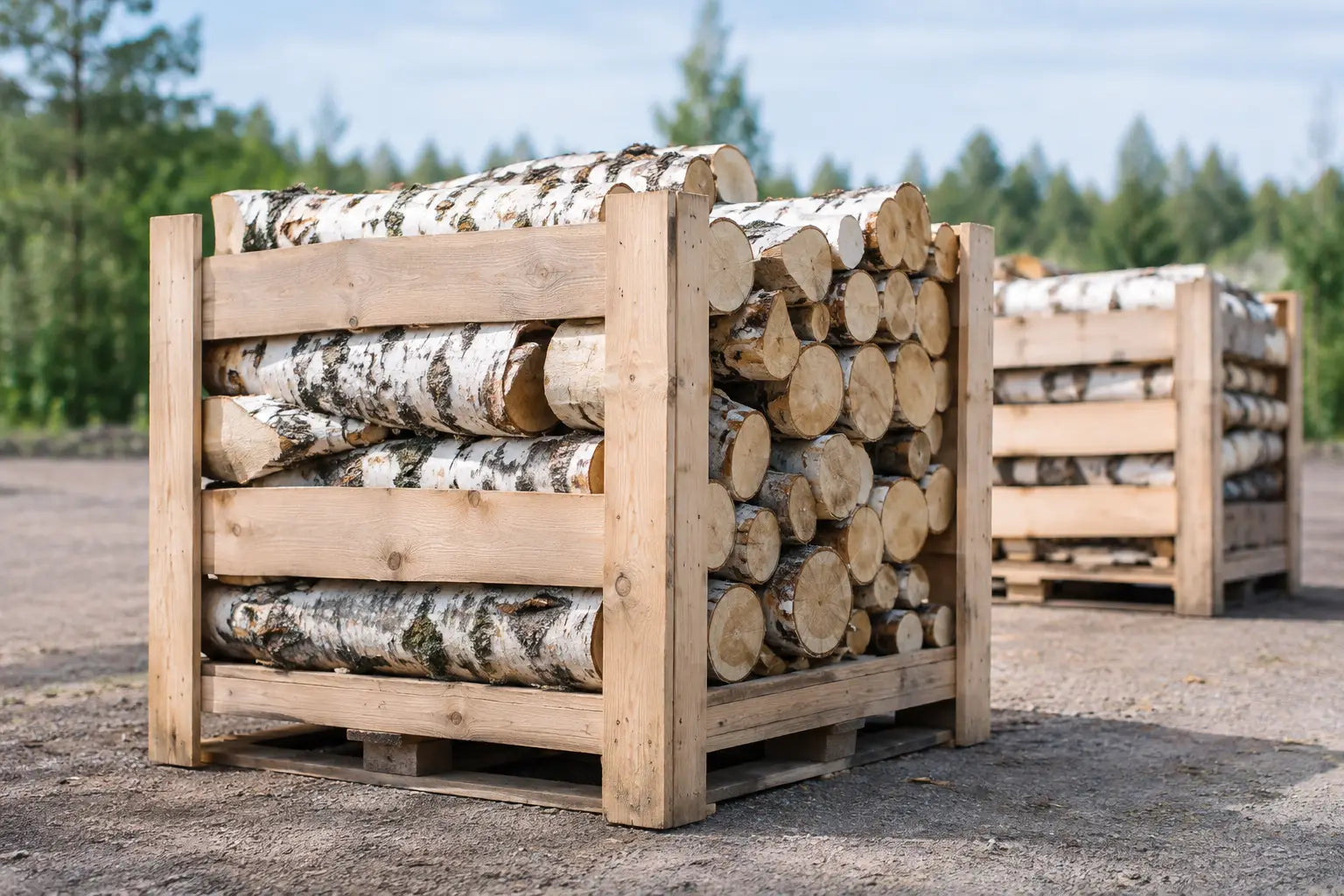
A crate is designed for customers who want a worthwhile quantity of fuel without the uncertainty of loose loads. The logs are packed into a defined format, which makes it easier to compare products and plan storage. For regular stove users, buying by the crate can also reduce the need for repeated smaller orders during colder periods.
Birch is a relatively light hardwood with bark that lights easily. It is a practical fuel when you want to get a fire established quickly, whether you are lighting the stove after work or building warmth through the house on a cold weekend. Its flame is lively and bright, while dry birch gives a dependable heat output.
There is a trade-off. Denser woods such as oak, hornbeam and ash may offer a longer burn per log, particularly when they are used for an overnight stove fire. Birch tends to burn more quickly, so it is often best for fast heat, daytime use or mixed loads. Many households use birch for lighting and maintaining a responsive fire, then add a denser hardwood when they want the fire to last longer.
Birch crates of logs near me: look beyond distance
Local availability can be useful, especially if you need fuel quickly. But a nearby supplier is not automatically the best value or the most reliable option. Firewood can look dry from the outside while still holding too much moisture in the centre. It may also be sold in unclear quantities, making a cheap-looking load difficult to compare with a properly specified crate.
When comparing birch crates of logs near me, start with the fuel standard rather than the postcode. For domestic wood-burning appliances, Ready to Burn certified logs with a moisture content below 20% are the sensible benchmark. They are dry enough to burn efficiently and help reduce excess smoke, blackened stove glass and soot deposits in the flue.
Kiln drying gives customers greater consistency than buying unseasoned or poorly stored wood. The process removes moisture under controlled conditions, so the logs arrive ready to use rather than needing months under cover before they perform properly. That is particularly valuable if your existing fuel store is running low or you do not have room to season wood yourself.
A national online supplier can still be a practical answer to a local search. Candowe delivers across most mainland UK postcodes, with free delivery and typical fulfilment within three to four working days. For many customers, a reliable delivery date and a known product specification are more useful than collecting a smaller, unknown quantity from a local yard.
Check what the crate actually contains
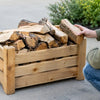
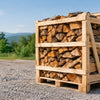
The word “crate” does not tell you enough on its own. Crates vary in dimensions, packed volume and the amount of space between logs. Always look for a clear loose-volume figure or equivalent volumetric information, rather than relying solely on a photograph or a description such as “large”.
Loose volume is useful because firewood is not a solid block. The gaps between the logs are part of the load, and different packing methods can make two crates of similar external size contain noticeably different amounts of wood. Transparent volume information lets you calculate the cost per cubic metre and compare birch with other species or formats fairly.
Log length deserves attention as well. Measure the internal width of your stove and allow room for air to circulate around the fuel. A log that just fits may be awkward to place and can restrict airflow. Most domestic users need a practical, consistent log size rather than oversized pieces that require splitting before use.
If a product includes kindling, this can improve convenience and value, particularly if you are starting from an empty store. Dry kindling and a suitable firelighter make lighting quicker and prevent the temptation to use damp scraps of wood or excessive paper, both of which can create more smoke.
Delivery access and storage are part of the purchase
A crate of logs is a palletised delivery, not a parcel that can be carried through the house. Before ordering, consider where the delivery can be made safely. A level, accessible hard surface is normally needed for a pallet lorry. Gravel, steep slopes, steps and narrow paths can limit how close the driver can position the crate.
Choose a storage point before the fuel arrives. The best location is outdoors, off the ground and protected from persistent rain, while still allowing air to move around the wood. A log store with a roof and open sides works well. If you cover a crate, avoid wrapping it tightly in plastic for long periods, as trapped moisture can reduce the benefit of buying kiln-dried logs.
It is also worth thinking about how you will move the logs from the crate to the stove. Keeping a small indoor basket or log holder topped up saves repeated trips outside, but avoid storing a large amount directly beside the appliance. A clear area around your stove is safer and easier to keep clean.
How much birch firewood do you need?
Your usage will depend on the size and efficiency of your appliance, how well your home is insulated, how often you light a fire and whether wood is supplementary or your main heat source. A household using a stove for a few evenings each week may find a crate lasts a substantial part of the season. A home relying on wood for daily heating will use fuel much faster.
Rather than guessing from last winter alone, consider your routine. If you usually light the stove from late afternoon until bedtime, birch can be an efficient and enjoyable choice. If you burn for long periods every day, a mixed order of birch and denser hardwood may give you a better balance of quick lighting, flame quality and duration.
Buying a larger format can improve the price per cubic metre, but only if you can store it correctly and use it within a sensible period. There is little benefit in saving on unit price if the crate blocks access, sits exposed to driving rain or creates a handling problem. For smaller homes, net bags or fire-box packs may be easier to manage, even if the cost per volume is higher.
Signs of dependable kiln-dried birch
A reputable listing should make the essentials easy to find: the wood species, moisture standard, product volume, log dimensions where relevant, delivery terms and whether the fuel is certified Ready to Burn. Clear information is a sign that the supplier understands how customers compare fuel.
Once delivered, kiln-dried birch should feel dry and relatively light for its size. The cut ends may show small drying splits, and the logs should not feel damp or cold-wet when handled. Natural variation in bark, shape and colour is normal, because firewood is a natural product. What matters is that the overall load is dry, usable and consistent with the specification.
Avoid judging quality only by how many logs appear in a crate. Smaller logs produce a higher count, while larger logs produce a lower count. Volume, dryness and suitability for your appliance tell you far more about practical value than a headline number of pieces.
Make the order work for your stove
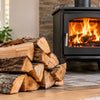
Birch performs best when the stove is operated correctly. Use dry kindling to establish a strong flame, follow your appliance manufacturer’s guidance on airflow and avoid starving a new fire of oxygen. Once the fire is established, add logs in sensible amounts rather than overfilling the firebox.
Burning dry fuel at the right temperature helps keep the glass clearer and reduces deposits in the stove and chimney. Regular sweeping remains essential, but good-quality kiln-dried logs make day-to-day stove use cleaner and more predictable.
The right crate is the one that arrives dry, fits your storage and matches how you actually use your fire. Choose certified birch with clearly stated volume and dependable delivery, then you can spend less time chasing fuel and more time enjoying a properly warm home.