Skip to content
Low Smoke Fuel for Urban Homes That Burns Cleanly
A fire that fills a sitting room with warmth should not leave the house smelling of smoke, coat the glass in soot or create avoidable problems with neighbours. Choosing low smoke fuel for urban homes is about more than comfort: it helps your stove or fireplace burn efficiently, keeps flues cleaner and supports compliance where local smoke-control rules apply.
The best choice depends on your appliance, the way you use it and the fuel storage space available. For many households, properly dried Ready to Burn logs are the everyday answer. In other situations, wood briquettes, pellets or approved smokeless fuels may be a better fit. The key is to match a quality fuel to the appliance it was designed for.
What makes a fuel low smoke?
Low smoke does not mean smoke-free. Any solid fuel can produce visible smoke if it is damp, starved of air or burnt incorrectly. In practice, low-smoke performance comes from fuel with a consistent composition, low moisture content and a suitable burning environment.
Wet logs are the most common cause of smoky fires. Much of the heat is spent evaporating water rather than warming the room, so the fire burns at a lower temperature and produces more smoke, tar and particulates. Kiln-dried firewood with moisture content below 20% lights more readily and burns hotter and more cleanly than unseasoned or poorly stored wood.
Fuel quality matters just as much as moisture. Clean, untreated wood, purpose-made briquettes and authorised smokeless fuels are predictable products. They are a safer choice than burning painted timber, old furniture, MDF, household waste or unknown offcuts, none of which belong in a domestic stove or fireplace.
Low smoke fuel for urban homes: the main options
Kiln-dried logs for stoves and open fires
Ready to Burn kiln-dried logs are a practical option for households with wood-burning or multi-fuel stoves. Birch and alder are easy to light and useful for getting a fire established. Ash offers reliable heat and a steady flame, while denser hardwoods such as oak and hornbeam generally burn for longer once the fire is properly hot.
A mixed approach often works well. Use a smaller, quick-lighting log alongside kindling to build heat, then add denser hardwood logs to maintain the fire. This reduces the temptation to overfill the stove or restrict the air supply too early, both of which can create more smoke.
For an open fire, dry logs will still burn more cleanly than damp wood, but an open fireplace is naturally less efficient than a modern enclosed stove. If low emissions and heat output are the priority, an appropriate stove is usually the better long-term option.
Wood briquettes for consistent heat
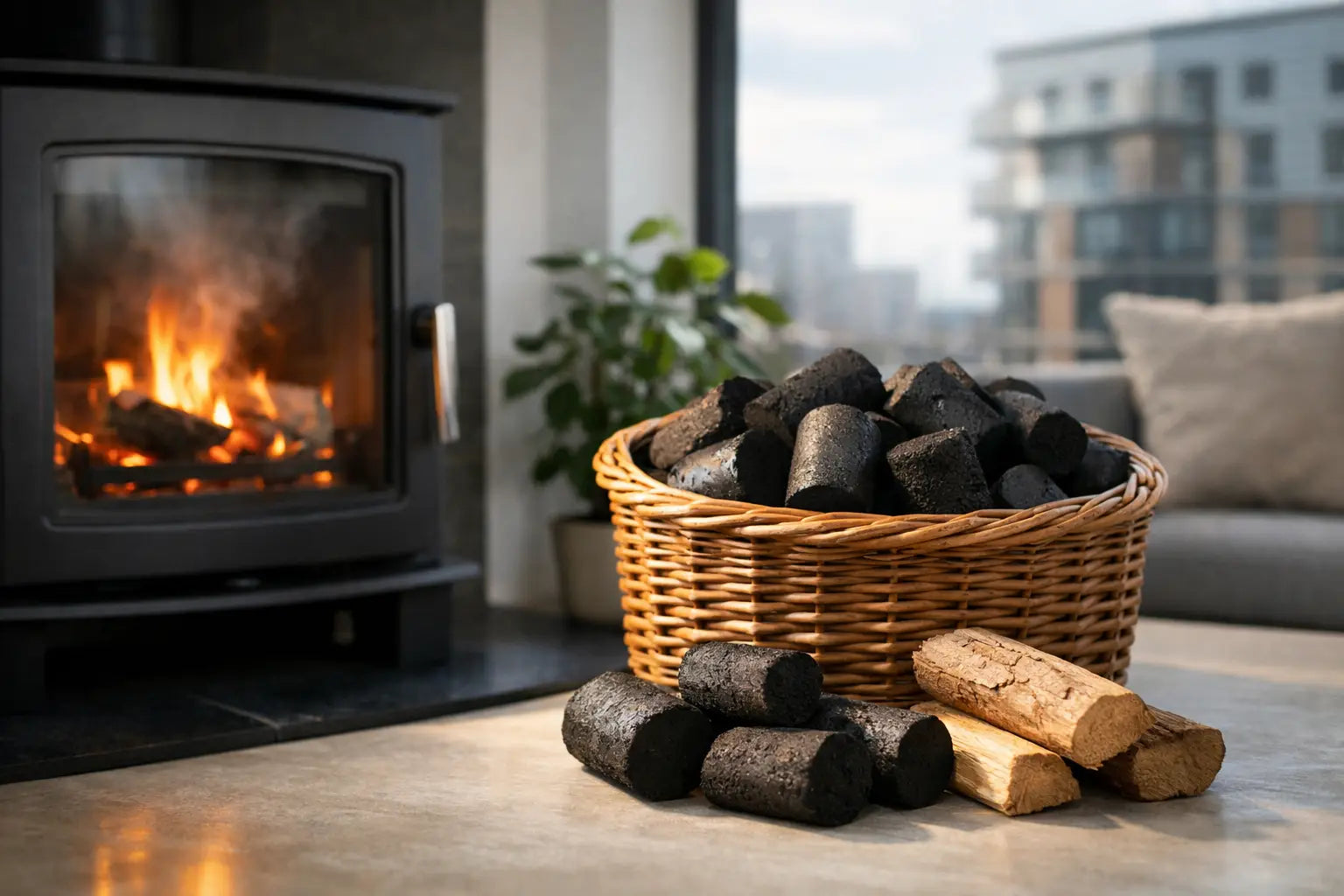
Wood briquettes are made from compressed, untreated wood residues. Because they are dry and dense, they can give dependable heat with less storage space than loose logs. They are particularly useful for households that want a tidy, uniform fuel for a stove, provided the appliance manufacturer permits their use.
The trade-off is that some briquettes expand as they burn and can produce intense heat. Start with a modest amount and avoid packing the firebox tightly. A good fuel should make heating easier, not encourage overheating or damage to the appliance.
Pellets for pellet appliances only
Wood pellets are a specialist fuel for pellet stoves and pellet boilers. They should not be used in a conventional wood burner or open fire. In the right appliance, pellets provide controlled, efficient heating with a consistent fuel format, but they must be kept completely dry and stored in a clean place.
Smokeless coal and anthracite
Authorised smokeless fuels and anthracite can be suitable for compatible multi-fuel appliances. They typically burn with less visible smoke than traditional house coal and can provide long-lasting heat. They are not interchangeable with logs, however, and they should only be used where the stove, grate and manufacturer guidance allow it.
It is worth considering the practical differences. Smokeless solid fuel can be convenient for overnight heat and extended burn times, while kiln-dried wood gives the distinctive flame and quicker response that many stove owners prefer. Some multi-fuel households use each for different conditions, rather than relying on one fuel all year.
Check your local rules before lighting up
Urban areas are more likely to include smoke control areas. In these locations, the fuel and appliance combination matters. You may need to use an authorised fuel, or burn wood only in an exempt appliance. Requirements can vary, so check with your local authority and follow the guidance for your area.
This is not simply a paperwork issue. Smoke-control restrictions are intended to reduce the effect of domestic smoke on densely populated streets, where emissions can linger between closely spaced homes. Even where no restriction applies, choosing dry, clean fuel and burning it properly remains the considerate approach.
The fuel is only half the answer
A premium fuel can still burn badly in an unmanaged fire. Start with dry kindling and small logs, with the air controls open enough to establish a bright flame. Once the appliance and flue are warm, add larger logs gradually. Avoid shutting down the air supply so far that flames disappear and the fire begins to smoulder.
A smouldering fire may appear economical because the logs last longer, but it often wastes usable heat and produces more pollution. A clear flame and a warm flue encourage more complete combustion. Stove glass that quickly turns black, a sharp smoky smell outdoors or heavy deposits in the flue are all signs that something needs attention.
Your chimney or flue should also be swept at appropriate intervals by a competent professional, particularly if the appliance is used regularly. Correctly sized, well-maintained flues draw better and reduce the risk of deposits building up over time.
Store fuel so it stays dry
Buying dry fuel is only useful if it remains dry at home. Keep logs and briquettes off the ground, protected from rain and in a place with airflow. A covered log store, garage or dry shed is usually suitable, but do not seal wood in a damp, unventilated space.
For city homes with limited outdoor room, smaller net bags, fire-box packs or stacked crates can make stock control easier. Buy a format that fits the space you genuinely have. A large volume offers strong value when stored correctly, but a smaller delivery may be the more sensible choice for a flat, terraced house or compact garden.
Pellets need particularly careful storage. Keep bags intact and away from moisture, as damp pellets can break down and may not feed properly through an automatic appliance.
Choosing the right supply for your household
When comparing fuel, look beyond the bag price. Consider the stated volume or weight, moisture specification, wood type, fuel format and likely burn duration. Transparent measurements make it easier to compare like with like and plan how much you need for a week, a cold spell or the full heating season.
Ready to Burn certification is a useful reassurance when purchasing firewood for domestic use. It confirms that the wood meets the required moisture standard for cleaner burning. Reliable suppliers should also make it clear what is included, how the fuel is packaged and how delivery is handled.
Candowe supplies kiln-dried, Ready to Burn logs alongside kindling, briquettes, pellets and smokeless fuel options, allowing households to choose fuel around their appliance rather than settling for whatever is locally available. For bulk orders, factoring in storage and delivery access before purchasing helps ensure the fuel arrives ready to use and easy to manage.
A cleaner urban fire starts with one simple decision: burn only fuel that is dry, suitable for the appliance and stored properly. Get those basics right, and you will spend less time managing smoke and more time enjoying dependable heat.