Skip to content
Smokeless Briquettes Review for Home Heating
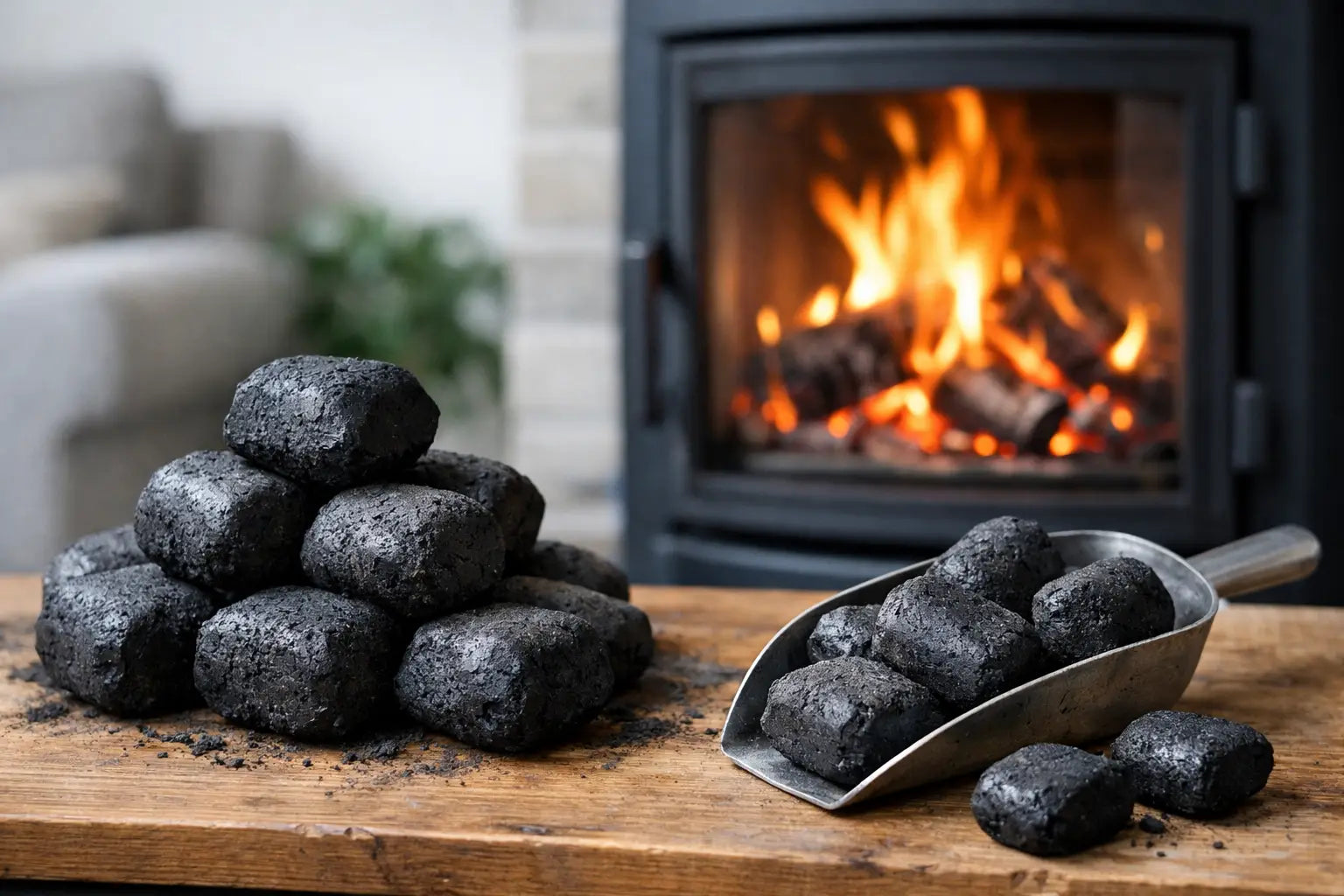
A fire that looks lively for an hour but needs constant refuelling is rarely good value. For households relying on a stove, fireplace or multi-fuel appliance through the colder months, this smokeless briquettes review for heating focuses on what matters at home: usable heat, burn duration, ash, cleanliness and whether the fuel suits your appliance.
Smokeless briquettes can be a practical alternative to traditional house coal, particularly where a longer, steadier burn is more useful than a bright, fast flame. However, not every briquette is the same, and the right choice depends on the appliance, local rules and how you use your fire. A bag that performs well overnight in a closed multi-fuel stove may be unsuitable for an open fire or unnecessary for a short evening burn.
Smokeless briquettes review for heating: what to expect
Smokeless briquettes are manufactured solid fuels, typically formed from processed mineral fuel and binding materials. They are designed to burn with less visible smoke than traditional coal and can provide high heat output with a relatively long burn. This makes them especially useful for multi-fuel stoves, room heaters and certain cookers approved for solid fuel.
Their key advantage is consistency. Unlike unseasoned logs, which can vary greatly in moisture and performance, a properly manufactured briquette is uniform in size and composition. With correct airflow, it should light predictably, hold a steady firebed and produce dependable heat.
The word “smokeless” needs a sensible reading. It does not mean zero emissions, nor does it mean every product can be burnt in every location or appliance. In Smoke Control Areas, use an authorised fuel or a Defra-exempt appliance as required. Always check the fuel packaging and your local authority guidance, rather than assuming that any fuel described as clean-burning meets the relevant rules.
Heat output and burn time
For sustained heating, smokeless briquettes usually outperform ordinary logs by weight and can last longer between refuelling. Their dense composition means they release heat gradually once the fire is established. This is useful if you want to keep a living room warm through an evening, maintain background warmth in a conservatory, or reduce the need to tend a stove continually.
That said, briquettes are not always the fastest way to warm a cold room. Kiln-dried firewood catches quickly and produces an attractive flame, making it ideal for lighting and for shorter fires. Many households find the most effective approach is to build a fire with dry kindling and Ready to Burn logs, then add smokeless briquettes once a good bed of embers has formed.
Burn time is affected by more than the product itself. A stove with the air controls fully open will consume fuel quickly. A poorly maintained chimney, excessive draught or an appliance with leaking door seals can also shorten the burn and waste heat. The best fuel cannot compensate for an appliance that needs servicing.
Ash, smoke and day-to-day cleanliness
Good-quality smokeless briquettes should create a firm ash that is manageable to remove after the appliance has cooled. Ash levels vary between products, so this is worth watching when trying a fuel for the first time. Lower ash can mean less emptying and better airflow through the grate, but the lowest-ash option is not automatically the best value if it burns away much faster.
Compared with traditional house coal, smokeless fuels generally produce less smoke and fewer deposits when used correctly. This can make day-to-day heating cleaner, although chimney sweeping remains essential. Arrange regular sweeping at a frequency appropriate to the fuel and how often you use your appliance.
Storage is straightforward. Keep briquettes dry, preferably in a covered store, shed or sealed fuel container. Damp can cause bags to weaken and may make lighting more difficult. If fuel is delivered in bulk, move it under cover as soon as practical rather than leaving it exposed through wet weather.
Are smokeless briquettes right for your appliance?
Before ordering, check the appliance manual. A wood-burning-only stove should burn wood fuel only unless the manufacturer specifically says otherwise. Smokeless briquettes are generally intended for multi-fuel appliances with a grate and air supply from below. Burning the wrong fuel can damage components, invalidate a warranty and create avoidable safety issues.
Open fires also require care. Some smokeless fuels are suitable for open appliances, while others are designed for enclosed stoves. An enclosed stove controls airflow more efficiently and extracts more heat into the room, so it is usually the better setting for long-burning fuel. Follow the manufacturer’s guidance on fuel size, loading level and recommended operating temperature.
Wood briquettes are a separate category and should not be confused with mineral smokeless briquettes. Wood briquettes are compressed dry wood, often made from sawdust and wood residues. They can burn cleanly and efficiently in a suitable wood burner, but they do not automatically carry the same Smoke Control Area approval as an authorised smokeless fuel. Check the individual product details before use.
Where the value really comes from
The price of a bag is only part of the calculation. A cheaper fuel that burns quickly, leaves excessive ash or produces poor heat may cost more over a week than a slightly higher-priced option that lasts longer. For regular stove users, assess value by the warmth achieved and the number of refuels needed, not simply the upfront price.
When comparing products, look at the stated bag weight, fuel type and intended use. For larger orders, calculate storage space before delivery. Dense briquettes are convenient to stack, but a winter supply still needs a dry, accessible area. Buying a small quantity first is often sensible when changing fuel type, particularly if you have a new stove or are unsure how it will behave with your usual firing routine.
Delivery convenience matters too. A dependable fuel supply helps avoid last-minute trips to find suitable bags during a cold spell. For homes using solid fuel frequently, ordering enough to cover several weeks can make heating easier to manage, provided you have appropriate storage.
Getting the best performance from briquettes
Start with a clean grate and clear ash pan so air can move freely from beneath the fire. Use dry kindling and a suitable firelighter, then establish a bed of embers with approved starter fuel or kiln-dried logs. Add briquettes gradually rather than filling the firebox immediately. This allows them to ignite evenly without smothering the fire.
Once the briquettes are burning, reduce the air controls in line with the appliance instructions. Closing them too early can lead to a dull, inefficient fire; leaving them wide open for too long uses fuel unnecessarily. The aim is a stable, active fire rather than a fierce blaze or a smouldering load.
Do not overload the appliance for an overnight burn. A controlled load of the correct fuel is safer and normally more effective than packing the firebox to the top. Fit and maintain working smoke alarms and carbon monoxide alarms in the rooms recommended by current safety guidance.
A practical verdict for UK households
Smokeless briquettes are a strong option when you need controlled, long-lasting heat from a compatible multi-fuel stove or approved open fire. Their predictable performance, compact storage and reduced smoke compared with house coal make them particularly useful for regular winter heating. They are less suitable where a quick wood fire is the priority, where the appliance is wood-only, or where the product is not approved for local Smoke Control Area requirements.
For many homes, the most flexible fuel store includes both kiln-dried logs and smokeless briquettes. Logs provide easy lighting and a natural flame; briquettes add staying power when the temperature drops. Candowe supplies both options, helping households match their fuel to the appliance and the way they heat their home.
A useful first step is to try a modest quantity during normal stove use, record how long it holds heat and check the ash after a few fires. That small test will tell you far more about value in your own home than a price label alone.