Skip to content
Log Burning Firewood: How to Choose Better Logs
A fire can look well supplied and still perform badly if the logs are damp, poorly sized or stored without airflow. Buying log burning firewood is therefore not simply a question of choosing the cheapest bag or largest load. The right fuel should light without constant tending, produce useful heat, keep the stove glass clearer and leave less residue in the flue.
For most UK households, kiln-dried logs offer the most dependable starting point. They arrive ready to use, with a known moisture level, rather than asking you to season timber for months or manage uncertain local supplies. Once you understand species, log size and volume, it becomes much easier to buy the amount that suits both your appliance and your household routine.
Choosing log burning firewood with the right moisture level
Moisture content is the first specification to check. Wood burns efficiently when it is dry because more of the fire's energy can go into heating your room, rather than boiling water out of the log. Wet wood hisses, smokes and struggles to establish a good flame. It can also contribute to soot and tar deposits in a stove or chimney.
Ready to Burn certified firewood has a moisture content below 20%, making it suitable for immediate domestic use. This matters particularly when buying smaller quantities, as you should not have to guess whether a net, bag or fire-box pack will burn well that evening. Certified dry logs are also a practical way to meet the requirements for wood sold in small volumes in England.
Kiln drying gives greater consistency than buying unseasoned or loosely described "seasoned" logs. Natural seasoning can work well when timber is correctly split, stacked and protected for long enough, but the result depends on the species, the weather and the care taken in storage. For busy households, dry logs delivered to the door remove that uncertainty.
Which wood species suits your stove?
Different hardwoods bring different strengths. The best choice depends on whether you want a quick, bright fire after work, a long steady burn through a cold evening or a flexible mix for everyday use.
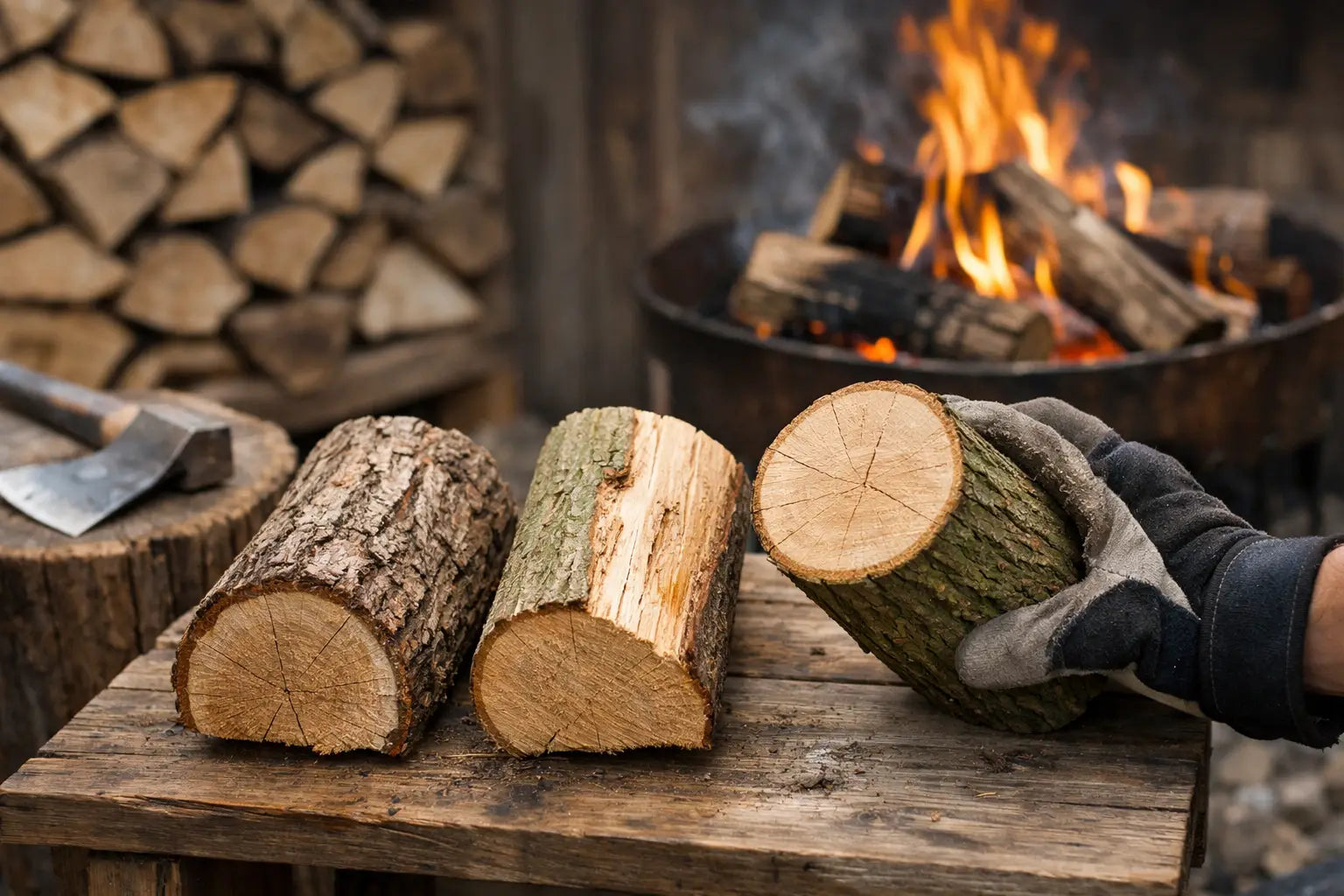
Birch is popular because it lights readily and creates an attractive flame. Its bark helps it catch well, so it is a useful choice for getting a fire established. Birch generally burns more quickly than denser hardwoods, which can make it ideal for shorter fires or for use alongside slower-burning logs.
Ash is often valued as an all-round firewood. It lights easily, burns steadily and produces good heat, making it a sensible option for regular stove users. Alder is another dependable choice for a clean, responsive fire, especially where you want to bring a room up to temperature without waiting for very dense logs to take hold.
Oak and hornbeam are denser hardwoods with a longer burn time when properly dried. They suit households looking for sustained heat and fewer refuelling trips during a long evening. The trade-off is that dense logs can take a little longer to establish, so begin with kindling and a small bed of fast-lighting logs before adding larger pieces.
There is no single best species for every fire. A mixed load can be especially practical: use birch, ash or alder to build the fire, then add oak or hornbeam once the stove is hot. This gives you prompt warmth without sacrificing burn duration.
Match log size to your appliance
Before ordering, measure the usable width and depth of your stove firebox rather than relying on the size of the stove itself. Logs need room for air to circulate around them. Pieces that are too long encourage overfilling and can make it harder to close the door safely; pieces that are very small may burn through faster than you expect.
For a compact stove, consistently cut smaller logs are usually easier to stack and control. Larger appliances can accept longer pieces, but it is still wise not to fill the firebox to capacity. A modest load with good airflow is more efficient than a crowded fire that smoulders.
Split logs are preferable to round, unsplit pieces for most domestic burners. Splitting exposes more surface area, helps the wood dry properly and gives the flame an edge to catch. If you are using an open fire, choose logs with care and use a proper fireguard. Open fires lose more heat up the chimney than a modern stove, so fuel quality becomes even more important.
Buy a format that makes sense for your usage
The most economical format is not always the largest one. It depends on how often you burn wood, where you can store it and whether you need to move the fuel through a side gate, garage or shed before use.
Net bags, plastic bags and fire-box packs are useful for occasional users, flats with limited storage or households that want a clean, manageable top-up. They are easy to carry and make it simple to keep a few days' supply close to the stove. For frequent burners, crates and palletised loads generally offer better value per cubic metre and reduce the need for repeated small orders.
When comparing products, look beyond the number of bags. Check the stated loose volume, log length and price per cubic metre where available. A transparent volumetric description lets you compare like with like, whereas a bag count alone can hide major differences in how much usable wood you are receiving.
It is also worth planning for the colder months. Ordering before your stock is low gives you time to stack the delivery properly and avoids making a rushed choice when a cold spell arrives. Candowe supplies kiln-dried logs in several practical formats, helping households choose between convenient smaller packs and larger loads for regular heating.
Store dry logs so they stay dry
Even excellent firewood can lose performance if it is left exposed to rain or sealed into an airless space. Store logs outside or in a well-ventilated log store, raised off the ground and covered across the top. Leave the sides open enough for air to move through the stack.
Avoid wrapping a whole stack tightly in tarpaulin. It keeps rain out, but it can also trap moisture and condensation. If a cover is needed, secure it over the roof of the stack while leaving the front and sides open. Bring a small basket of logs indoors only when you are ready to use them, particularly if storage space is tight.
Keep fuel away from direct contact with the house wall where possible. This protects airflow, reduces the chance of damp transfer and makes it easier to inspect the stack. A tidy log store also helps you rotate your supply, using older stock first and keeping fresh deliveries at the back.
Get more heat from every log
Good firewood works best with the right lighting method. Open the stove air controls fully when lighting, use dry kindling and build a small fire with space between pieces. A top-down arrangement, with larger logs below and kindling above, can produce a cleaner start because the flames burn down through the fuel and warm the flue gradually.
Once the fire is established, reduce the air supply according to your stove manufacturer's instructions. Do not shut it down so far that the logs smoulder. A lively flame is generally a sign of more complete combustion, while a dull, smoky fire wastes fuel and dirties the appliance.
Use a stove thermometer if your appliance is suited to one. It can help you avoid running too cool, which encourages deposits, or too hot, which may damage the stove over time. Regular ash removal, sensible loading and an annual chimney sweep are part of getting the safest, cleanest result from your fuel.
For overnight heat, it can be tempting to pack the stove tightly and starve it of air. In practice, a better approach is to use dense, dry hardwood logs in a normal load and operate the appliance within its recommended range. You will get more predictable heat, less smoke and fewer problems with blackened glass.
Consider briquettes and other solid fuels carefully
Wood briquettes can be a useful complement to logs because they are compact, dry and consistent. They may suit homes with restricted storage or users who want a controlled burst of heat. However, briquettes vary in composition and expansion, so always follow the appliance guidance and avoid overloading the firebox.
Wood pellets are designed for pellet stoves, not ordinary log burners. Smokeless coal and anthracite should likewise only be used in appliances approved for those fuels. Matching the fuel to the appliance protects your warranty, supports safe operation and helps you get the heating performance you paid for.
The most reliable fire is rarely the one built from the biggest pile of wood. It is the one made with properly dried, correctly sized logs, sensible airflow and a supply plan that keeps good fuel on hand when you need it.