Skip to content
Kiln Dried Oak Logs: Are They Right for You?
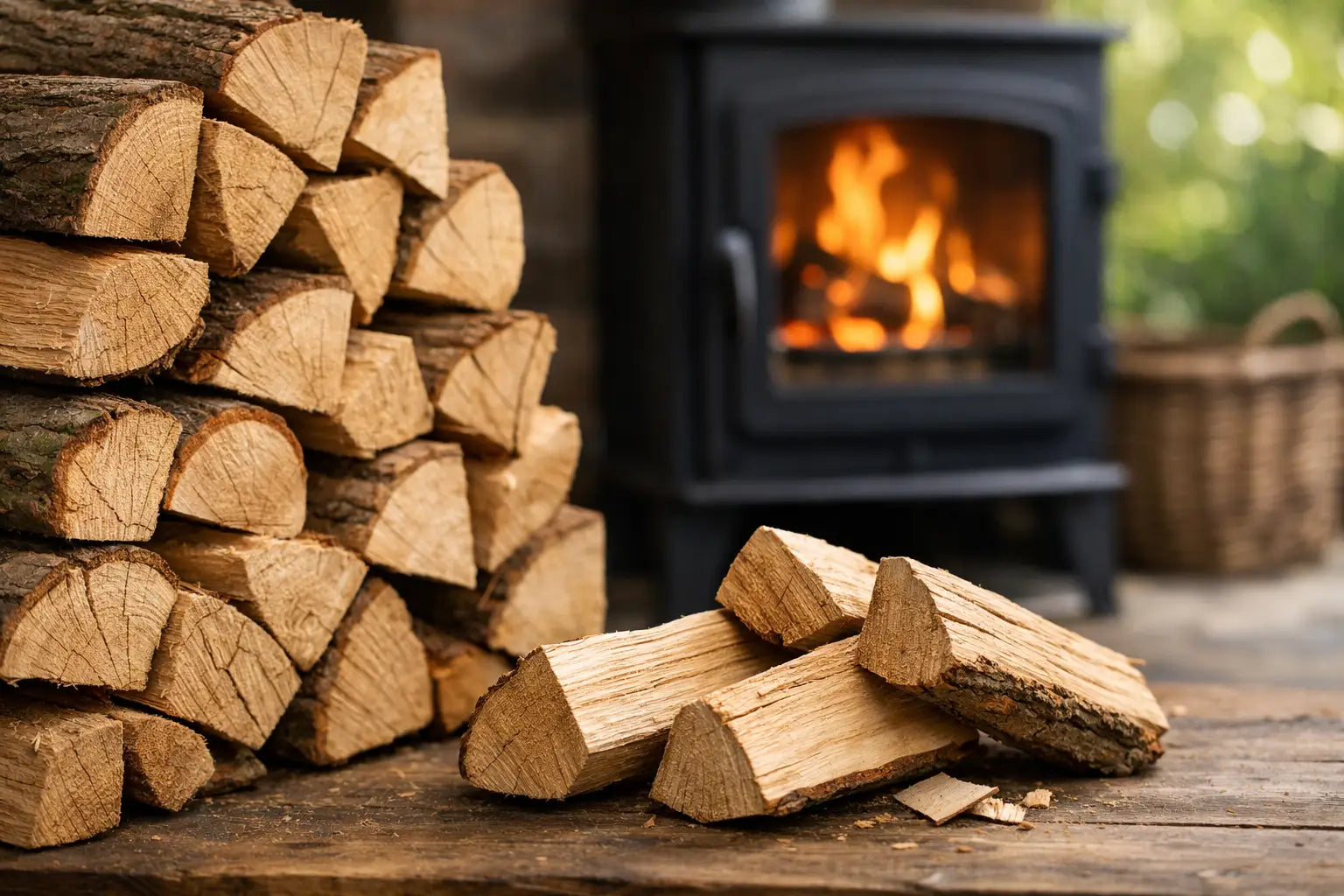
If your stove seems to race through softwood or struggles with damp firewood, kiln dried oak logs usually solve both problems at once. They arrive ready to burn, with moisture content below 20%, so you get a cleaner flame, a steadier heat output and far less guesswork than you would with unseasoned or poorly stored logs.
Oak has long been a trusted hardwood for domestic heating, but the way it is prepared makes a real difference. Freshly cut oak can hold a great deal of moisture and takes a long time to season naturally. Kiln drying removes that delay. Instead of buying logs that still need months of storage before they perform properly, you receive fuel that is dry, dependable and suitable for immediate use in wood-burning stoves, fireplaces and other solid-fuel appliances.
Why kiln dried oak logs perform so well
The main advantage of oak is density. It is a slow-burning hardwood, which means each log tends to last longer than lighter species. That slower burn is often exactly what households want when they are heating a room over an evening rather than just lighting a quick decorative fire.
Kiln drying improves that natural strength. Lower moisture means the energy in the log goes into producing heat rather than evaporating water. In practical terms, that usually means easier lighting, a more stable burn and less smoke. It also helps reduce soot and residue compared with wetter logs, which is better for both stove performance and general cleanliness around the home.
There is a trade-off, though. Oak is not always the fastest species to catch if used on its own from a cold start. Many people get the best results by using kindling and a good firelighter first, then adding oak once the firebox is properly established. Once burning well, oak rewards that extra minute or two with strong heat and useful burn time.
Kiln dried oak logs compared with other hardwoods
Not every household needs the same type of firewood. Kiln dried oak logs are a strong option when long burn time matters most, but they sit alongside other hardwoods that may suit different habits.
Ash is often chosen because it lights readily and burns very consistently. Birch is popular for its bright flame and quick start, while hornbeam is another dense hardwood known for high heat output. Oak tends to appeal to buyers who want a fuel that lasts well and provides a steady, controlled burn once the fire is going.
That means the best choice depends on how you use your appliance. If you regularly light short evening fires for atmosphere, a quicker-burning species may feel more convenient. If you rely on your stove for longer heating periods, oak can be excellent value because of how slowly it burns. Many experienced stove users keep more than one species on hand for exactly this reason - one for getting the fire established, another for sustained heat.
Moisture content matters more than species alone
A common mistake is assuming that all oak logs are automatically premium. In reality, species is only part of the picture. Moisture content has just as much impact on performance.
Wet or partly seasoned oak can be frustrating. It is harder to light, gives off more smoke and can leave your appliance working below its best. This is why Ready to Burn certified firewood matters. It confirms that the logs are dry enough for efficient domestic use, rather than leaving customers to judge by appearance alone.
For homeowners, that reliability is worth paying attention to. You are not just buying a type of wood. You are buying usable heat, cleaner combustion and less hassle. That is especially important in colder months, when fuel needs to work as soon as it arrives.
What to expect from oak in everyday use
In day-to-day heating, oak is usually valued for steadiness rather than drama. You are not choosing it because it flares up instantly or produces the liveliest flames in the first few minutes. You are choosing it because once it is burning well, it tends to hold heat effectively and burn at a measured pace.
For stove owners, that can make room temperature easier to manage. Instead of repeatedly refuelling with lighter logs, you may find you need fewer top-ups over the course of an evening. That can be particularly useful in rural and suburban homes where the stove is more than a feature - it is part of the home’s regular heating routine.
The exact burn time still depends on your appliance, airflow settings and log size. A modern stove with the air controls set correctly will get far more benefit from oak than an open fire losing much of its heat up the chimney. So while oak is a premium fuel, results always depend on the setup around it.
Choosing the right format for kiln dried oak logs
Buying the right wood species is only one part of a practical order. Format matters as well. Some customers want net bags or smaller packs because access is limited or usage is occasional. Others prefer larger volumes in crates or palletised formats because they are heating regularly and want clearer value per cubic metre.
This is where transparent volumetric pricing becomes useful. Comparing products by loose volume, bag size or cubic metre helps you judge the real cost of heat, not just the headline pack price. For frequent stove users, larger quantities often make better sense financially, provided there is suitable storage space.
If you burn wood every week through autumn and winter, under-ordering can be a false economy. Reordering small quantities too often can be less convenient than planning ahead with a larger delivery. Candowe’s range is built around that kind of practical decision-making, giving households and trade buyers formats that match how they actually use fuel.
Storage still matters after delivery
Even premium firewood needs proper storage once it arrives. Kiln drying gives you a very good starting point, but logs can absorb moisture again if they are left exposed to rain or poor airflow.
The aim is simple: keep the wood dry and ventilated. A log store with a roof and open sides is ideal. If you are storing bagged or boxed fuel, avoid placing it directly against damp walls or on wet ground for long periods. Garages and sheds can work well, but only if they do not trap condensation.
It also helps to bring a small amount indoors before use. Tempering logs to room conditions can make lighting easier, especially in very cold weather. Good storage protects the performance you paid for.
Are kiln dried oak logs worth the price?
For many buyers, yes - but the answer depends on what you value. Oak is often priced as a premium hardwood, and kiln drying adds processing cost compared with loosely seasoned firewood. On the face of it, that can make it look expensive.
But price per load is not the whole story. Dry, dense logs generally burn more efficiently and with less waste. You spend less time dealing with smoky starts, poor combustion and inconsistent heat. If the logs burn longer, you may also use fewer of them across the week than you would with lower-density alternatives.
There is also the convenience factor. Buying wood that arrives ready to use, with dependable moisture content and straightforward delivery, removes the uncertainty that often comes with local ad hoc firewood purchases. For households balancing heating needs, storage limits and busy schedules, that reliability has real value.
When oak may not be the perfect choice
Even a high-quality hardwood will not suit every situation. If you mainly light short fires for appearance rather than sustained heating, oak can be more than you need. A quicker-lighting species may feel easier and more responsive.
Oak may also be less ideal if your appliance is very small and designed for shorter, lighter burns. Dense hardwood can still work well, but the benefit is greatest when the stove can make proper use of its slow-burning character. And if your fire-lighting routine is rushed, you may prefer to pair oak with kindling or a faster-catching hardwood rather than relying on it alone from a cold start.
That does not make oak difficult. It simply means matching the fuel to the appliance and the way you heat your home.
The practical case for buying better logs
Most stove owners are not looking for romance. They want firewood that lights properly, burns cleanly, stores well and arrives without fuss. That is why kiln dried fuel has become the benchmark for households that rely on solid-fuel heating.
Kiln dried oak logs fit that need particularly well when long, steady heat matters more than a quick flash of flame. They offer dependable performance, low moisture content and the kind of consistency that makes heating simpler over the colder months. If you want fewer surprises from your firewood and more confidence every time you light the stove, buying dry, well-prepared oak is a practical place to start.
A good fire should not be a battle with damp logs, excess smoke or uncertain quality - it should simply do its job, quietly and reliably, when you need the heat most.