Skip to content
Kiln Dried Birch Logs for Cleaner Heat
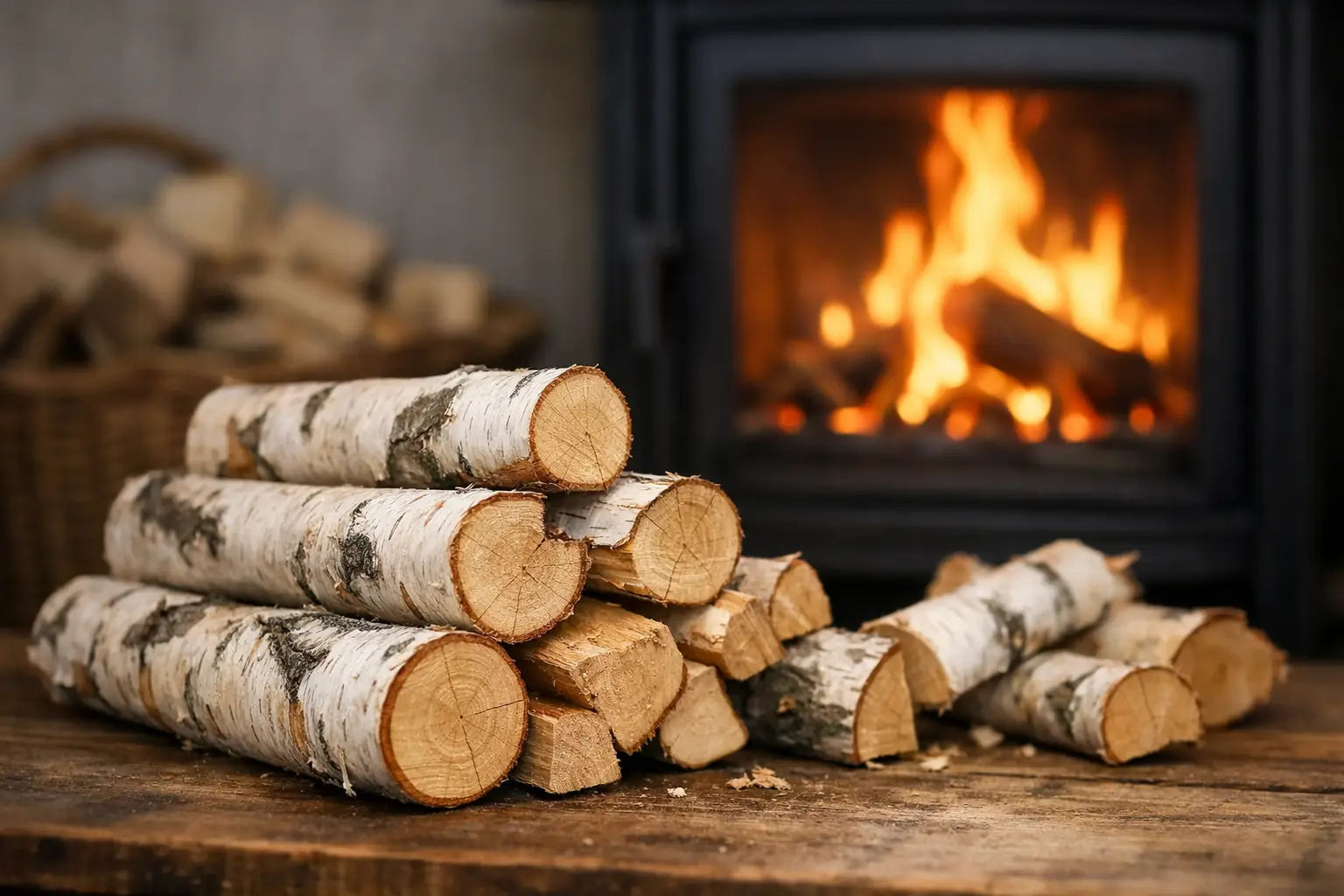
A log fire soon tells you whether you bought well. If the wood hisses, struggles to catch and leaves you with a blackened stove glass, the problem is often moisture. Kiln dried birch logs are a different proposition. They arrive ready to burn, light quickly and give steady, clean heat without the guesswork that comes with unseasoned or poorly stored firewood.
For many UK households, that matters as much as price. When you rely on a stove or open fire through colder months, you want fuel that performs consistently, stores neatly and does not waste time at the fireside. Birch has long been a popular firewood choice, but kiln drying changes it from simply decent firewood into a much more dependable heating option.
Why kiln dried birch logs are so popular
Birch is naturally well suited to domestic burning. It is relatively easy to light, produces an attractive flame and gives a lively fire that suits both stoves and open fireplaces. Once kiln dried to below 20% moisture content, it becomes far easier to use efficiently.
That lower moisture level is the key point. Wet or partly seasoned logs have to burn off excess water before they can produce useful heat. This slows ignition, reduces flame quality and creates more smoke, soot and residue in the appliance and flue. Kiln dried birch logs avoid that problem because the drying process removes excess moisture in a controlled environment rather than leaving the result to weather, storage conditions and hope.
For the customer, the benefit is practical rather than technical. The logs are ready when they arrive. You do not need to stack them for months, test whether they are still too damp or accept inconsistent burning from one load to the next.
How birch burns compared with other firewood
Birch is often chosen by people who want a responsive, easy-to-manage fire. It catches faster than many denser hardwoods and creates a bright flame quickly, which makes it useful for evening heating, topping up room temperature or getting a stove up to operating temperature without much delay.
Compared with oak or hornbeam, birch usually burns a little faster. That is the trade-off. Dense hardwoods can offer longer burn times and more prolonged heat output per log, while birch tends to reward you with easier lighting and a more active flame. For some households, especially those using their stove daily, that can be a very sensible balance. You get a clean, controllable fire without needing to work hard to start it.
It also pairs well with other fuels. Some users like birch for lighting and establishing the fire, then add slower-burning hardwood logs afterwards. Others prefer birch throughout because it is straightforward, clean and reliable. It depends on your appliance, how often you refuel and whether you value quick response over maximum burn duration.
Flame, heat and ease of use
Kiln dried birch logs are known for producing a lively flame and pleasant visual burn. That makes them a strong fit for households that use both the heat and the appearance of the fire as part of the room. In a stove, this can mean faster heat into the space. In an open fire, it can mean a more satisfying flame picture.
Because birch is easier to ignite than some heavier woods, it is also a practical choice for people who want less fuss. If you are tired of repeated relighting, overusing kindling or wrestling with logs that smoulder before they burn, birch is often a noticeable improvement.
The real value of kiln drying
Not all dry-looking logs are genuinely dry enough to burn efficiently. Firewood sold as seasoned may still vary widely in moisture content, especially after poor storage or wet transport. Kiln drying brings more control. Properly prepared kiln dried birch logs should remain below 20% moisture content, which supports cleaner combustion and helps meet Ready to Burn expectations.
This matters for more than convenience. Drier logs generally produce more usable heat for the volume you buy because less energy is wasted evaporating water. They also tend to create less smoke and fewer deposits in the chimney or flue system. Over time, that can support cleaner appliance operation and less maintenance trouble.
For buyers comparing costs, this is where headline price can be misleading. Cheaper wet logs may look attractive at first, but if they burn poorly, deliver less heat and create more mess, they are not necessarily better value. Reliable moisture content is part of what you are paying for.
Choosing the right format for your home
The best firewood is not only about species. Format matters as well. A household using a stove every evening through winter may be better served by a larger crate or pallet option with transparent volume and clear value per cubic metre. Someone using a fire occasionally might prefer net bags or compact fire-box packs that are easier to move and store.
This is where buying from a specialist supplier has an advantage. Structured product options make it easier to match your order to your actual fuel use, rather than overbuying or ending up short in bad weather. If you have limited space, smaller packs may be more practical. If you have dry outdoor storage and want to reduce repeat ordering, bulk formats often work out better.
The useful question is not simply, how much wood do I need? It is, how do I burn, where will I store it and how often do I want deliveries?
Storage still matters after delivery
Even the best kiln dried birch logs need sensible storage. Once delivered, keep them in a dry, ventilated space and off bare ground where possible. If they are left exposed to rain or trapped in a damp shed with no airflow, moisture can creep back in.
A log store with cover and open sides is usually a good option. Indoor storage for a smaller working supply also helps, particularly in colder spells when you want the easiest possible lighting. Buying dry wood is only half of the job. Keeping it dry protects the performance you paid for.
Who should buy kiln dried birch logs?
Birch suits a wide range of domestic users, but it is especially appealing if you want low-hassle burning. Households with wood-burning stoves often appreciate how readily birch lights and how cleanly it performs when moisture content is properly controlled. It is also a sensible choice for customers moving away from informal local firewood supply because they want more certainty on quality and delivery.
For occasional burners, birch is forgiving. You do not need to be especially experienced to get a good result from it. For regular users, it offers consistency, which matters when the fire is part of your routine rather than an occasional extra.
Small commercial settings can also benefit, particularly where appearance, cleanliness and dependable stock levels matter. A pub, holiday let or workshop stove does not need surprises from poor fuel. Reliable birch can make day-to-day heating simpler.
What to check before you buy kiln dried birch logs
Start with moisture content. If the supplier is not clear about the logs being below 20%, ask questions. You should also look for Ready to Burn certification where relevant, because that gives added reassurance that the fuel meets recognised dryness standards.
Then check how the logs are packed and priced. Clear volume information makes comparison easier and helps you understand actual value. Free delivery across most mainland UK postcodes can also make a meaningful difference when comparing suppliers, especially for larger orders.
Delivery speed matters too. If your stock is running low, a supplier that can fulfil promptly is more useful than one with vague lead times. Equally, if you are buying ahead for winter, consistency and reliability should matter more than a small saving on paper.
Candowe focuses on that practical side of the purchase - dry, certified fuel, clear pack options and dependable nationwide delivery that takes the uncertainty out of ordering online.
A sensible choice for dependable home heating
Kiln dried birch logs are not the answer to every heating preference. If your priority is the slowest possible overnight burn, you may prefer to mix birch with denser hardwoods. But if you want logs that light well, burn cleanly and arrive ready to use, birch is one of the most dependable choices available.
Good firewood should make heating simpler, not more complicated. When the logs are properly dried, sensibly packed and delivered in a format that suits your home, the whole process works better from the first match onwards. That is what most people are really buying - not just wood, but fewer problems when the temperature drops.