Skip to content
How to Light Smokeless Fuel Safely at Home
A fire that struggles to catch, fills the room with an unpleasant smell or quickly dies back is usually not a fuel-quality problem. It is more often a matter of airflow, preparation or using the wrong lighting method. Knowing how to light smokeless fuel properly helps you get steady heat from an approved appliance while reducing smoke, wasted fuel and unnecessary mess.
Smokeless fuel is designed to burn with lower smoke emissions than traditional house coal, but it still needs the right conditions. Whether you use anthracite or manufactured smokeless briquettes, begin with a clean grate, a strong initial flame and enough air to establish the fire. Rushing this stage is the most common reason a fire disappoints.
Check your appliance before you start
Only burn smokeless fuel in an appliance designed for it. A multi-fuel stove, suitable open fire or boiler may have a grate and ashpan that allow air to come up through the fuel bed. This under-grate air is particularly important for smokeless fuel because it needs a good supply of oxygen from below to ignite and maintain heat.
Do not assume a wood-burning stove can burn smokeless fuel simply because it has a firebox. Many dedicated wood burners are intended for logs only. Burning an unsuitable fuel can damage internal components, invalidate a warranty and create inefficient combustion. Check the appliance manual or manufacturer’s guidance if there is any doubt.
In a Smoke Control Area, make sure the fuel and appliance combination meets local requirements. Products described as smokeless are not automatically authorised for every use, so it is sensible to confirm the current rules for your area.
Before lighting, ensure the chimney or flue is clear and the stove’s air controls operate freely. A carbon monoxide alarm should be fitted in the room and tested regularly. Keep combustible items well away from the hearth, and never leave a newly lit fire unattended.
What you need to light smokeless fuel
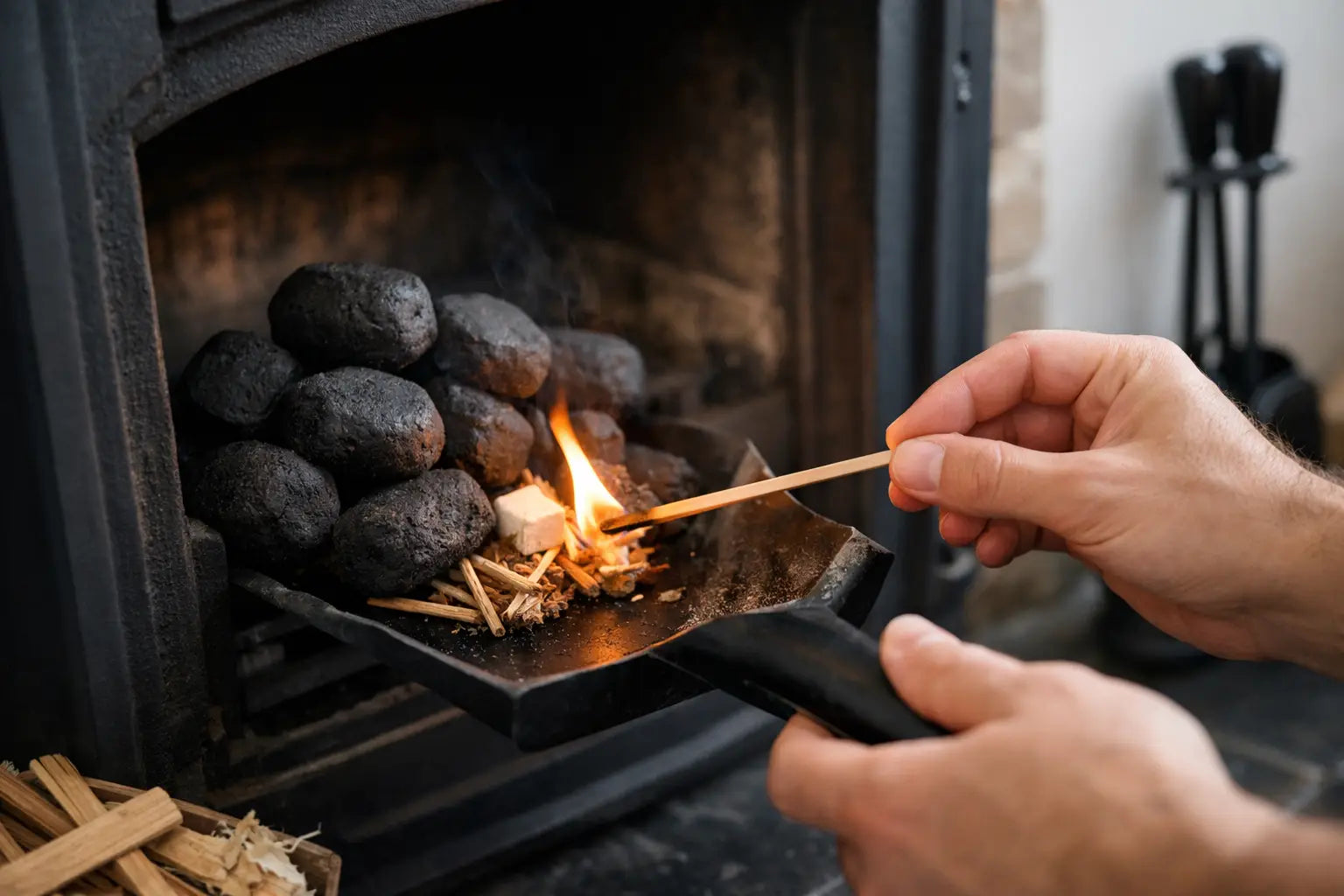
The most reliable method uses dry kindling and purpose-made firelighters to establish a hot flame before adding the main fuel. Smokeless briquettes and anthracite are slow-burning, dense fuels. They are excellent once established, but they are not intended to be lit with one match directly on a cold grate.
Start with a small amount of dry kindling, two natural or approved firelighters and a modest first layer of smokeless fuel. Avoid overfilling the firebox at the beginning. A large pile of cold fuel can smother the flames before the fire has generated enough heat.
Never use petrol, paraffin, methylated spirits or other liquid accelerants. They can flare unpredictably, damage your appliance and create a serious fire risk. Household rubbish, treated timber and damp wood should also stay out of the fire.
How to light smokeless fuel step by step
1. Clear excess ash, but leave a light base
Empty the ashpan if it is full and clear ash that is blocking the grate. Air must be able to pass upwards through the fuel. However, a very thin layer of ash on the grate can help insulate the firebed and support a consistent burn, particularly in a multi-fuel stove.
Make sure the ashpan door is closed before lighting unless your appliance instructions specifically state otherwise. Leaving it open can cause the appliance to overfire, which may warp metal parts or damage firebricks.
2. Open the air controls fully
Open the primary air control, which feeds air beneath the grate, fully. If your appliance has a secondary air control, open that too for lighting. The flue damper, where fitted, should be in the open position.
A cold chimney can delay the draw, especially on still days. Opening the controls gives the initial flame the best chance of warming the flue and pulling combustion gases safely upwards. If smoke enters the room rather than rising through the chimney, stop and investigate rather than continuing to add fuel.
3. Build a small kindling fire
Place firelighters on the grate, then arrange dry kindling loosely above and around them. Leave spaces between the sticks so that air can circulate. Light the firelighters and close the stove door once the flames are established, following the instructions for your particular appliance.
For an open fire, arrange the kindling so the flame can rise through it without collapsing. A fireguard is sensible wherever children or pets may be nearby.
Let the kindling burn until there is a lively flame and a small bed of glowing embers. This usually takes several minutes. The aim is not simply to create flame, but to produce enough heat to ignite the smokeless fuel reliably.
4. Add smokeless fuel gradually
Add a small layer of smokeless fuel over the glowing kindling and embers. Do not bury the flames under a deep load. Leave some visible flame and allow air to come through the grate.
Once the first pieces or briquettes begin to glow around the edges, add another small amount. Continue in stages until you have the depth of fuel needed for your appliance and the length of burn you want. Anthracite can take longer to light than manufactured smokeless fuel, so patience at this point pays off.
If the fuel gives off a little smoke or appears slow to catch, check the primary air control first. It may need more air from below. Adding more fuel too soon usually makes the problem worse.
5. Reduce the airflow only when the fire is established
When the smokeless fuel has a broad, glowing firebed and the flames are stable, gradually reduce the air controls to the normal running setting. The correct position depends on your stove, fuel type and chimney draw, so use the appliance manual as your starting point.
Closing the controls too early starves the fire of oxygen and can lead to poor combustion. Keeping them fully open for too long can burn fuel faster than necessary and make the appliance excessively hot. The best setting produces a steady glow, clean combustion and the level of heat you need.
Choosing the right lighting approach for your fuel
Manufactured smokeless briquettes and anthracite behave differently. Briquettes are often easier to light because their shape and composition are designed to create an even fuel bed. Anthracite is naturally hard and very high in carbon, which gives it long-lasting heat but can make it slower to establish.
For anthracite, use a particularly well-developed kindling fire and add only a small amount at first. Once it is glowing, it can provide dependable, controlled warmth for a long period. With briquettes, avoid packing them tightly together at the lighting stage, as this restricts airflow.
It also depends on your appliance. Some multi-fuel stoves perform best with a deeper fuel bed, while others need smaller, more frequent additions. An open fire loses more heat up the chimney than a closed stove, so it will generally use fuel more quickly. Follow the appliance guidance over any generic rule of thumb.
Common problems when lighting smokeless fuel
If your fire goes out after the kindling burns away, the main fuel was probably added before a proper ember bed formed, or the primary air control is too restricted. Rebuild the kindling fire rather than repeatedly adding fresh fuel to a weak flame.
If the room smells of fumes, smoke is spilling out or the glass blackens rapidly, poor draw or insufficient airflow may be involved. Check that the chimney is not blocked, the vents are open and the fuel is suitable for the appliance. Do not continue using the fire if you suspect a flue issue or carbon monoxide risk.
A fire that burns fiercely but does not last may have too much air passing through it. Once the fuel is properly lit, reduce the controls in small adjustments and give the appliance time to respond. Constantly opening the door also feeds extra air to the fire and wastes heat.
If there is a heavy build-up of clinker, review the fuel being used and avoid mixing unknown products. Use good-quality smokeless fuel from a dependable supplier, stored in a dry place. Damp storage will not change the basic composition of smokeless fuel, but it can make lighting less pleasant and create unnecessary handling problems.
Use fuel efficiently and look after the appliance
Refuel onto a healthy bed of embers rather than waiting until the appliance is completely cold. Add enough fuel for the heat period required, but do not fill above the manufacturer’s recommended level. For overnight burning, establish the fire fully first, then set the controls to the approved slumber setting if your appliance supports it.
Remove ash only when it is cold, placing it in a metal container with a lid. Ash can retain heat for far longer than expected. Arrange regular sweeping and servicing, particularly if you use solid fuel throughout the heating season. A clean flue supports better draw, safer operation and more consistent heat.
Good fuel deserves a good start. With dry kindling, controlled airflow and a little patience, smokeless fuel can provide the long, clean-burning warmth it is made for - without turning lighting the fire into a daily struggle.