Skip to content
Hornbeam Logs Review for Stoves: Worth Buying?
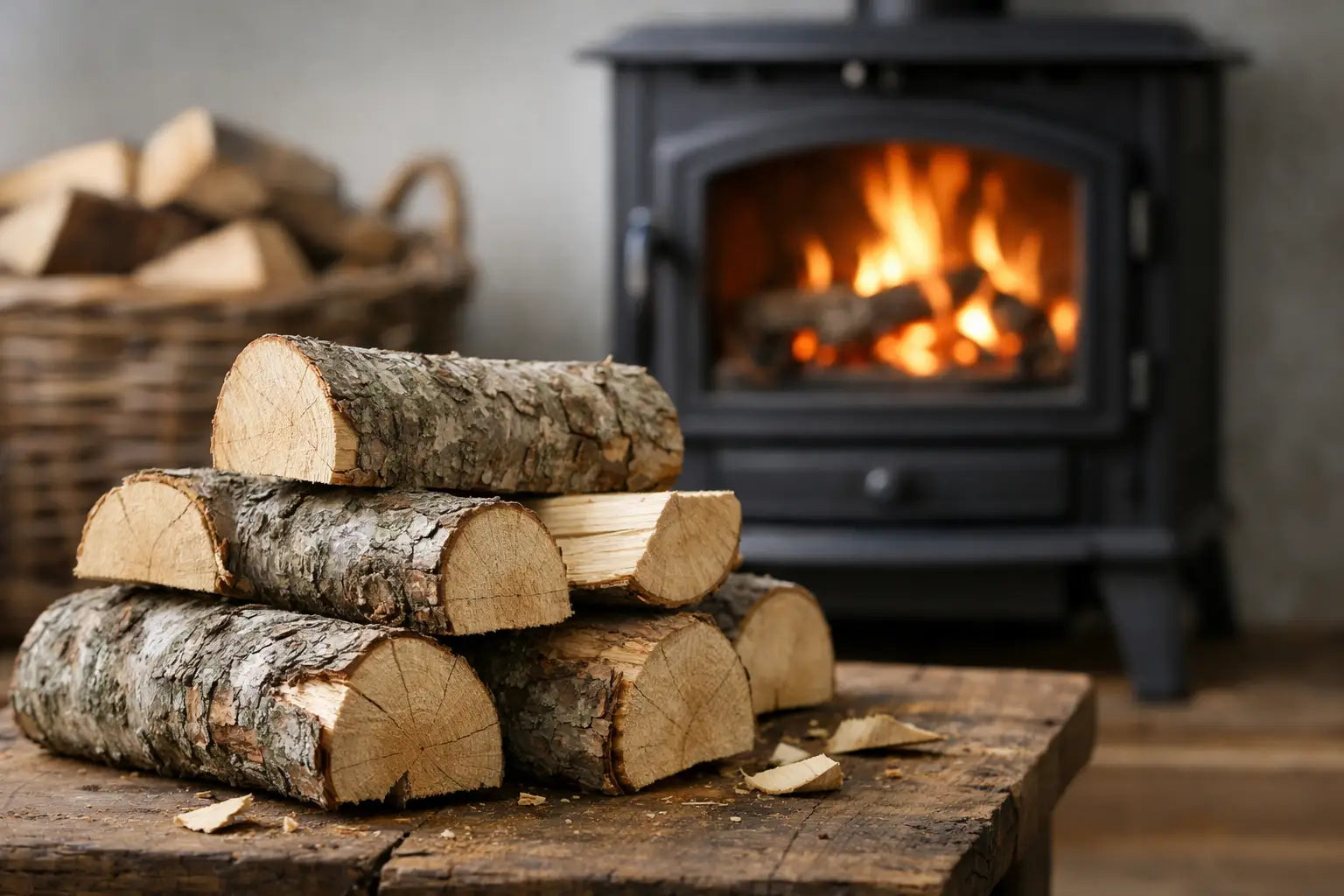
A stove can only perform as well as the fuel put into it. If you are tired of logs that hiss, blacken the glass or disappear before the room has warmed up, this hornbeam logs review for stoves will help you decide whether hornbeam is the right choice. It is one of the densest commonly available firewoods, valued for a long, hot and steady burn - provided it is properly dried and suited to the way you use your stove.
Hornbeam logs review for stoves: the short answer
Hornbeam is an excellent stove fuel for households that want sustained heat, a clean flame and fewer trips to the log basket. Its density gives it a notably long burn, making it particularly useful for evening heating and larger stoves with good air control. Kiln-dried hornbeam with a moisture content below 20% will light reliably when used with suitable kindling and burn far more efficiently than unseasoned wood.
The trade-off is that hornbeam is not usually the quickest wood to establish from a cold start. It is a hard, dense timber, so it benefits from a small, hot kindling fire or being mixed with an easier-lighting species such as birch. Once the firebox is properly hot, however, hornbeam comes into its own.
For regular stove users, that balance is often worthwhile. You use less fuel volume over an evening, receive dependable heat and avoid the damp, smoky performance associated with poorly stored or inadequately seasoned logs.
Why hornbeam performs so well in a wood-burning stove
The main reason is simple: density. Hornbeam is a very hard hardwood with a close grain. A log of a given size contains more wood fibre than a lighter species, and that fuel is released more slowly as it burns. The result is a high heat output over a longer period rather than a fast flash of flame followed by frequent refuelling.
This makes hornbeam well suited to modern closed stoves, where airflow can be controlled effectively. Once a good bed of embers has formed, adding one or two hornbeam logs can maintain a stable fire without overloading the appliance. It is also useful for open-plan rooms, older homes that lose heat quickly and households using their stove as a meaningful supplementary heat source.
A dense log is not automatically a better log if it is wet. Moisture is the deciding factor. Wet wood wastes energy boiling off water before it can heat your room. It creates more smoke, can leave deposits in the flue and makes the stove glass harder to keep clean. Ready to Burn certified logs are tested to confirm a moisture content of 20% or below, giving buyers a clear standard rather than relying on an uncertain claim that wood is simply “seasoned”.
Heat output and burn duration
Hornbeam has a reputation as one of the strongest-burning British and European hardwoods. In practical terms, users will notice that it produces a deep ember bed and holds heat well after the main flames have settled. This is useful when you want the stove to continue giving out warmth while you relax in the evening, rather than needing to add lighter logs every 30 to 45 minutes.
Actual burn time depends on several factors: stove size, the appliance’s air settings, log dimensions, draught conditions and how often the door is opened. A larger log in a well-controlled stove will last considerably longer than a small split log burnt with the air fully open. Hornbeam offers the potential for a long burn, but good stove operation still matters.
Flame, ash and cleanliness
Hornbeam produces a lively flame once established, although it is generally less immediately showy than birch. Its real strength is the consistent heat behind that flame. It also tends to create a firm, long-lasting charcoal bed, which makes subsequent refuelling easier.
Ash levels are usually manageable, particularly when burning dry, clean logs in an efficient stove. Ash is a normal by-product of wood fuel, but excessive ash, tar or a strong smoky smell often points to damp fuel or restricted combustion rather than a problem with the species itself. Empty the ash pan according to your stove manufacturer’s guidance and leave a thin bed of ash where recommended to help protect the firebox base.
Is hornbeam right for your stove and heating routine?
Hornbeam is a strong all-round option, but the best choice depends on how you light and run your appliance. If your priority is getting a fire going quickly after work, birch or alder can be convenient as a starter fuel. If you want the room to stay warm through a long winter evening, hornbeam has a clear advantage.
For smaller stoves, check the maximum log length specified by the manufacturer before ordering. Hornbeam is commonly supplied split into manageable stove lengths, but dimensions can vary between formats and suppliers. Avoid forcing oversized logs into the firebox or packing the stove too tightly. Air needs to circulate around the fuel for safe, efficient combustion.
Households with a multi-fuel stove should also check whether the appliance is approved for wood burning and use the correct grate position. Wood burns best on a bed of ash with air supplied mainly from above, while smokeless fuel and coal products are generally designed for air from beneath. The wrong setup can reduce efficiency whichever fuel you choose.
What to check before buying hornbeam logs
A good hornbeam log should arrive dry, clean and ready for use. The most useful buying details are not marketing phrases but measurable information: moisture standard, log length, pack volume and delivery arrangement. Comparing price alone can be misleading when one supplier is selling a small bag and another is selling a stacked crate or loose-volume equivalent.
Look for Ready to Burn certification when purchasing firewood in England, particularly if buying small quantities. It provides reassurance that the wood meets the required moisture threshold. For larger loads, ask how moisture has been managed and whether the logs are kiln-dried. Kiln-drying gives a more consistent result than relying only on outdoor seasoning, especially where wood has been stored through variable British weather.
Format matters too. Net bags and fire-box packs are practical for occasional users, smaller storage areas and carrying logs through the house. Crates are often better value for frequent stove users because they provide a larger, clearly defined volume and reduce the need for repeat orders. Candowe offers kiln-dried hornbeam in formats that make it easier to match your order to your storage space and expected usage.
Do not overlook storage after delivery. Keep logs off the ground, protected from rain and open at the sides where possible. A shed with airflow, a covered log store or a sheltered rack works well. Sealing dry logs in an unventilated space can allow moisture to build up again, undermining the benefit of buying quality fuel.
How to get the best from hornbeam logs
Start with dry kindling and a firelighter, building a small top-down fire with plenty of airflow. Let this establish a hot flame and warm the flue before adding a hornbeam log. Adding dense logs too early can smother a weak fire, particularly in a cold stove.
Once the hornbeam is burning cleanly, reduce the air controls gradually rather than shutting them down. A stove starved of oxygen will smoulder, producing smoke and soot instead of useful heat. The aim is visible, active flames and a stable ember bed, not an overnight-style burn that leaves the appliance and flue coated in deposits.
It can also be sensible to mix species. Birch gets the fire established quickly, while hornbeam extends the burn and maintains heat. This approach suits households that want both convenience and economy, and it avoids judging a dense hardwood unfairly by expecting it to behave like a lighter, fast-lighting log.
Hornbeam is not the cheapest option in every pack size, but its burn duration can make it strong value per evening of heating. Buy it dry, store it properly and give it a well-established fire to work with. Your stove should reward you with the sort of steady, clean warmth that makes lighting it feel worthwhile.