Skip to content
How to Burn Firewood Cleanly and Efficiently
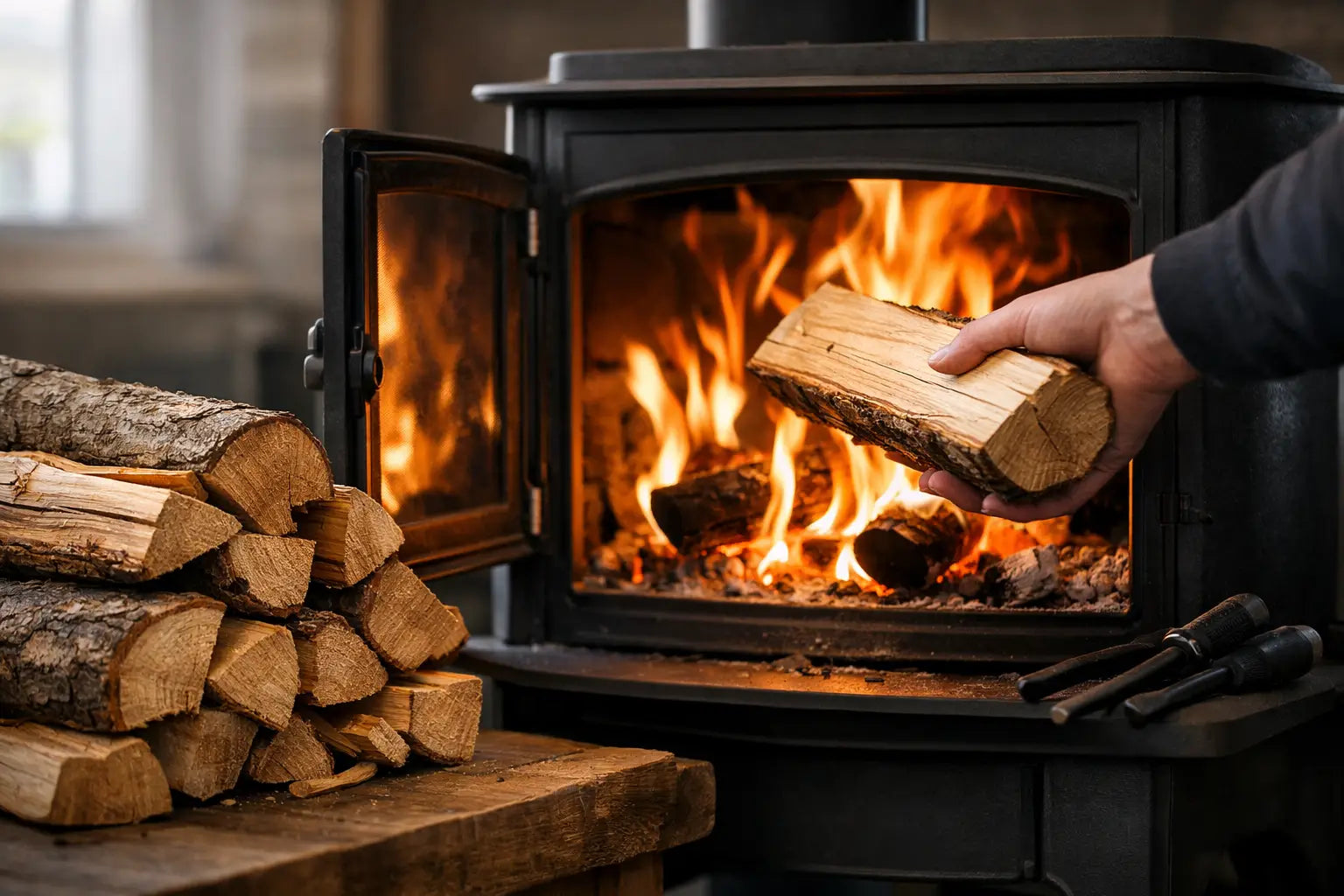
A stove that blackens its glass after every fire, gives off little heat or fills the room with smoke is rarely a problem with the stove alone. More often, the issue is wet fuel, restricted airflow or a fire built in the wrong order. Learning how to burn firewood properly makes each load go further, keeps your appliance cleaner and gives you more dependable warmth when it matters.
For UK households, the starting point is simple: use dry wood. Firewood with a moisture content of 20% or less is easier to light, produces more heat and creates less smoke than unseasoned logs. It also helps protect your flue from the excess deposits associated with burning damp fuel.
Start with dry, Ready to Burn firewood
Freshly cut wood can contain a surprising amount of water. Before it can release useful heat, a fire must first boil that moisture away. That wastes energy, lowers flame temperature and often leads to a sluggish, smoky burn.
Ready to Burn certified firewood has a moisture content below 20% and is suitable for use straight away in domestic wood-burning stoves, open fires and log burners. It removes the uncertainty of buying logs that have been stored outside or described as seasoned without a clear moisture measure.
Species still matter, but dryness comes first. Birch lights readily and gives a bright, responsive flame, making it useful for getting a fire established. Ash and hornbeam are dense hardwoods that generally provide a longer-lasting heat output. Oak burns steadily but benefits from a properly established, hot fire because it can be slower to catch. Alder is a practical choice for an attractive flame and consistent everyday burning.
A mix can work well. Use smaller, quicker-lighting logs to build heat, then add denser pieces once there is a bed of glowing embers. The best choice depends on your appliance, room size and whether you want a shorter evening fire or a longer, steadier burn.
How to burn firewood with the right fire build
The top-down method is a reliable way to light most stoves. Place two or three small logs across the base, leaving modest gaps for air. Lay kindling above them, then put a natural firelighter at the top. Light the firelighter and close the door according to your stove manufacturer's instructions.
As the kindling burns, it ignites the logs below while warming the flue gradually. This usually produces less initial smoke than lighting beneath a large stack of logs. It also avoids repeatedly opening the stove door to rearrange fuel while the fire is still weak.
Keep the air controls open during lighting and the early stage of the burn. A new fire needs oxygen and heat to establish a clean flame. Once the logs are burning confidently and the flue is warm, reduce the controls gradually. Closing them too soon can make the fire smoulder. Leaving them fully open for the entire burn may use fuel too quickly and make the stove run hotter than necessary.
Every stove behaves slightly differently. Follow the appliance manual, particularly where it specifies control settings, maximum fuel load or suitable log length. If your stove has been installed recently, ask the installer to show you how its primary and secondary air controls work in practice.
Refuel little and often
A common mistake is overloading the firebox. Packed logs restrict airflow, which can cause incomplete combustion and a dirtier burn. Instead, add one or two logs at a time onto a hot ember bed. Open the air controls briefly after refuelling so the new wood catches quickly, then return them to the normal operating position once flames are established.
Avoid placing a large, cold log directly onto a fading fire and shutting down the air supply. This encourages smoke and can leave the log blackened rather than properly burned. Smaller logs are often more convenient for responsive heat, while larger kiln-dried logs can be useful when you need a longer burn. Use the size that suits your stove rather than forcing oversized pieces into the firebox.
A clean fire should show active flames for much of the burn cycle, not thick smoke spilling from the chimney. Flames do not need to roar constantly, but a stove operated at a low, starved setting is inefficient and increases soot and tar formation.
Use the right fuel for your appliance
Only burn fuels approved by your appliance manufacturer. Treated timber, painted wood, old furniture, MDF, plywood, pallets and household rubbish do not belong in a stove or open fire. They may release harmful fumes and can damage the appliance or flue.
For homes in Smoke Control Areas, you must also use an approved appliance or authorised fuel. Ready to Burn firewood supports cleaner domestic burning, but it does not override local requirements. Check your appliance rating and local council guidance before using a stove in a restricted area.
Wood briquettes can be an efficient complement to logs, particularly in appliances designed for them, but they are usually very dry and can burn intensely. Use them in sensible quantities and follow the product and appliance instructions. Coal, smokeless coal, pellets and anthracite are separate fuel types with their own appliance requirements. A wood burner should not automatically be treated as suitable for all solid fuels.
Store logs so they stay dry
Good firewood can lose its advantage if it is stored badly. Keep logs raised from the ground, protected from direct rain and exposed to airflow. A covered log store with open sides is usually better than a sealed shed, where moisture can become trapped.
Bring a small supply indoors a day or two before use if practical. This helps remove surface chill and keeps the fuel close at hand, but do not stack excessive quantities beside a stove. Maintain the clearance distances set out by the stove manufacturer and keep logs away from open flames and hot surfaces.
Bagged logs and firewood crates offer different benefits. Bags are easy to handle and suitable for topping up a household supply. Larger crates can provide better value for regular stove users, provided you have a dry, accessible place to store them. Compare products by volume as well as price, since log sizes, packing methods and bag dimensions can vary.
Maintain the stove and chimney
Even premium kiln-dried logs need a clean appliance to perform well. Empty ash when it begins to restrict airflow, but leave a shallow layer if your stove manual recommends it, as this can help retain heat around the ember bed. Only remove cold ash, place it in a metal container and keep it away from combustible materials.
Have the chimney or flue swept at an appropriate interval for your level of use. Regular sweeping improves draw, reduces the risk of chimney fires and gives a professional the chance to identify issues such as blockages, damaged liners or bird nests. If smoke enters the room, stop using the appliance until the cause has been checked.
Watch for the practical warning signs of poor combustion: persistent black stove glass, a strong smoky smell, unusually rapid soot build-up and logs that hiss or struggle to light. These often point to damp fuel, insufficient air or an overdue sweep.
Make each delivery work harder
Buying a suitable volume before the colder months reduces the risk of running short and relying on poor-quality emergency fuel. For occasional fires, compact fire-box packs or nets may be enough. Frequent stove users often benefit from a larger crate of kiln-dried logs, with kindling kept on hand for easy lighting.
Candowe supplies Ready to Burn kiln-dried firewood in a range of species and formats, helping households match fuel quantity to storage space, appliance use and budget. Clear volume information is particularly useful when comparing a convenient smaller pack with a bulk delivery.
The best fire is not the one that burns fastest. It is the one that lights without fuss, gives steady heat, uses dry fuel efficiently and leaves your stove ready for the next evening. Keep a dry supply, give the fire enough air and let the appliance do the job it was designed to do.