Skip to content
Is a Large Crate of Firewood Worth Buying?
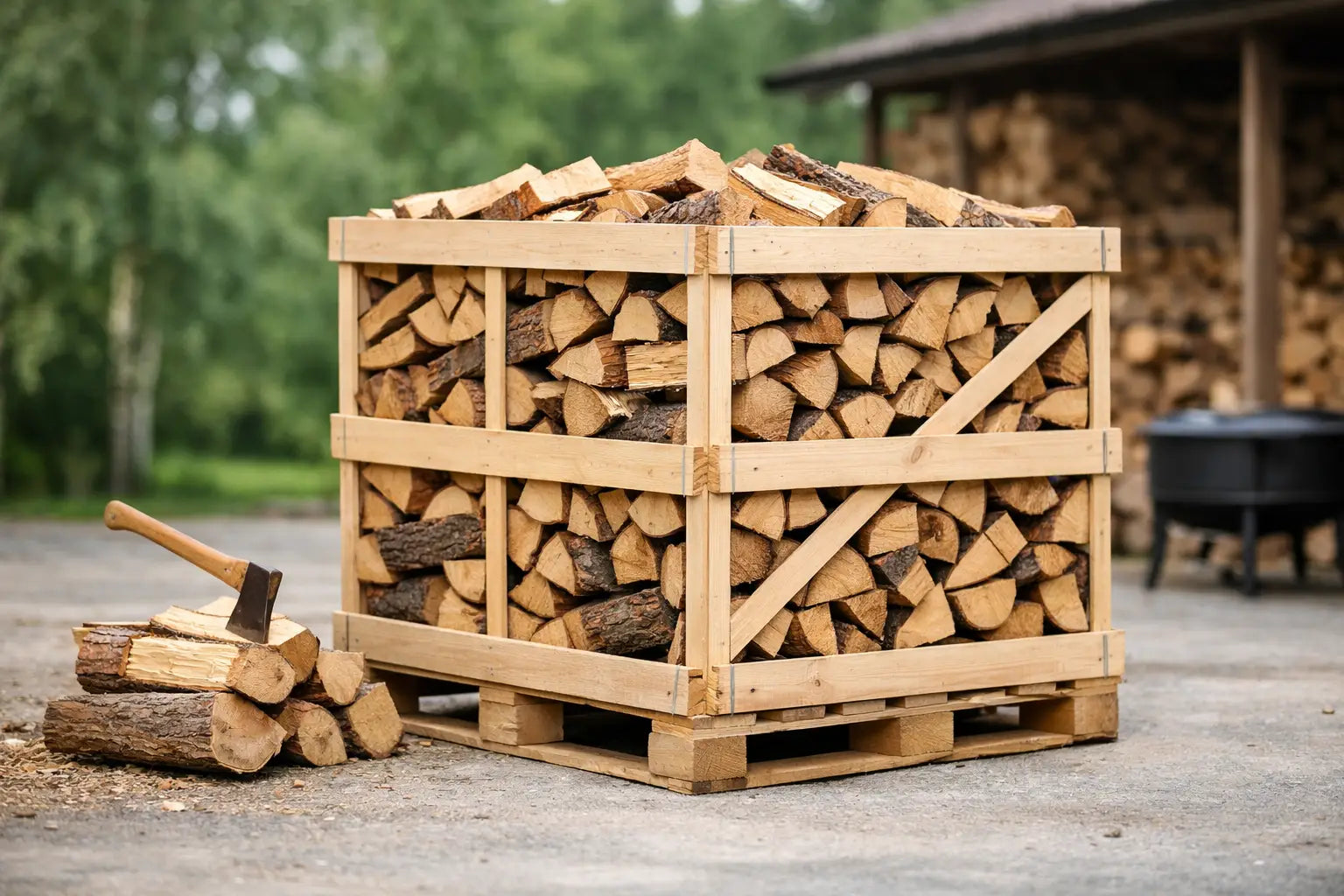
A fire that struggles to light, spits excess smoke or leaves blackened stove glass usually starts with the fuel, not the appliance. A large crate of firewood gives regular stove and fireplace users a dependable reserve of dry logs, delivered in a format that makes it easier to plan both cost and storage. The right crate can reduce last-minute fuel runs, provide better value than small bags and keep your home supplied through colder periods.
The value depends on more than the crate price. Log species, actual volume, moisture content, delivery access and the space available at home all affect whether bulk firewood is the sensible choice for you.
What do you get in a large crate of firewood?
A large crate is a palletised load of loose-stacked logs, normally supplied in a sturdy crate designed for transport and outdoor storage. It contains considerably more wood than nets or fire-box packs, making it suitable for households that use a log burner several times each week or rely on solid fuel as a meaningful part of their heating.
The most useful way to compare crates is by the stated loose volume, rather than by the crate’s outside dimensions alone. Logs have gaps between them, and stack density differs by species and log shape. A clear volume figure lets you compare like for like, calculate the cost per cubic metre and estimate how long a delivery is likely to last.
Crate capacity varies between suppliers, so check the product specification before ordering. It should set out the loose volume, typical log length, moisture standard and the wood species included. Transparent information matters because a crate that looks large in a photograph may not offer the same usable fuel quantity as another format.
Why kiln-dried logs make the difference
For domestic stoves and open fires, dry wood is the starting point for cleaner, more efficient heating. Ready to Burn certified firewood has a moisture content of below 20%, meaning it is suitable for immediate use in domestic appliances without the uncertainty of home seasoning.
Wet logs use a substantial amount of the fire’s energy simply to evaporate water. This often means slower lighting, more smoke, less heat reaching the room and greater soot build-up in the stove and flue. Properly kiln-dried logs are easier to light, burn more consistently and help you get more practical heat from each load.
A large crate is especially worthwhile when the wood arrives ready to burn. Buying a large quantity of unseasoned logs can seem economical, but it creates a longer-term storage project and offers no guarantee that the centre of each log is dry enough to burn well. If you want fuel for this heating season, kiln-dried wood removes that waiting period.
Choose the species for how you use your fire
There is no single best firewood for every household. Your appliance, how often you light it and the sort of heat you prefer should guide the choice.
Birch is a popular option for easy lighting and a bright, lively flame. It is useful for everyday fires and for getting a stove established quickly. Alder also lights readily and burns cleanly, making it a practical choice for frequent use.
Harder woods such as oak, hornbeam and ash are often chosen for their longer, steadier burn. They can be a good fit for households wanting sustained heat from an evening fire, although dense logs may benefit from a well-established bed of embers. Ash is valued for its reliable burning characteristics, while hornbeam offers high density and strong heat output.
Many households find a mixed approach works best: easier-lighting logs for starting and denser hardwood for maintaining the fire. It depends on your routine. If the stove is lit briefly after work, convenient ignition may be the priority. If it heats a room for several hours each day, longer-burning hardwood can offer better value over time.
How much firewood will you actually use?
Consumption changes sharply from one home to another. A stove used at weekends as supplementary heating needs far less fuel than one lit daily throughout autumn and winter. House insulation, room size, appliance efficiency and outside temperatures all play a part.
As a practical guide, think about your recent usage before moving to a crate. If you regularly get through several net bags each month, or find yourself repeatedly ordering smaller loads, bulk delivery may make financial and practical sense. It reduces packaging, cuts down on repeat ordering and gives you a usable reserve when cold weather arrives.
Avoid ordering solely on the basis that larger is always cheaper. A crate only represents good value if you can store it dry and use the logs while they remain in good condition. For occasional fires or homes with limited outdoor space, smaller bags or compact fire-box packs may be the better fit.
Storing a large crate of firewood properly
Kiln-dried logs need protection from rain and ground moisture once delivered. The crate can provide a useful starting structure, but it is not a substitute for sensible storage. Choose a firm, level area close enough for convenient access but away from a doorway, air brick or route that needs to stay clear.
Keep the wood raised from wet ground wherever possible, and cover the top with a waterproof cover while leaving the sides open to airflow. Fully wrapping a crate in plastic can trap moisture and condensation, which works against the purpose of buying dry logs. A log store, lean-to or covered area with open sides is ideal.
Before delivery day, check these practical points:
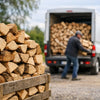
- Make sure the delivery vehicle has safe, reasonable access to your property.
- Measure gates, narrow paths and the intended storage area.
- Prepare level ground that can take the weight of a palletised crate.
- Keep a cover ready, particularly if rain is expected after delivery.
Compare price by volume, not by appearance
A large crate of firewood should be assessed as a fuel purchase, not simply as a stack of attractive logs. The clearest comparison is price per cubic metre alongside moisture content, species and delivery terms. A lower upfront price may not be the best saving if the wood is wet, the quantity is unclear or delivery costs are added later.
Also consider the hidden cost of poor-quality logs. Extra kindling, longer lighting times, reduced room heat and more frequent chimney maintenance can all follow from burning unsuitable wood. Certified dry logs cost more to process than unseasoned timber, but they are designed to perform from the first fire.
Candowe provides kiln-dried, Ready to Burn certified logs in clearly specified formats, with free delivery across most mainland UK postcodes. That combination is useful for buyers who want to compare volume honestly and order bulk fuel without arranging collection or storing wood to season.
Getting the best burn from your crate
Even excellent logs perform better with a sound lighting method. Use dry kindling and a natural firelighter, then build the fire with good air gaps rather than packing the firebox tightly. Once the flames are established, add logs gradually and adjust the appliance controls in line with the manufacturer’s guidance.
Burn only suitable, untreated firewood. Painted timber, waste wood, damp garden cuttings and household rubbish can release harmful pollutants and damage your appliance or flue. Have the chimney swept at the appropriate interval for your appliance and usage, and use a carbon monoxide alarm in the room where solid fuel is burned.
A well-chosen crate is not just a larger delivery. It is a way to make home heating more predictable: dry fuel on hand, less packaging to manage and fewer compromises when the temperature drops. Choose the volume you can store properly, select a species that suits your stove routine, and your next fire will be ready when you are.