Skip to content
Firewood for Sale: What UK Buyers Should Check
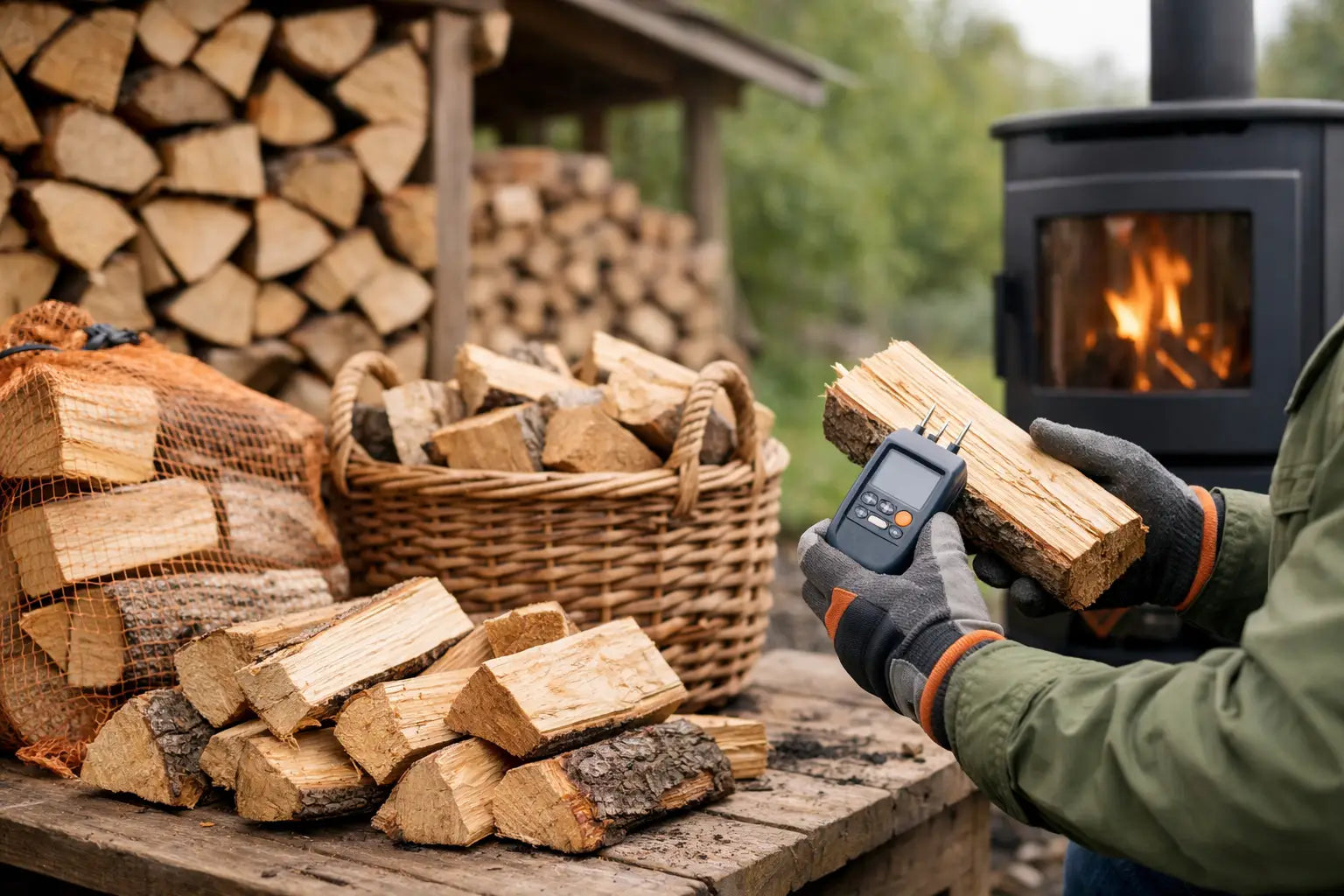
A low price on firewood for sale means very little if the logs arrive damp, undersized or in a volume that does not last through the coldest part of winter. For stove and fireplace owners, good fuel is fuel that lights without fuss, burns efficiently and gives a steady heat rather than filling the glass with soot. That starts with knowing what you are buying, not simply how many bags are on the pallet.
Start with dry, Ready to Burn firewood for sale
Moisture content is the first specification to check. Freshly cut wood holds a great deal of water, and even naturally seasoned logs can vary significantly depending on how they have been stored. Wet wood is harder to light, produces less useful heat and creates more smoke, soot and deposits in the flue.
For domestic use in England, small volumes of wood fuel sold for burning must meet the Ready to Burn standard, meaning a moisture content below 20%. Choosing certified kiln-dried logs removes the uncertainty. Kiln drying uses controlled heat and airflow to reduce moisture consistently, so the logs are ready for a stove or open fire when delivered rather than needing months of drying time at home.
This matters beyond convenience. Dry logs burn hotter and more cleanly, helping you get better value from every load. They also support responsible stove use, particularly in built-up areas and Smoke Control Areas where controlling visible smoke is essential. A moisture meter can be useful once fuel is at home, but clear certification and product information should come before it.
Choose the wood species for your appliance and routine
There is no single best firewood species for every household. The right choice depends on how you use your appliance, how much heat you need and whether you value a fast flame or a long, slow burn.
Birch is a popular all-round option. It lights readily, produces a bright flame and suits everyday stove use, especially when you want to warm a room quickly. Alder is also easy to light and burns cleanly, making it a practical choice for regular fires and smaller appliances.
Denser hardwoods such as oak, ash and hornbeam generally offer a longer burn and strong heat output. Oak is well suited to an established fire, though its density means good kindling and a hot base are helpful at the start. Ash is valued for reliable burning and straightforward handling. Hornbeam is among the densest firewoods available, making it a sensible option when lasting heat and fewer refuelling trips matter most.
A mixed hardwood load can be a practical compromise. Use quicker-lighting logs to build the fire, then add denser pieces once the stove is hot. The key is to buy properly dried fuel whichever species you choose. A damp hardwood log will not outperform a dry, well-prepared alternative simply because it is denser.
Compare volumes, not just bag prices
Firewood formats can make like-for-like comparison difficult. Nets, plastic bags, fire-box packs and crates all have a place, but they serve different buying needs. Looking only at the ticket price can lead to false savings when one product contains far less wood than another.
Smaller bags and fire-box packs are useful for occasional fires, weekend use, camping where permitted, or households with limited storage. They are easy to carry and keep tidy, but usually cost more per cubic metre than a larger order.
For frequent stove users, crates and palletised loads often provide better value. A hard crate also gives a clearer indication of the delivered quantity because its dimensions can be stated as a volume. Check whether the advertised measurement is a stacked volume or loose volume, and read the product specification for log length and approximate crate size. These details help you plan storage and confirm the fuel will fit your stove.
When comparing firewood for sale, ask three simple questions: how much usable wood is included, what is the price per cubic metre, and how long should that quantity last in your household? The answer will depend on insulation, room size, appliance efficiency and how often you light the fire. Still, transparent volumetric pricing makes it much easier to make a fair comparison between products.
Do not overlook log length and split size
A log can be excellent quality and still be inconvenient if it does not fit your appliance. Before ordering, measure the firebox and allow room for airflow around each piece. Most domestic stoves work well with logs around 25 cm long, but smaller stoves may need shorter cuts.
Split size matters too. Smaller splits catch more easily and are useful for starting and maintaining a lively fire. Larger pieces usually last longer, particularly in a stove with good air control. A varied load is often the most useful for a household because it gives you flexibility from lighting through to an overnight burn.
If your stove manufacturer gives guidance on fuel size or loading, follow it. Overfilling a stove or forcing oversized logs into the firebox can reduce combustion quality and may damage the appliance over time.
Order enough kindling to make dry logs perform properly
Even premium kiln-dried logs need a proper fire lay. Kindling is not an optional extra when you want clean, consistent lighting. Start with dry kindling and an approved firelighter, leaving enough space for air to circulate. Once the kindling is burning strongly, add one or two smaller logs before moving to larger pieces.
Avoid shutting the air supply down too early. A stove needs sufficient oxygen while the fuel is establishing. Turning it down only after the logs are burning well helps maintain a cleaner flame and reduces the tendency for blackened stove glass.
Briquettes can also complement logs, particularly when you want a compact, uniform fuel for steady heat. Wood pellets are designed for compatible pellet appliances, rather than conventional log burners. Smokeless coal and anthracite should only be used in appliances approved for those fuels. Choosing the correct fuel for your appliance is as important as choosing a good supplier.
Plan delivery and storage before you place the order
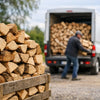
A larger fuel order is convenient, but only if it can be delivered safely and stored dry. Check access to your property, including narrow drives, steep slopes, loose gravel and steps. Pallet deliveries generally require a safe, reasonably level hard surface for the pallet truck. If access is limited, smaller formats may be easier to manage even if the cost per cubic metre is higher.
Once delivered, move logs into a purpose-built store, covered log rack or sheltered area with good airflow. Keep the wood off the ground to prevent moisture rising into the bottom layer, and cover the top while leaving the sides open. A fully sealed shed or plastic cover can trap condensation and undo some of the benefit of buying dry fuel.
Store only a manageable amount indoors. A basket or log holder beside the stove is convenient for a day or two of use, but the main supply is better kept outside in a dry, ventilated position. This also reduces mess, insects and the risk of bringing excess debris into the home.
Buy from a supplier that makes the details clear
Dependable fuel supply is about more than the logs themselves. Look for straightforward product descriptions that show species, moisture standard, format, dimensions and volume. Delivery information should be clear, including expected timescales and postcode coverage. For regular users, being able to choose from crates, bags and larger palletised formats makes it easier to match each order to the season and available storage.
Sustainable sourcing should also be part of the decision. Wood fuel is a renewable heating option when it comes from responsibly managed sources and is burned efficiently in a suitable appliance. Buying certified dry logs helps reduce wasted energy, while choosing the right order size can cut down on frequent deliveries and unnecessary packaging.
Candowe offers Ready to Burn kiln-dried logs in practical formats, alongside kindling, briquettes, pellets and solid fuels, with clear product information to help households and trade buyers order with confidence.
A good fire begins well before the match is struck. Choose dry fuel, check the true volume, make sure the logs fit your appliance and give your delivery a dry place to go. Those few checks turn a fuel order into dependable warmth when you need it.