Skip to content
How a Firewood Drying Kiln Produces Better Logs
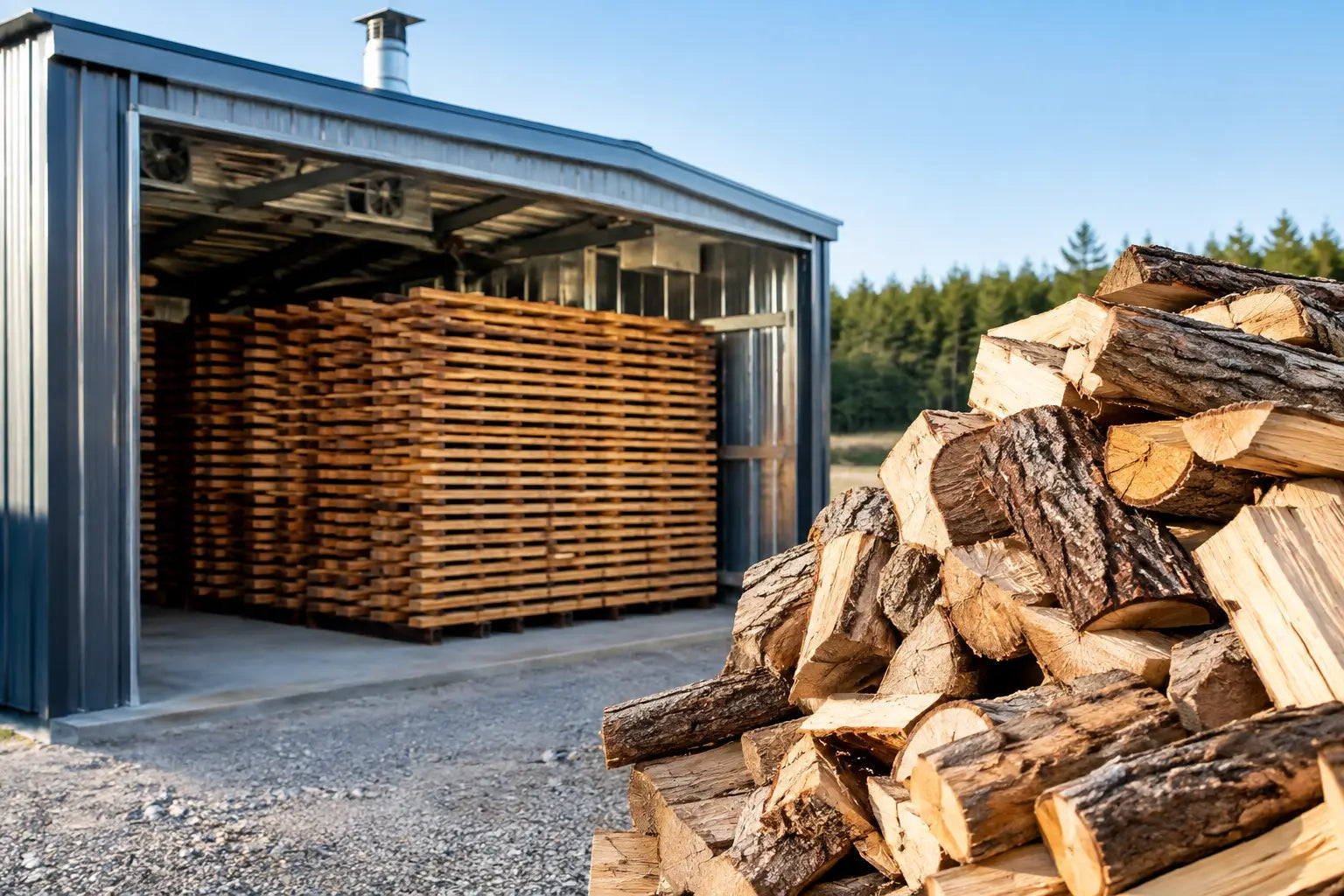
A firewood drying kiln is not simply a quicker alternative to leaving logs outside for a season. Properly controlled kiln drying removes excess water from the timber so the logs arrive ready to light, burn efficiently and produce dependable heat in a stove or fireplace. For households that do not have the space, time or certainty to season their own wood, that difference is practical from the first fire.
Freshly cut wood can contain a large amount of natural moisture. Much of the energy from a fire is then spent boiling that water away rather than warming your room. Kiln-dried firewood is processed to reduce moisture content to below 20%, giving you a fuel that lights more readily, burns more cleanly and is easier to manage.
What does a firewood drying kiln do?
A firewood drying kiln uses controlled heat and airflow to draw moisture from split logs. The wood is stacked so air can move around it, then dried under monitored conditions until it reaches the required moisture level. The aim is consistency: not just dry surfaces, but logs that are dry enough throughout to perform well when burned.
This matters because firewood dries from the outside in. A log left in a damp pile may look pale and cracked on its surface while still holding substantial moisture at its centre. A professionally managed drying process gives suppliers greater control over the final product than outdoor seasoning alone, particularly through a British autumn and winter when humidity and rain can slow natural drying considerably.
Kiln drying is also a useful quality-control step. Moisture can be measured before logs are packed, helping ensure that the fuel sold as kiln dried meets its stated standard. For smaller retail volumes of wood fuel in England, Ready to Burn requirements apply, so choosing certified logs gives customers a clear assurance that the moisture content is below 20%.
Why dry logs make a noticeable difference
The most immediate benefit is usable heat. Wet wood hisses and steams because the fire must first drive off its water content. This lowers flame temperature and can leave the room feeling underheated even when you have added plenty of fuel. Drier logs burn more efficiently, so more of the wood's energy is available for heating.
A hotter, cleaner burn also helps reduce visible smoke and soot. No wood fuel is entirely maintenance-free, and every appliance needs to be used correctly, but burning suitable dry logs supports cleaner combustion than burning damp, unseasoned timber. This is better for the glass on a stove, the firebox and the flue.
There is a value benefit too. Wet logs can feel heavy and look like a generous purchase, but weight from water does not create warmth. When comparing firewood, consider the stated moisture content and the actual volume supplied, rather than relying on a bag's weight alone. Transparent loose-volume information makes it far easier to compare crates, nets and larger pallet deliveries fairly.
Kiln dried versus seasoned firewood
Seasoned firewood is wood that has been split and left to dry naturally, usually under cover with good ventilation. Given enough time, suitable storage and favourable weather, it can become good fuel. The difficulty is that all three conditions need to be right.
Many households buy seasoned logs that have been stored in a yard, under a tarpaulin or in open bags. They may have had months to dry, but the final moisture level can still vary widely. Large rounds dry slowly, rain can re-wet exposed timber, and a poorly ventilated store traps damp air around the pile.
Kiln-dried logs cost more to produce because drying requires equipment, monitoring and energy. That is a real trade-off. However, for customers who want fuel delivered ready to use, the cost is often balanced by reliable performance, less wasted firewood and fewer frustrating smoky fires. It also removes the need to buy a season ahead and devote garden space to a large drying stack.
The source of the timber matters alongside the drying method. Responsibly sourced wood, processed and dried to a verified moisture standard, is the sensible choice for regular stove use. Kiln drying does not make unsuitable or contaminated wood safe to burn. Painted timber, treated offcuts, MDF and household waste should never go into a stove or fireplace.
Choosing the right kiln-dried species
Different species have different burning characteristics, even when they have been dried to the same moisture content. The best choice depends on how you use your appliance and whether you want fast heat, a longer burn or a mixture of both.
Hardwoods such as oak, ash and hornbeam are generally dense and are valued for a longer, steadier burn. They suit evening stove use, larger rooms and households looking to get more time from each refill. Birch lights readily and produces a bright, lively flame, making it particularly useful for getting a fire established. Alder is also easy to light and can be a practical choice for quicker heat.
There is no single best species for every fire. A blend can work well: use kindling and easy-lighting logs to build a hot base, then add denser hardwood logs once the stove is up to temperature. The key point is that each log should be genuinely dry. A dry alder log will normally be more useful than a damp oak log, despite oak's reputation as a premium firewood.
How to check that logs are ready to burn
A moisture meter is the most reliable home check. Split a representative log and test the freshly exposed centre, rather than pressing the pins into the outer bark. Surface readings can be misleading, especially after logs have been stored in a dry room or shed.
There are visual clues, but they are only clues. Dry logs tend to be lighter than freshly cut timber, may show end grain cracks and make a clearer sound when knocked together. None of these signs replaces a measured moisture reading or the reassurance of Ready to Burn certification.
Be wary of terms such as “air dried” or “seasoned” when no moisture figure is given. They describe a process, not necessarily the final result. Reliable suppliers should clearly state the fuel type, format and moisture standard, so you know what is arriving at your door.
Store kiln-dried firewood properly after delivery
Even the best kiln-dried logs can lose their advantage if they are left exposed to rain. Storage is straightforward: keep the wood raised off the ground, covered on top and open at the sides. A purpose-built log store, a ventilated shed or a sheltered rack against a wall can all work well.
Avoid wrapping the whole stack in plastic or packing it tightly into a sealed area. Wood needs airflow to stay in good condition. If you buy nets or fire-box packs for convenience, bring a small amount indoors before use but keep the main supply in a dry, ventilated place. Storing a large volume beside the stove is unnecessary and can create a safety risk.
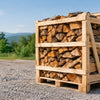
For bulk buyers, plan the delivery area before ordering. A hard crate or palletised load needs a stable, accessible position and enough room for the delivery to be made safely. Measuring your log store in advance also helps you choose the most cost-effective format instead of repeatedly buying small bags at a higher price per cubic metre.
Getting the best burn from kiln-dried logs
Start with a clean appliance, open the air controls as recommended by its manufacturer and use dry kindling with smaller logs to establish a strong flame. Adding large hardwood logs too early can slow the fire before the flue and firebox are hot enough. Once the fire is established, add logs without overfilling the stove and adjust the airflow to maintain a bright, controlled burn.
Do not close air controls down excessively in an effort to make wood last longer. Starving a fire of oxygen encourages incomplete combustion, more deposits and less useful heat. A smaller, cleaner fire using dry logs is generally a better approach than a smouldering stove full of damp fuel.
A firewood drying kiln gives the process its consistency, but good results continue at home through sensible storage and correct stove operation. Choosing certified, below-20% moisture logs means less time wrestling with reluctant fires and more confidence that each delivery is ready for the colder evenings ahead.