Skip to content
Winter Firewood for a Warmer, Cleaner Home
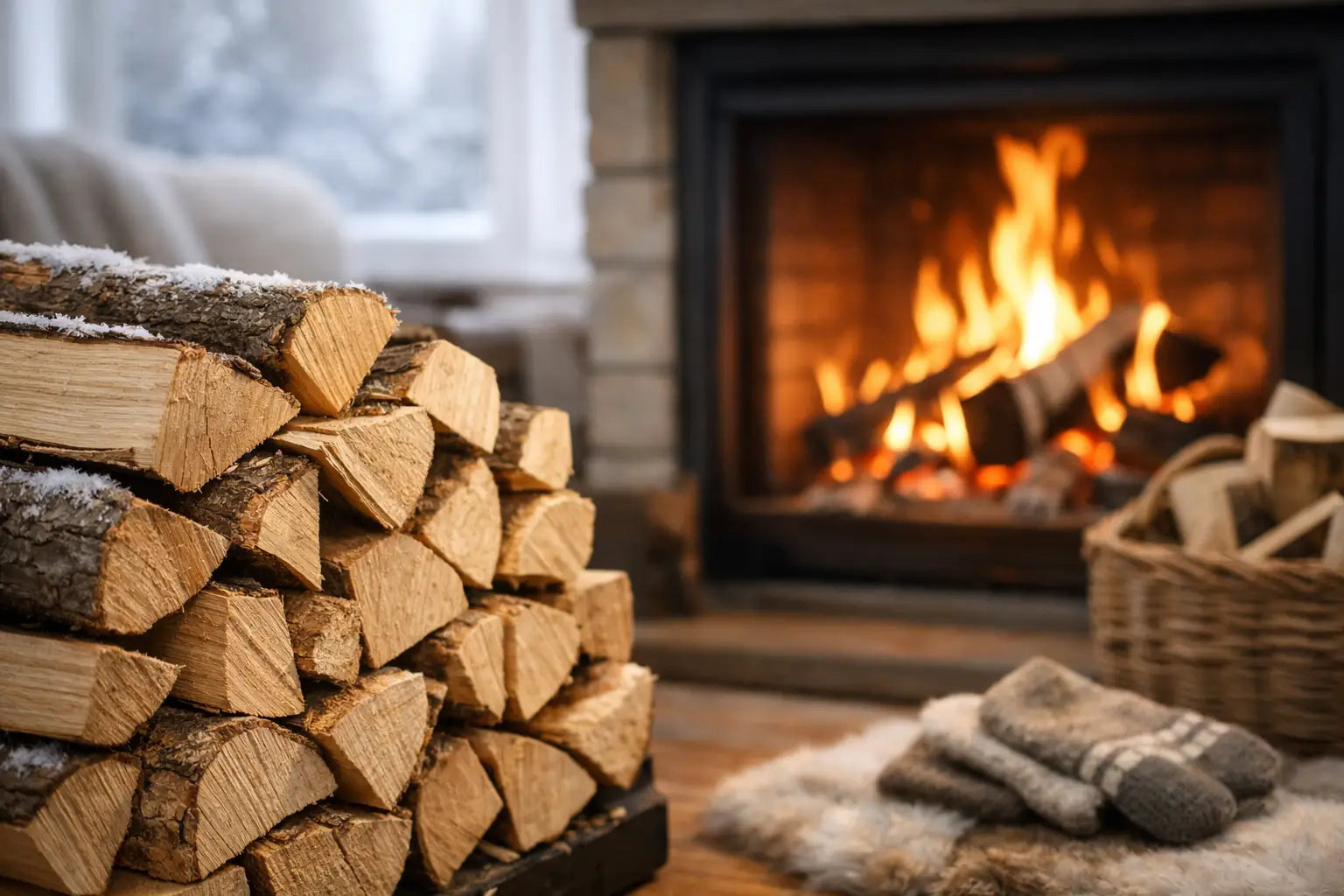
A fire that hisses, struggles to catch and leaves dark deposits on the stove glass is usually not a stove problem. It is a fuel problem. The right winter firewood should arrive dry, light reliably and provide steady heat without filling your home with excess smoke or creating unnecessary mess around the hearth.
For households relying on a log burner, open fire or multi-fuel stove through the colder months, buying fuel is not simply a matter of choosing the cheapest bag. Wood species, moisture content, log size, storage and order volume all affect the heat you get from every load. Making the right choices before the weather turns gives you a more dependable, cleaner-burning fire when you need it.
Why dry winter firewood makes the difference
Freshly cut wood contains a significant amount of water. When it is burned before it has dried properly, much of the fire's energy is spent evaporating that water rather than heating your room. The result is lower heat output, more smoke, blackened glass and a greater build-up of soot and tar in the flue.
Kiln-dried logs with a moisture content below 20% are designed to avoid these problems. They are easier to light, reach a good burning temperature sooner and burn with a brighter, more consistent flame. In practical terms, dry logs mean less time tending an unresponsive fire and less fuel wasted trying to achieve the same level of warmth.
For domestic use, Ready to Burn certification is a useful safeguard. It confirms that small-volume wood fuel meets the required moisture standard, so you know the logs are suitable for immediate use. This is particularly valuable in winter, when there is no realistic opportunity to season a damp delivery in a cold, wet garden.
Dry fuel also supports better stove care. No firewood can remove the need for regular chimney sweeping and appliance maintenance, but clean-burning logs reduce the conditions that encourage rapid deposits in the flue. Always follow your stove manufacturer's guidance and arrange sweeping at the appropriate intervals for your use.
Choosing winter firewood for your stove or fire
The best firewood depends partly on the appliance you use and the type of heat you prefer. Dense hardwoods generally burn for longer and produce strong, sustained heat. Lighter species tend to catch more quickly and can be useful when building the fire or when you want responsive warmth without a long burn cycle.
Birch, alder and ash for easy lighting
Birch is a popular choice for its attractive flame and dependable performance. It lights readily when dry and produces a lively fire, making it well suited to evening use in stoves and fireplaces. Its bark can be naturally useful when lighting, although kindling and proper firelighters remain the most reliable way to start a fire.
Alder is another practical, easy-burning option. It establishes a flame quickly and provides pleasant, efficient heat. It can suit households that use their stove regularly but do not always need the longest possible burn from every log.
Ash has long been valued as a versatile all-round firewood. Properly kiln-dried ash lights well, burns cleanly and provides reliable heat. It is often a sensible choice for those who want one species that performs consistently across everyday stove use.
Oak and hornbeam for longer-lasting heat
Oak is dense and slow-burning, which makes it a strong option for maintaining heat over a longer period. It is best used once a good bed of embers is established, as dense logs can take a little longer to get going than lighter wood.
Hornbeam is also very dense and offers excellent heat output with a long burn. For homes with efficient wood burners, it can be a particularly good choice during the coldest spells, when you want fewer refills and steady warmth. The trade-off is that dense hardwoods benefit from a well-established fire and good airflow at the start.
Many households find that a mix works best. Faster-lighting birch, alder or ash can help build a fire, while oak or hornbeam can maintain it. This approach lets you match the fuel to the time of day and the weather rather than treating every log as interchangeable.
Buy the right amount, not just the lowest price
Firewood value is easier to judge by volume and usable heat than by the number of bags in a photograph. Bag sizes vary considerably, and a low headline price can be misleading if the quantity is small or the logs are not genuinely dry. Check the stated loose volume, dimensions or price per cubic metre before comparing options.
Smaller net bags and fire-box packs are useful for topping up a household supply, taking on holiday, or storing neatly where space is limited. They are also convenient if you are trying a new species for the first time. However, frequent small orders can cost more per unit of wood than buying a larger quantity.
Hard crates and palletised options are usually better suited to regular stove users, rural homes and customers with suitable storage space. A larger delivery reduces the risk of running short during a cold snap and can offer clearer value when calculated by volume. Before ordering, consider access for the delivery vehicle, where the fuel will be placed, and whether you can keep the load protected from rain.
Your usage will vary with insulation, room size, appliance efficiency and how often the stove is lit. A well-insulated home using a modern stove for a few evenings each week will consume far less than a household using wood as a principal source of heat. If you are unsure, start by tracking how quickly you use a few bags or a crate over several weeks. That gives you a far more useful guide for your next winter order than guesswork.
Store winter firewood so it stays ready to burn
Kiln-dried logs are delivered ready to use, but poor storage can quickly undo that benefit. The aim is to keep rain off the wood while allowing air to move around it. A covered log store, shed with ventilation or sheltered outdoor rack is ideal.
Keep logs raised off bare ground using a pallet, rack or solid base. This helps prevent moisture from being drawn up from below and makes the stack easier to keep tidy. Position the store where it is accessible in poor weather, but do not block air vents or keep large quantities immediately beside the stove.
Avoid wrapping a full wood stack in an airtight tarpaulin. While it may stop rain, it can trap condensation and restrict airflow. Cover the top and leave the sides open where possible. Bring a small amount indoors for the next day or two, rather than storing a whole season's supply in the living area.
Get more heat from every fire
Good lighting technique matters as much as good fuel. Start with clean kindling and dry firelighters, then add smaller logs before moving to larger pieces. Keep the stove air controls open initially so the fire can establish quickly. Once there is a bright flame and a bed of embers, adjust the controls according to your appliance instructions.
Do not overload the firebox or close the air supply too early. A fire that smoulders may appear to last longer, but it produces less useful heat and more smoke. Burn seasoned, certified wood at a healthy temperature instead of trying to make damp or oversized logs last.
For multi-fuel appliances, briquettes, smokeless coal, anthracite and wood pellets may also have a place depending on the appliance and your heating routine. Check what your stove is approved to burn before changing fuel type. Wood-burning stoves, pellet appliances and open fires each have different requirements.
Plan ahead before the first cold spell
The most convenient time to arrange a fuel delivery is before your existing store is nearly empty. You have more time to choose the right format, prepare dry storage and avoid buying whatever is available locally during a sudden cold spell. Candowe supplies Ready to Burn kiln-dried logs in practical bag, box, crate and pallet formats, with clear product information to help you compare quantities.
A well-stocked log store is not about buying more than you need. It is about having dry, suitable fuel ready for the evenings when the temperature drops, the rain sets in and you want the stove to work exactly as it should.