Skip to content
Cheapest Kiln Dried Logs Without False Economy
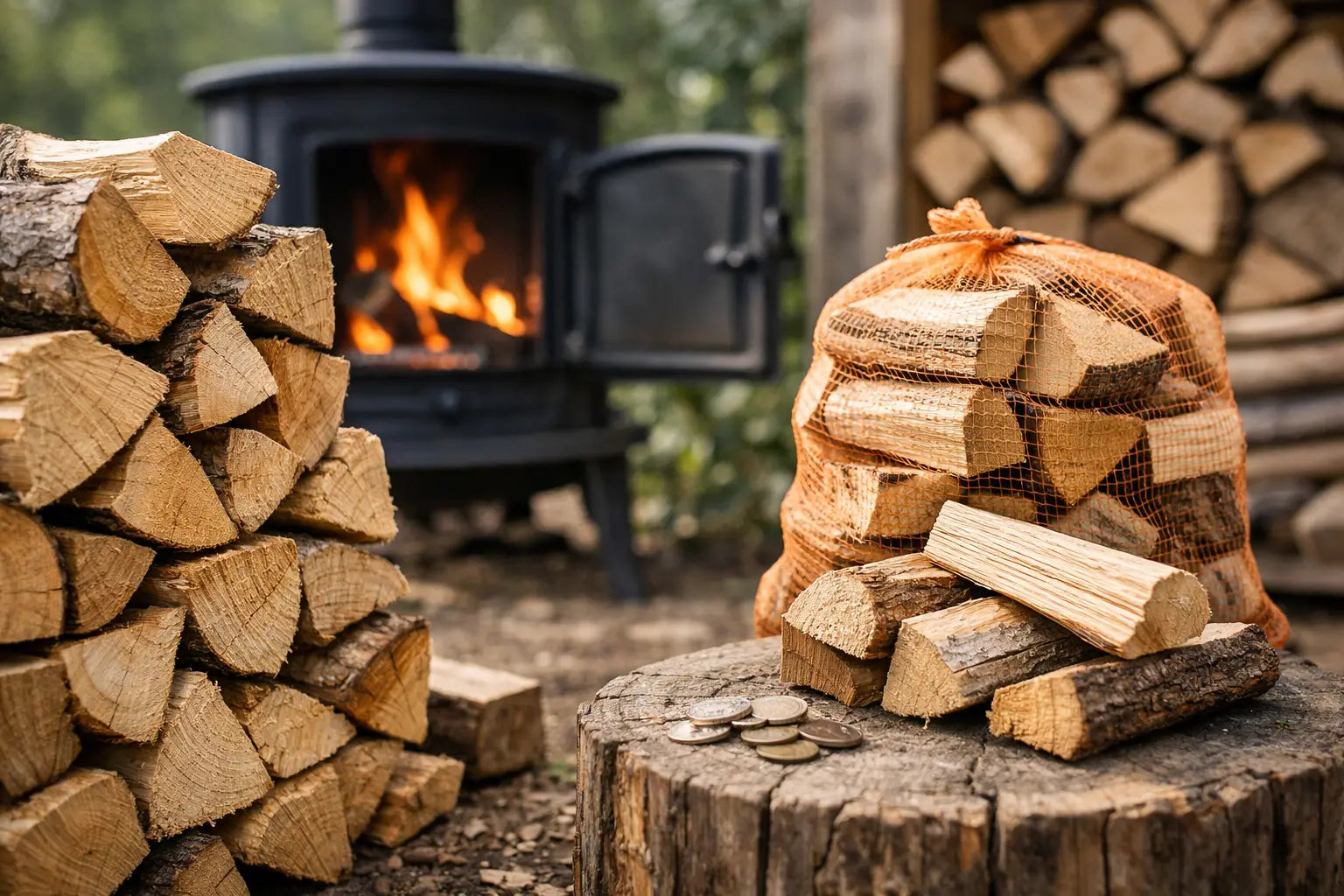
If you are searching for the cheapest kiln dried logs, the lowest price on the page is only half the story. Firewood that looks cheap can burn quickly, arrive in a smaller-than-expected quantity, or carry hidden delivery costs that wipe out any saving. For most households, real value comes from dry logs that burn cleanly, last well and arrive ready to use.
That matters even more when you rely on a stove or fire as part of your regular heating. A poor-value load does not just cost more in the long run. It also creates more ash, more frustration and less heat when you need it most.
What cheapest kiln dried logs really means
Cheap and good value are not always the same thing. The cheapest kiln dried logs in pure price terms might be a small bag with a low headline cost. But if that bag contains lightweight logs, mixed sizes or lower-density wood, you may end up using more fuel to get the same room temperature.
A better way to judge price is by usable heat, moisture content and actual volume. Kiln-dried logs with moisture below 20% are ready to burn straight away. They light more easily, produce a steadier flame and waste less energy evaporating water. That gives you more useful heat from every basket of logs.
For stove owners, this is not a technical detail. Wet or borderline wood can blacken glass faster, leave more residue in the appliance and make the whole fire less responsive. Paying slightly more for properly dried logs often works out cheaper over the season.
Why kiln-dried logs can save money over time
Seasoned wood is often sold as a budget option, but the description can cover a wide range of moisture levels. One supplier's seasoned logs may be reasonably dry. Another's may still be too damp for efficient burning, especially after outdoor storage or winter weather.
Kiln-dried logs are more predictable. The drying process is controlled, and reputable suppliers state the moisture level clearly. That consistency is worth money because it reduces waste. You use fewer firelighters, spend less time coaxing a fire into life and get a cleaner, hotter burn from the start.
If you use a stove most evenings, the difference becomes obvious quite quickly. A cheaper load that burns fast and poorly can disappear sooner than expected, meaning you reorder earlier and spend more overall.
How to compare kiln-dried log prices properly
The simplest mistake is comparing unlike-for-like products. One retailer may show a low price for a net bag, while another shows a crate, bulk bag or fire-box. Unless you know the volume or approximate cubic metre equivalent, the cheaper option may only look cheaper.
Always check the format. Hard crates, net bags, plastic bags and boxed packs all suit different needs, but they are not directly comparable on price alone. A household with storage space often gets stronger value from larger formats, while smaller packs may suit occasional fireplace use or homes with limited room.
Species also affects value. Dense hardwoods such as oak, hornbeam and ash usually burn longer and provide lasting heat. Birch and alder tend to light quickly and burn very nicely, but burn characteristics differ. There is no single best choice for every home. If quick lighting matters, birch may suit you well. If you want a slower, longer burn, denser hardwoods can make better sense.
Then there is delivery. A low product price with a steep delivery charge is not a bargain. For many buyers, especially in rural areas, free delivery across most mainland UK postcodes can make a noticeable difference to the real landed cost.
The details that separate a bargain from a bad buy
When comparing the cheapest kiln dried logs, look beyond the headline price and focus on five practical details.
First, check moisture content. Below 20% is the benchmark for Ready to Burn use. If that figure is missing or vague, caution is sensible.
Second, check the stated volume, not just the packaging. A large-looking bag is not always a generous one.
Third, look at species or wood mix. Hardwood products can offer better burn time, but only if the price difference makes sense for your usage.
Fourth, check whether the logs are cut to a size that suits your stove. Oversized logs are awkward and can turn a good-value delivery into extra work.
Fifth, check the supplier's reliability. Consistent fulfilment, clear stock information and sensible delivery times matter, especially when you are topping up before a cold spell.
Bulk buying versus small packs
For regular stove users, bulk buying is usually where better value appears. Larger crates or palletised options often reduce the cost per cubic metre and cut down the frequency of reordering. That is especially useful if you heat a home in the countryside, use a log burner daily or buy for a small commercial setting such as a holiday let or workshop.
That said, bulk only saves money if you can store the logs properly. Kiln-dried firewood still needs a dry, ventilated space once delivered. If your storage is poor, smaller purchases may be the smarter option because they reduce the risk of the logs reabsorbing moisture.
There is also a convenience factor. Smaller boxed packs or bags are easier to handle and stack near the stove. They can suit households that want tidy, manageable quantities without moving a full crate. The cheapest option on paper is not always the easiest to live with.
Why Ready to Burn certification matters
If you want dependable performance, Ready to Burn certification is one of the clearest quality signals. It gives buyers confidence that the logs meet the recognised standard for moisture content and are suitable for immediate use.
This matters for both efficiency and appliance care. Dry, certified logs help maintain cleaner combustion, which supports better stove performance and can reduce soot and deposits compared with wetter fuel. It is a straightforward way to avoid guesswork.
For value-conscious buyers, certification also protects against disappointment. You are less likely to pay for wood that still needs drying time or burns below expectations.
Cheap logs can be expensive if they burn badly
A low-cost load that produces weak heat often leads to a familiar pattern. You add more logs sooner, use more kindling, and keep the air vents open longer to maintain flame. That increases fuel use and shortens the life of the load.
This is why transparent specifications matter. Buyers should be able to see what they are getting in terms of moisture, species, format and approximate volume. Clear pricing by volume is far more useful than attractive but vague product descriptions.
A dependable supplier makes this easier by presenting products in a way that helps you compare properly. Candowe's approach, with structured product formats, certified dry fuel and free delivery across most mainland UK postcodes, reflects what practical buyers actually need - clarity, consistency and value that holds up once the logs are on the fire.
How to find the best value for your home
Start with your usage. If you light the stove a few weekends a month, a smaller format may be perfectly sensible. If you burn daily through autumn and winter, look closely at bulk hardwood options and cost by volume rather than cost per pack.
Next, think about your appliance. Some stoves perform best with a certain log length and a steady supply of dense hardwood. Open fires may favour a different mix, especially if appearance and quick flame are part of the appeal.
Then consider your storage and delivery needs. Fast fulfilment within a few business days is useful, but only if you have somewhere dry to keep the order. Planning ahead often brings the best value because you can buy the right quantity rather than paying more for urgent top-ups in the coldest weeks.
Finally, ignore prices that seem unusually cheap unless the details stand up. Good kiln-dried logs involve processing, controlled drying, packing and transport. If the price looks far below the market, there is usually a reason.
The best buying decision is rarely the absolute lowest figure on screen. It is the one that gives you clean-burning, properly dried logs in a format that suits your stove, your storage and your budget. When you compare on that basis, the cheapest kiln dried logs are the ones that keep your home warm without wasting fuel, time or money.