Skip to content
Cheap Hardwood Logs That Offer Better Value
A low price on a load of firewood can be tempting, particularly when the weather turns cold and the log store is running low. But cheap hardwood logs only represent good value if they arrive dry, burn efficiently and provide the volume you expected. Logs that need further seasoning, contain excessive bark or have been sold in an unclear quantity often cost more in time, storage and supplementary fuel than a properly specified alternative.
For a wood-burning stove or open fire, the aim is not simply to buy the lowest-priced bag. It is to buy dependable fuel that produces useful heat, lights without difficulty and keeps your appliance cleaner. Knowing what to compare makes that decision far more straightforward.
What makes cheap hardwood logs good value?
Hardwood is often chosen because it is generally denser than softwood and can give a longer, steadier burn. Species such as ash, oak, hornbeam, birch and alder all have different burning characteristics, but the quality of drying matters more than the name on the log.
A wet hardwood log can look substantial and feel like a bargain, yet much of the fire's energy is used to evaporate its moisture before it can heat the room. This leads to slower lighting, more smoke, blackened stove glass and a greater build-up of deposits in the flue. Dry logs, by contrast, burn more cleanly and predictably.
For domestic use, look for wood with a moisture content below 20%. Ready to Burn certified firewood gives buyers a clear indication that the fuel meets the required moisture standard for small-volume sales in England. It removes the uncertainty of buying wood described simply as "seasoned", which can mean different things from one seller to another.
The best-value order therefore combines three things: dry fuel, a clearly stated volume and a price that accounts for delivery. A cheaper product that performs poorly is not economical once the full cost of heating is considered.
Compare volume before comparing price
Firewood is sold in several formats, including net bags, fire-box packs, plastic bags and large crates. Each has its place, but they should not be compared by price alone.
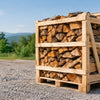
A small bag is practical for occasional fires, limited storage or topping up a log basket. It may be the right option for a household that only lights the stove at weekends. Larger crates are usually better suited to regular stove users because the price per cubic metre is often lower and the delivery is handled in one organised shipment.
Check whether the stated volume is a loose volume or a stacked volume. Loose logs naturally contain more air gaps, while neatly stacked logs occupy space more efficiently. Both measurements can be useful, provided the seller states which one is being used. Transparent volumetric information allows you to compare like for like rather than guessing from a product photograph.
Log length also matters. Before ordering, measure your stove's firebox and allow enough clearance for easy loading. A crate of excellent logs is of little use if the pieces are too long for the appliance. Most domestic stoves suit standard cut lengths, but checking this detail prevents avoidable inconvenience.
Choose the hardwood species for your fire
There is no single best hardwood for every household. The right choice depends on how you use the appliance, how quickly you want heat and whether you prefer a long, low burn or a lively flame.
Ash is a popular all-round option. It lights readily when dry, gives a reliable flame and works well for regular stove use. Birch lights quickly and produces an attractive flame, making it useful for getting a fire established, although it tends to burn faster than denser woods. Alder is also easy to light and can be a practical choice for everyday fires.
Oak and hornbeam are denser hardwoods that are often valued for a slower, longer-lasting burn. They are particularly useful when maintaining heat over an evening, but they should be properly kiln-dried for the best results. A mix of species can also be sensible: faster-lighting logs for the start of the fire and denser logs once the stove is up to temperature.
What matters most is that the logs have been dried consistently. Kiln-dried wood is prepared for immediate use, saving the space and uncertainty involved in storing green or partially seasoned logs for months.
Cheap hardwood logs should not mean damp or poor quality
The word "cheap" can cover very different products. Some suppliers reduce costs through efficient buying, direct delivery and larger order formats. Others may offer low headline prices because the wood is wet, poorly sized or supplied in a smaller volume than expected.
Before placing an order, look beyond the first price shown. Check the stated moisture content, species, log dimensions, quantity and whether delivery is included. If a product description does not explain these basics, it is difficult to judge its true value.
Free delivery can make a meaningful difference to the cost of a larger order, especially for rural and suburban households where collecting logs may involve several car journeys. For palletised firewood, delivery arrangements should be clear too. Consider where the crate will be placed and ensure there is suitable access for the delivery vehicle.
Packaging is another practical consideration. Crates provide a tidy bulk solution, while bagged logs are easier to move and store in smaller spaces. Neither is automatically better. The right format is the one that suits your storage area, rate of use and budget without leaving fuel exposed to rain.
Make dry logs work harder
Even premium kiln-dried firewood needs sensible storage once it reaches your home. Keep logs raised off the ground where possible, protected from driving rain and open to airflow at the sides. A covered log store, lean-to or ventilated shed is ideal. Avoid sealing wood in an airtight container, as trapped moisture can affect its condition.
When lighting a stove, use dry kindling and a small number of firelighters designed for solid-fuel appliances. Build the fire with enough space for air to circulate, then add larger logs once a strong flame is established. Overloading the firebox at the start can restrict airflow and create unnecessary smoke.
Your stove should be operated in line with the manufacturer's instructions. Running it too slowly for long periods can cause logs to smoulder rather than burn cleanly, even when the wood is dry. A bright, controlled flame is generally more efficient than a smoky, starved fire.
It also pays to keep the flue maintained and have it swept at suitable intervals. Dry wood helps reduce deposits, but no fuel removes the need for regular appliance care. This protects performance and gives greater reassurance throughout the heating season.
When buying in bulk makes sense
Bulk buying is usually most effective for households that use their stove several times a week through autumn and winter. It provides a steadier supply, reduces repeat ordering and can offer a better cost per unit of volume. It is also useful for small commercial settings with a reliable solid-fuel heating requirement.
However, bulk is only a saving if you have dry, accessible storage. If your available space holds just a few bags safely, ordering a large crate may create more problems than it solves. Estimate your typical weekly use, then buy enough to avoid rushed purchases without filling every available corner with logs.
Candowe offers kiln-dried hardwood in bagged and crate formats, allowing households to match the order size to their stove, storage space and expected fuel use. Clear product specifications and free delivery across most mainland UK postcodes make it easier to assess the full cost before ordering.
A well-priced load of hardwood should give you more than a brief burst of heat. Choose dry, correctly sized logs from a supplier that states the volume and moisture content clearly, store them properly, and your fire will be easier to light, cleaner to run and more dependable when you need it most.