Skip to content
Kindling for Log Burner: What Works Best?
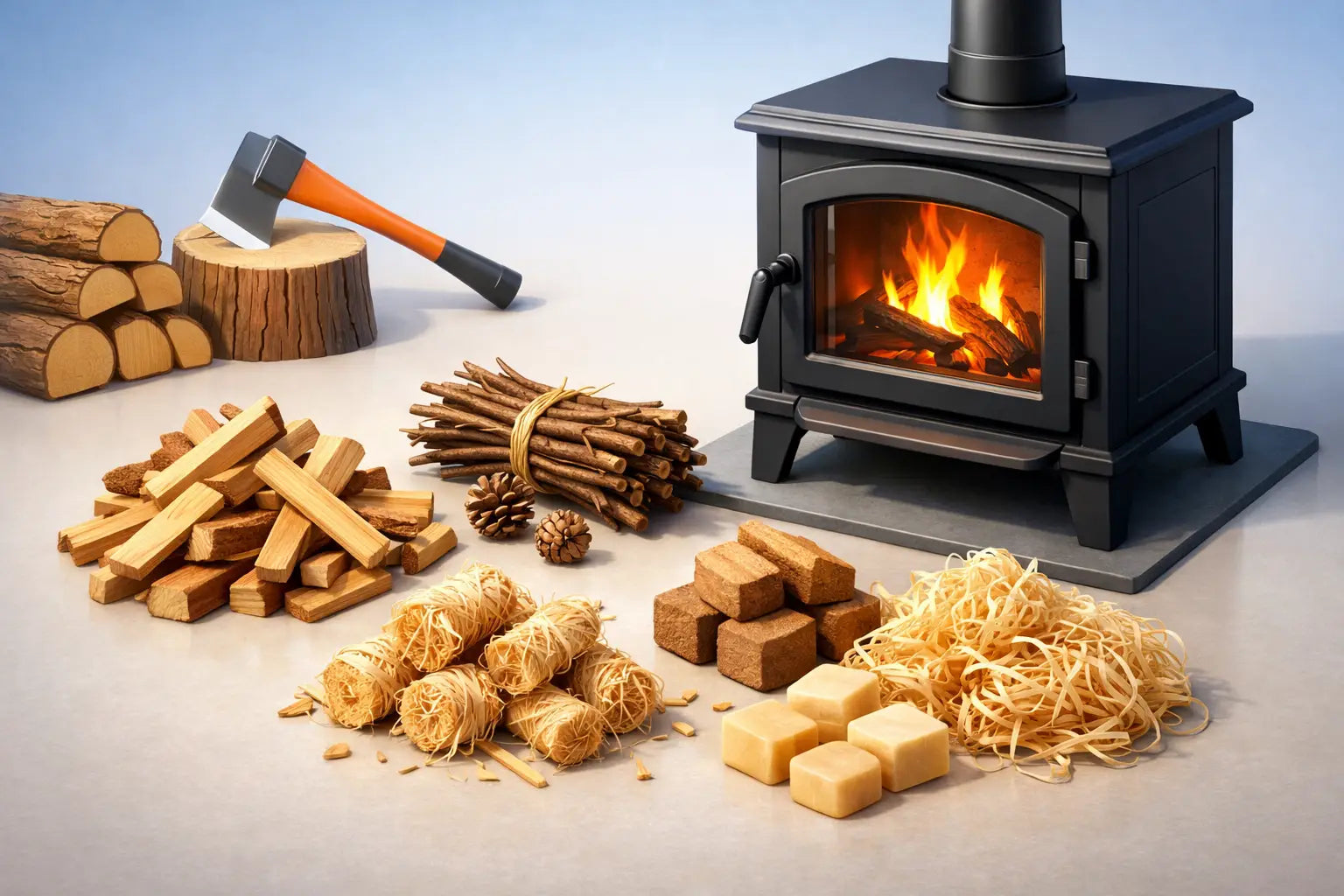
A log burner that refuses to catch properly usually comes down to the start of the fire, not the stove itself. The right kindling for log burner use makes the difference between a quick, clean flame and a smoky struggle that wastes time, fuel and patience. If your logs are good quality but your fire still feels unreliable, kindling is often the missing piece.
Why kindling matters more than most people think
Kindling has one job, but it is a crucial one. It creates the first hot, fast-burning flame that brings your firelighter to life and transfers enough heat to your main logs to get them burning properly. Without that step, even excellent kiln-dried firewood can be slow to ignite.
This matters for more than convenience. A fire that starts cleanly tends to burn more efficiently from the outset. You get less visible smoke, fewer failed relights and less temptation to overload the stove with paper or extra firelighters. In practical terms, better kindling helps your whole fuel supply perform as it should.
For households using their stove regularly, that consistency is valuable. You want fuel that is ready to burn, easy to store and dependable in day-to-day use, especially during colder spells when your heating routine needs to work without fuss.
What good kindling for log burner fires looks like
The best kindling is dry, thin enough to catch quickly and solid enough to produce a steady flame for several minutes. Softwood kindling is commonly used because it lights easily and burns fast, which makes it ideal for starting a fire. It is not there to provide long heat output. Its purpose is to bridge the gap between the firelighter and your logs.
Moisture content is the first thing to get right. If kindling is damp, it will hiss, smoulder and underperform. That slows the whole lighting process and can leave blackened pieces in the stove rather than a proper flame bed. As a rule, kindling should be dry enough to snap cleanly rather than bend.
Size also matters. Pieces that are too chunky behave more like small logs and can take too long to catch. Pieces that are too fine can burn through too fast without giving your larger logs enough time to ignite. A mix of slim sticks, rather than oversized offcuts, tends to give the best result.
Cleanliness counts too. Properly prepared kindling should be straightforward to handle and store, without excessive dust, bark debris or signs of damp. If you are buying fuel for convenience, the whole point is to avoid uncertainty.
Softwood or hardwood kindling
For most log burners, softwood kindling is the practical choice. It is resinous, catches quickly and gives you the lively initial flame needed to start the fire. Hardwood kindling can work, but it is generally denser and slower to ignite. That can be useful in some situations, though it is usually less forgiving if your stove is cold or your airflow is not quite right.
The trade-off is simple. Softwood kindling is better for easy lighting. Hardwood kindling may burn a little longer, but it is rarely the first choice when speed and reliability matter most. If you use kiln-dried hardwood logs in the stove itself, that is often the best combination - softwood kindling to start, hardwood logs to maintain heat.
How much kindling should you use?
A common mistake is using too little. People often place two or three sticks over a firelighter and expect the logs to take over almost immediately. In reality, your kindling needs to create a proper base of flame before the main fuel goes on.
For a standard household log burner, a small handful is usually right, arranged with enough space for air to move between the pieces. If you pack it too tightly, the fire struggles for oxygen. If you use far too much, you are not likely to damage anything, but you may burn through kindling unnecessarily and fill the firebox too quickly.
It also depends on your log size. Larger logs need a stronger start. If you are using chunky hardwood pieces, give the kindling stage a bit more time before expecting the fire to carry itself.
The best way to lay kindling in a stove
There are different methods, but the principle stays the same: give the flame air and keep the first fuel stage light and quick to ignite. Some users prefer a traditional bottom-up method, with a firelighter underneath, kindling above it and small logs on top. Others use a top-down lay, where the larger logs go at the bottom and kindling sits higher up.
Both can work well if your fuel is dry. For many households, the simplest method is still the most reliable. Place one or two firelighters in the centre, add kindling loosely above and around them, then position one or two small logs once the kindling has caught. Leave enough space for airflow and start with the stove vents suitably open.
The key is patience at the beginning. Let the kindling do its job before adding more fuel. If you close the airflow too early or place large logs on before there is enough flame, the fire can stall.
Why damp kindling causes poor stove performance
When people talk about poor burning logs, they are sometimes actually dealing with poor kindling. Damp kindling produces steam before flame, which lowers firebox temperature and delays ignition. That can lead to smoke staining on the glass, extra ash and a frustratingly slow start.
This is one reason fuel quality and storage matter just as much as stove technique. Ready to Burn logs may be below 20% moisture, but if your kindling has absorbed moisture in a shed, porch or open bag, your fire is already at a disadvantage.
If your fire takes repeated attempts to light, or seems to burn weakly for the first ten minutes, check the condition of the kindling before blaming the logs.
Storing kindling for log burner use
Good storage protects the quality you paid for. Kindling should be kept dry, covered and ventilated. Indoors is often easiest, provided it is away from direct damp sources. A utility area, garage shelf or dedicated fuel box can work well.
If you store kindling outside, keep it off the ground and protected from rain. A fully sealed plastic container is not always ideal if moisture is already present, because trapped damp can linger. Breathable storage in a dry location is generally a better option.
It also helps to store kindling in manageable amounts close to the stove. That keeps daily use tidy and means you are not opening larger packs more often than necessary. For regular stove users, convenience has a real value. If the fuel is easy to handle, you are more likely to use the right amount and keep your setup organised.
Should you make your own kindling?
You can, but it depends what you want from your fuel supply. Splitting your own offcuts or chopping down larger pieces may seem cost-effective, and for some households it works well. The drawback is inconsistency. Homemade kindling is often mixed in size, sometimes damp and not always convenient to prepare safely.
Bought kindling is usually the better option if you value speed, reliability and less mess. It arrives ready to use and gives you predictable results, especially when paired with properly dried logs. For many customers, that reliability is worth more than the small saving of making kindling from scrap wood.
You should also avoid using treated timber, painted wood or construction waste as kindling. These materials are unsuitable for domestic stoves and can release unpleasant fumes while leaving unwanted residues behind.
Pairing kindling with the right logs
Kindling only solves the first stage of the fire. To keep the stove burning cleanly, your main logs still need to be dry and appropriate for the appliance. Kiln-dried hardwoods such as ash, birch, hornbeam, alder and oak all have their place, but they perform best when the fire has been established properly.
Birch is often appreciated for easy ignition and a bright flame. Oak and hornbeam are denser and can provide longer-lasting heat, though they benefit from a strong start. Ash is a dependable all-round option. The point is not that one species suits every user, but that kindling and logs should work together as part of the same fuel setup.
That is where a dependable supplier makes life easier. When kindling and logs are both prepared to the right standard, there is less guesswork in everyday stove use.
When your kindling setup needs adjusting
If the stove lights but the fire repeatedly dies back, the issue may not be the amount of kindling alone. Airflow, ash build-up, flue draw and log size all play a part. Even the best kindling cannot compensate for closed vents or oversized fuel placed in too early.
Still, kindling is the easiest place to improve results quickly. Dry sticks, sensible spacing, enough volume to establish flame and proper storage will resolve a surprising number of lighting problems. For households that use their stove often, those small adjustments can make heating feel far more straightforward.
A clean, reliable fire starts with simple materials used properly. Choose kindling that is dry, consistent and easy to light, and the rest of your fuel has a much better chance to perform the way it should.