Skip to content
Firewood Near Me Without the Guesswork
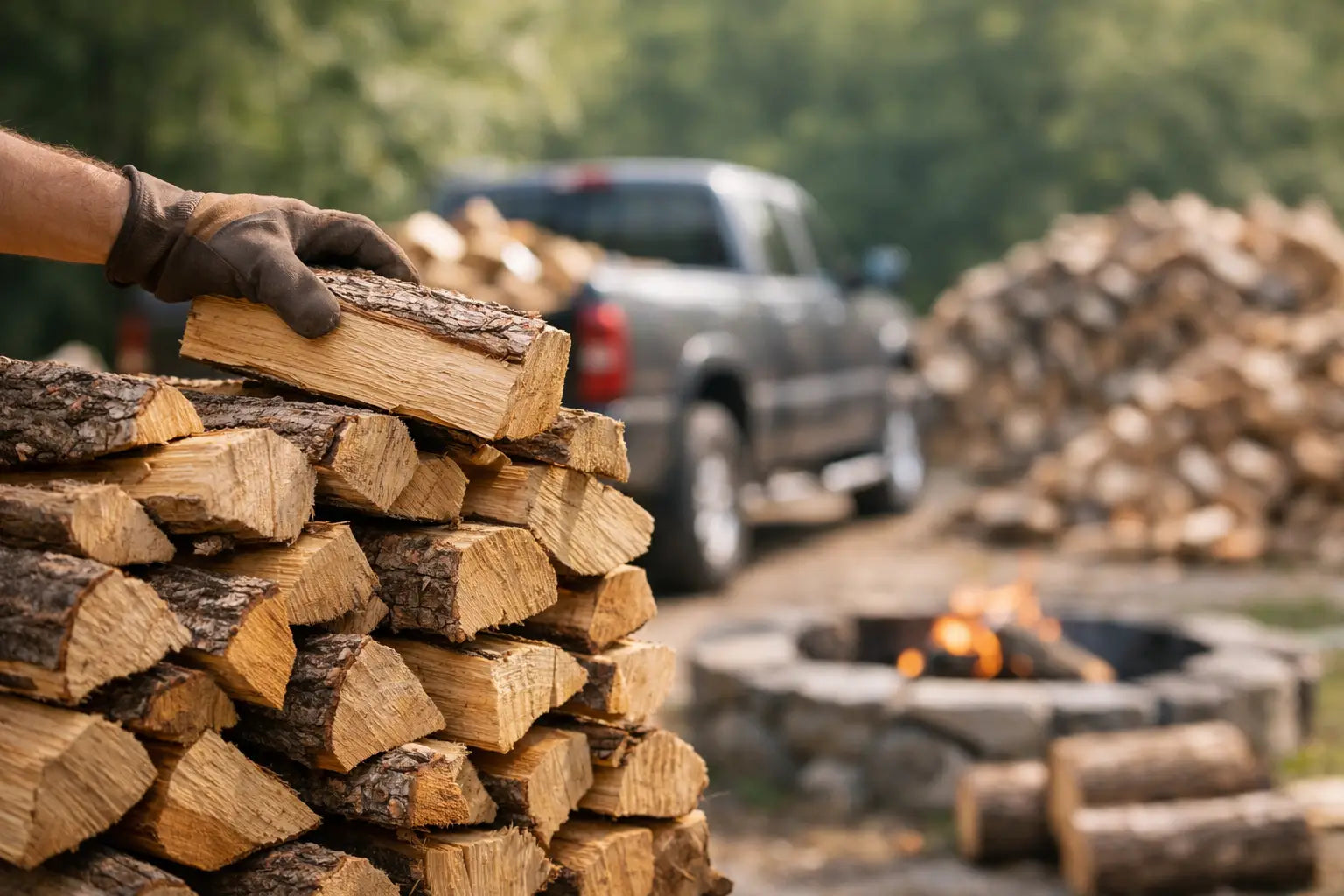
You usually search for firewood near me at the exact moment you do not want surprises. The stove is being used more often, the stack is running low, and the last thing you need is damp logs that hiss, smoke and disappear far too quickly. Finding the right supplier is less about distance alone and more about getting wood that arrives dry, burns cleanly and offers clear value.
That matters because firewood is not all the same. Two loads can look similar at first glance, yet perform very differently once they reach your stove or fireplace. If you are buying for a household, a holiday let, a workshop or a small commercial site, the real question is not simply who is local. It is who can supply consistent, ready-to-burn fuel without creating extra work for you.
What to look for when searching firewood near me
The first thing worth checking is moisture content. Properly kiln-dried logs should be below 20% moisture, which means they are ready to use on arrival and far less likely to waste heat boiling off water before the fire gets going. Wet or partly seasoned wood often seems cheaper at first, but you can end up burning more of it for less heat.
Clean burning performance matters just as much. Dry logs are easier to light, produce a steadier flame and help reduce excess smoke and residue. That is better for your appliance, better for day-to-day use and generally less frustrating if you rely on your stove regularly through colder months.
Certification is another useful signal. Ready to Burn certification gives buyers added reassurance that the fuel meets the moisture standard expected for immediate domestic use. It does not replace common sense, but it does reduce the guesswork that often comes with informal local buying.
Then there is consistency. Many people have had the experience of ordering one good batch and then receiving a weaker load the next time. Reliable suppliers remove that uncertainty by offering defined products, stated volumes and clear information on species, packaging and delivery.
Why local is not always the best measure
It is understandable to begin with proximity. If you type firewood near me into a search engine, you are probably hoping for convenience, speed and lower hassle. But local supply does not automatically mean better supply.
A nearby seller may offer collection only, limited stock or logs that still need further drying. Some operate seasonally, so availability becomes patchy just when demand peaks. Others sell by loose descriptions rather than measured volume, which makes it harder to compare one offer against another.
A dependable online supplier can often be the more practical option, particularly if they deliver nationwide, state moisture levels clearly and offer fuel in formats that suit different households. For many buyers across the UK, that is more useful than relying on whoever happens to be closest.
The better approach is to treat location as one factor rather than the deciding one. Delivery speed, product quality, moisture content, packaging and transparent pricing all deserve equal weight.
How to compare firewood properly
The easiest mistake is to compare only headline price. A lower figure can look attractive until you realise the logs are smaller than expected, not fully dry, or packed in a way that gives poor value per cubic metre.
It helps to look at the format first. Crates, net bags, plastic bags and compact fire-box packs all serve different needs. A crate can make sense if you burn through fuel steadily and want a larger stock delivered in one go. Nets and smaller bags can suit households with less storage space or those topping up between larger orders. Fire-box packs are useful when convenience matters most.
Species also affect performance. Birch is popular because it lights easily and burns well, making it a good all-round choice for many homes. Oak and hornbeam are denser hardwoods that can offer a longer burn, which may suit people wanting lasting heat. Ash remains a dependable option, while alder can be a practical choice where a quick, efficient burn is wanted. The right answer depends on your appliance, how often you use it and whether you value quick lighting or longer-lasting output more.
This is where clear product information makes a real difference. When a supplier shows bag size, weight, loose volume or volumetric pricing, you can judge value with much more confidence. Without that detail, you are often buying on assumptions.
Signs of good quality firewood
Good firewood tends to be boring in the best possible way. It arrives as described, lights without a struggle and burns with far less mess than poor-quality alternatives.
There are a few practical signs to look for. Kiln-dried logs should feel relatively light for their size because much of the moisture has already been removed. They often show splits at the ends and sound sharper when knocked together than wetter wood does. Once burning, they should produce a lively, steady flame rather than excessive sputtering.
Poor-quality logs usually reveal themselves quickly. They may be heavy, damp to the touch or unevenly cut. In use, they can blacken stove glass faster, create more smoke and leave you constantly adjusting the fire to keep it going. That is not just inconvenient. It can make heating feel more expensive and less reliable than it needs to be.
Convenience matters more than people admit
Most buyers are not trying to become firewood experts. They want the order process to be simple and the fuel to arrive ready for use. That is why stock reliability and delivery standards matter so much.
If you are managing household heating, you do not want to chase suppliers, wait around for uncertain delivery windows or discover the best-selling product has vanished from stock. You want to order with confidence, know what you are getting and have it delivered within a sensible timeframe.
This is one reason many UK buyers now prefer ordering online from structured suppliers rather than relying entirely on ad hoc local sources. A well-run service gives you a broader choice of hardwood species, sizes and pack formats, plus clearer delivery terms. For customers balancing cost, convenience and storage space, that removes a lot of friction.
Candowe is built around that practical need, with premium kiln-dried firewood, straightforward product specifications and free delivery across most mainland UK postcodes. For buyers who want dry fuel without the uncertainty, that clarity matters.
Storage still matters after delivery
Even the best logs can lose their advantage if they are stored badly. Kiln-dried firewood should be kept somewhere dry and ventilated, ideally off the ground and protected from direct rain. A garage, log store or covered outdoor area usually works well as long as air can still circulate.
Sealing logs into a damp, unventilated corner is a common mistake. Wood needs protection, but it also needs airflow. If you are buying in bulk, think about storage before ordering so that the product arrives to a space that keeps it in ready-to-burn condition.
The right packaging can help here. Some households prefer crate deliveries because they make handling and stacking easier. Others need smaller packs that can be moved and stored with less effort. There is no single best format for everyone. It depends on access, available space and how quickly you use fuel.
The cheapest option is not always the best value
When heating costs are under pressure, it is natural to shop carefully. But the cheapest logs on paper can be the most expensive to use if they burn poorly, create more residue or force you to order again sooner than expected.
Value comes from useful heat, low moisture, consistent sizing and dependable supply. It also comes from avoiding wasted time. If a supplier gives clear specifications, fair volumetric pricing and reliable delivery, you are in a better position to budget properly and buy the quantity that suits your usage.
That is especially true for customers ordering larger volumes. Trade and bulk buyers need repeatable quality, not one-off bargains that create problems later. A stable supply of dry, certified fuel is often the more cost-effective choice over a season.
Choosing with confidence
If you are comparing suppliers after searching firewood near me, the safest route is to focus on facts you can verify. Look for moisture content below 20%, Ready to Burn certification, clear species information, transparent pack sizes and delivery terms that fit how you actually buy fuel.
A good supplier should make the decision easier, not harder. You should not have to guess whether the wood is dry enough, whether the quantity is fair or whether the order will arrive when expected. When those basics are handled properly, your stove does what it is meant to do - deliver reliable heat without unnecessary fuss.
The best firewood purchase is rarely the one that shouts the loudest. It is the one that turns up dry, burns cleanly and lets you get on with heating your home properly.