EMAIL US
 WhatsApp
 FREE DELIVERY TO 95% OF UK POST CODES




Firewood Wood: How to Choose Logs That Burn Well

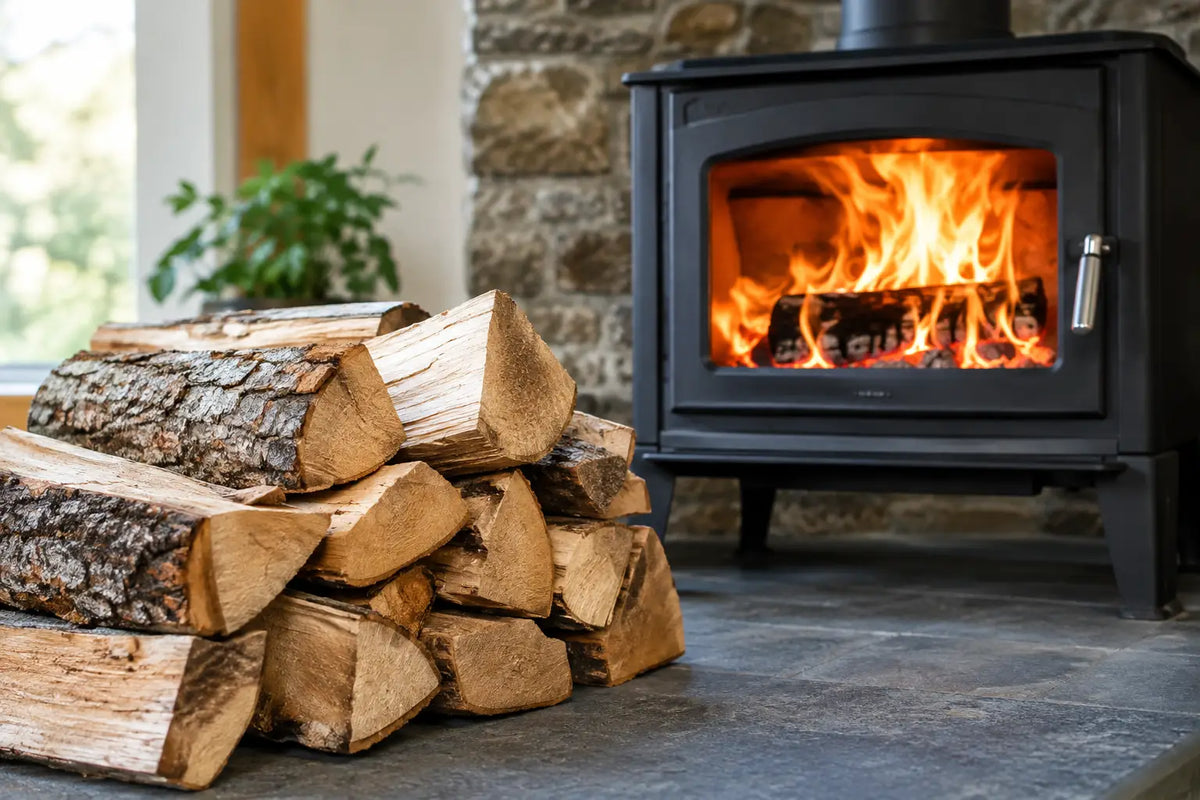
A log that looks dry on the outside can still be carrying enough moisture to hiss, smoke and leave your stove glass blackened. When buying firewood for a log burner, open fire or stove, the difference is not simply the species or the price per bag. It is the dryness, log size, source and format that determine how easily it lights, how much heat it gives and how often you need to refuel.
For most UK households, kiln-dried logs offer the simplest route to dependable heat. They arrive ready to burn, store neatly and remove the uncertainty that comes with unseasoned or poorly stored timber. The best choice still depends on your appliance, the space available for storage and whether you want quick warmth, a long burn or a balance of both.
What makes good firewood wood?
Good firewood should burn with a bright, steady flame, produce useful heat and create minimal smoke when used correctly. The key measure is moisture content. Wood with a moisture content below 20% is dry enough to burn efficiently in domestic appliances and is suitable for the Ready to Burn scheme.
Wet logs use much of their energy boiling off internal water before they can heat a room. This leads to a sluggish fire, excess smoke, darker glass and greater deposits in the flue. It can also mean you get through more logs for less warmth. A low moisture content is therefore not a minor specification. It is central to value, appliance performance and cleaner burning.
Kiln-dried firewood is dried in controlled conditions to achieve a consistently low moisture level. Seasoned logs can also burn well, but only if they have been split, stacked with airflow and protected from rain for long enough. In the UK climate, that process can take a year or more and is difficult to judge from appearance alone.
Ready to Burn certification
For logs sold in volumes under two cubic metres, Ready to Burn certification gives customers a clear level of reassurance. It confirms that the wood meets the required moisture standard of 20% or less. If you are purchasing bagged logs, fire-box packs or crates for immediate use, choosing certified fuel helps avoid the common problem of buying wood that is labelled as seasoned but is not genuinely dry.
Dry wood also supports better air quality. Modern stoves are designed to operate with dry fuel and sufficient airflow. Even an efficient stove cannot compensate for damp logs. Use dry, approved fuel alongside correct operation and regular chimney sweeping for the best results.
Which firewood species should you choose?
There is no single best log for every fire. Hardwood species are generally denser than softwoods, so they usually provide longer-lasting heat and a more sustained burn. Different hardwoods, however, behave differently once they are in the stove.
Ash is a dependable all-round choice. It lights readily, burns steadily and gives good heat, making it suitable for daily stove use. Birch catches quickly and produces an attractive, lively flame, so it is especially useful when starting a fire or when you want the room warm promptly. Because it can burn faster than denser hardwoods, it is often best used alongside a slower-burning log.
Oak is dense and slow-burning. Once a good fire bed is established, oak can provide lasting heat and reduce the need for frequent refuelling. It needs proper dryness and a well-established flame to show its strengths, so it is not always the easiest log for lighting from cold.
Hornbeam is another dense hardwood with excellent heat output and a long burn. It is a practical option for households looking to get the most duration from each load. Alder is lighter and easier to light, delivering a clean, useful flame that suits milder days, smaller stoves and regular top-ups.
A mixed hardwood crate can be a sensible choice if you value flexibility. Use birch or alder to establish the fire, then add ash, oak or hornbeam for sustained heat. This approach often works better than expecting one species to do every job.
Match the log size to your appliance
Before ordering, measure the usable width and depth of your firebox. The internal dimensions matter more than the external size of your stove. Logs that are too long may need awkward repositioning, restrict airflow or simply not fit. A log that is slightly shorter than the maximum internal width is usually easier to arrange and safer to refuel with.
Smaller logs offer more exposed surface area and tend to catch more quickly. Larger logs can burn for longer but need a stronger bed of embers and adequate airflow. For compact stoves, consistently cut smaller logs are generally more convenient. For larger appliances or open fires, standard-sized logs may offer better burn duration.
Think about the split size as well as the length. Very large splits are useful for a long, established burn, while medium splits are easier to light and control. A varied load is often the most practical arrangement: smaller pieces for ignition, medium pieces for building heat and larger hardwood logs to maintain it.
Choosing bags, boxes or crates
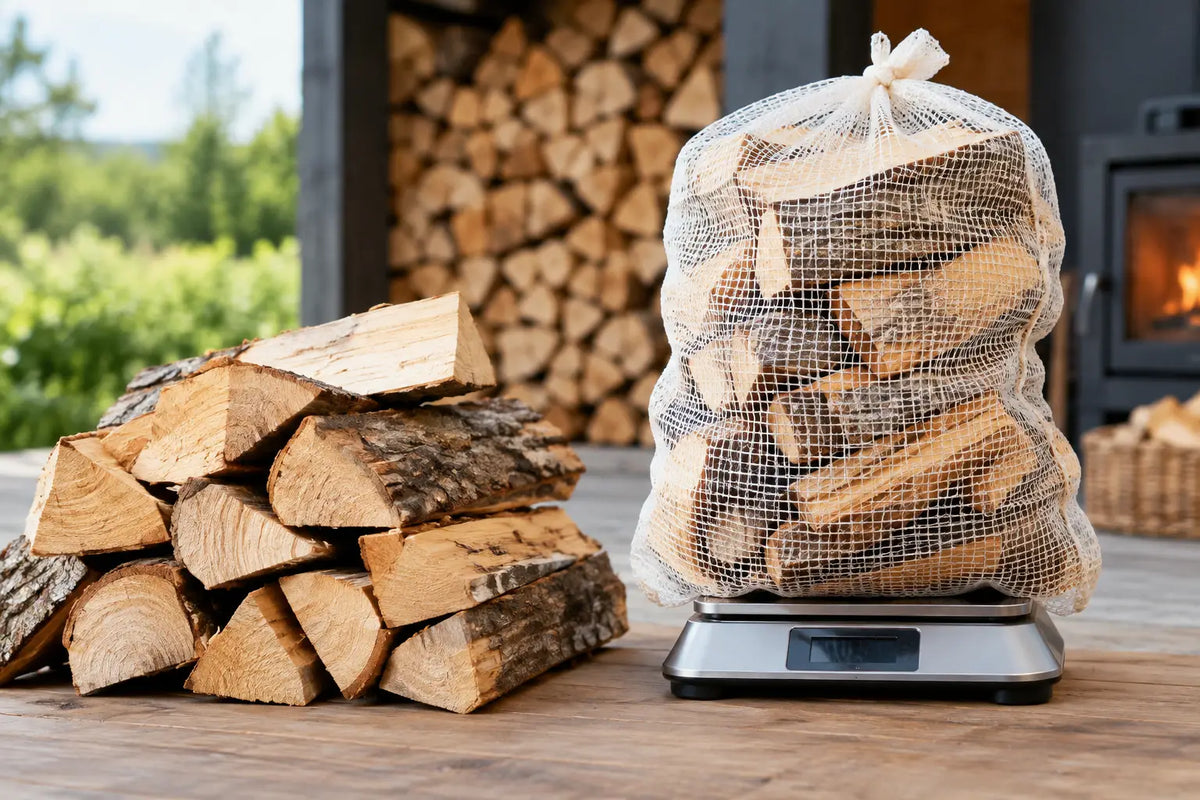
The right firewood format is largely a matter of consumption, storage and delivery access. Smaller net bags and plastic bags are useful for occasional fires, topping up an existing supply or carrying logs neatly indoors. Fire-box packs can make a convenient choice where storage space is limited or a quick, tidy supply is needed.
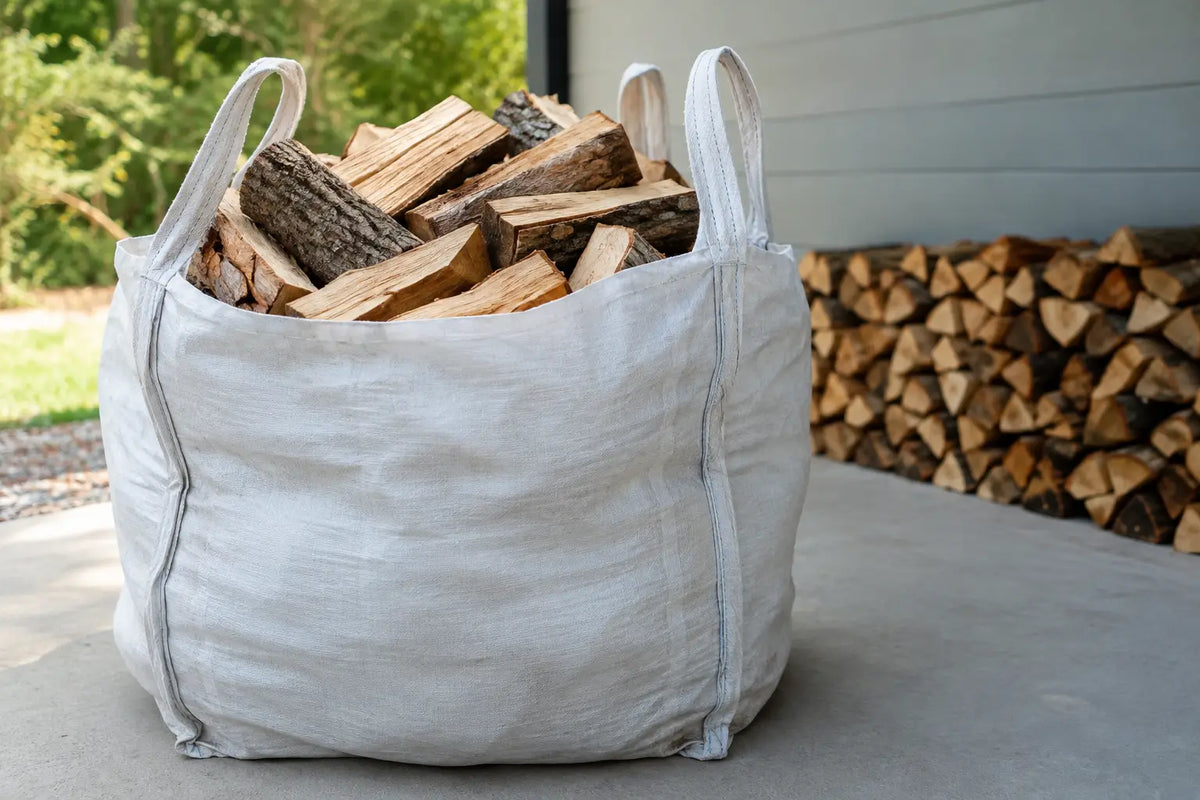
For regular stove users, a crate normally offers clearer value per cubic metre and reduces the frequency of ordering. It also makes it easier to build a proper reserve before colder weather arrives. When comparing crates, check whether the advertised volume is loose volume or stacked volume, and consider the log dimensions rather than comparing the headline price alone.
Palletised deliveries suit homes with a suitable accessible location for the driver to leave the goods. Plan where the crate will go before it arrives. Moving a large volume of logs by hand across a long drive or through a narrow side passage is possible, but it takes time and effort.
For trade customers, holiday lets and rural properties with higher demand, buying larger volumes can simplify stock management. The saving only makes sense, however, if the wood can be kept dry and well ventilated. Do not purchase more than your storage can protect.
Store dry logs properly
Kiln-dried logs need sensible storage to stay dry. Keep them off bare ground, protect the top from rain and allow air to circulate around the sides. A purpose-built log store, covered rack or dry shed with ventilation works well. Sealing logs in an airtight space is not ideal, as trapped moisture and poor airflow can affect their condition.
Avoid placing your main log store directly against an external wall if it blocks ventilation or encourages dampness. Keep a small amount of fuel indoors for convenience, but do not stack substantial quantities beside the stove. Logs need clearance from heat sources, and bringing in only a day or two of fuel at a time keeps the area tidy.
If your wood has been delivered in a crate, remove the outer wrapping when practical and move the logs to a suitable store rather than leaving them exposed for weeks. The delivery packaging protects the load in transit, but it is not a permanent storage solution.
How to get more heat from every log
Start with a clean firebox and a clear grate or air path. Build the fire using dry kindling and smaller logs, with enough space for air to move between them. Many modern stoves respond well to a top-down lighting method, where larger logs sit beneath kindling and a firelighter. This produces a controlled flame and can reduce the amount of smoke created during lighting.
Once the fire is established, adjust the air controls according to your stove manufacturer's instructions. Closing the air supply too early can cause the wood to smoulder rather than burn cleanly. Overloading the stove can have a similar effect. A smaller number of dry logs, added when there is a good ember bed, often delivers more reliable heat than packing the firebox full.
Never burn treated timber, painted wood, MDF, chipboard or household rubbish. These materials can release harmful fumes and leave damaging deposits in your stove and chimney. Use only appropriate dry logs and approved solid fuels for the appliance.
Buy for the way you actually heat your home
A household using a stove every evening through winter should buy differently from one that lights an open fire a few times a month. Regular users benefit from a crate of kiln-dried hardwood, with kindling kept on hand for easy lighting. Occasional users may prefer bags or compact fire-box packs that are simple to store without committing to a large delivery.
It is also worth considering whether your stove is supplementary or a meaningful part of your heating plan. If you rely on it during cold spells, keep enough dry fuel in reserve rather than waiting until the last bag is gone. Candowe supplies Ready to Burn kiln-dried logs in a range of species and formats, helping households choose a quantity that suits both their usage and storage space.
The right logs should make lighting the stove feel routine, not uncertain. Choose certified dry fuel, select a species that matches the heat and burn time you need, and give it a dry place to wait. Your fire will be cleaner, warmer and far easier to enjoy when the weather turns.