EMAIL US
 WhatsApp
 FREE DELIVERY TO 95% OF UK POST CODES




Builders Bag of Firewood: Is It Worth It?
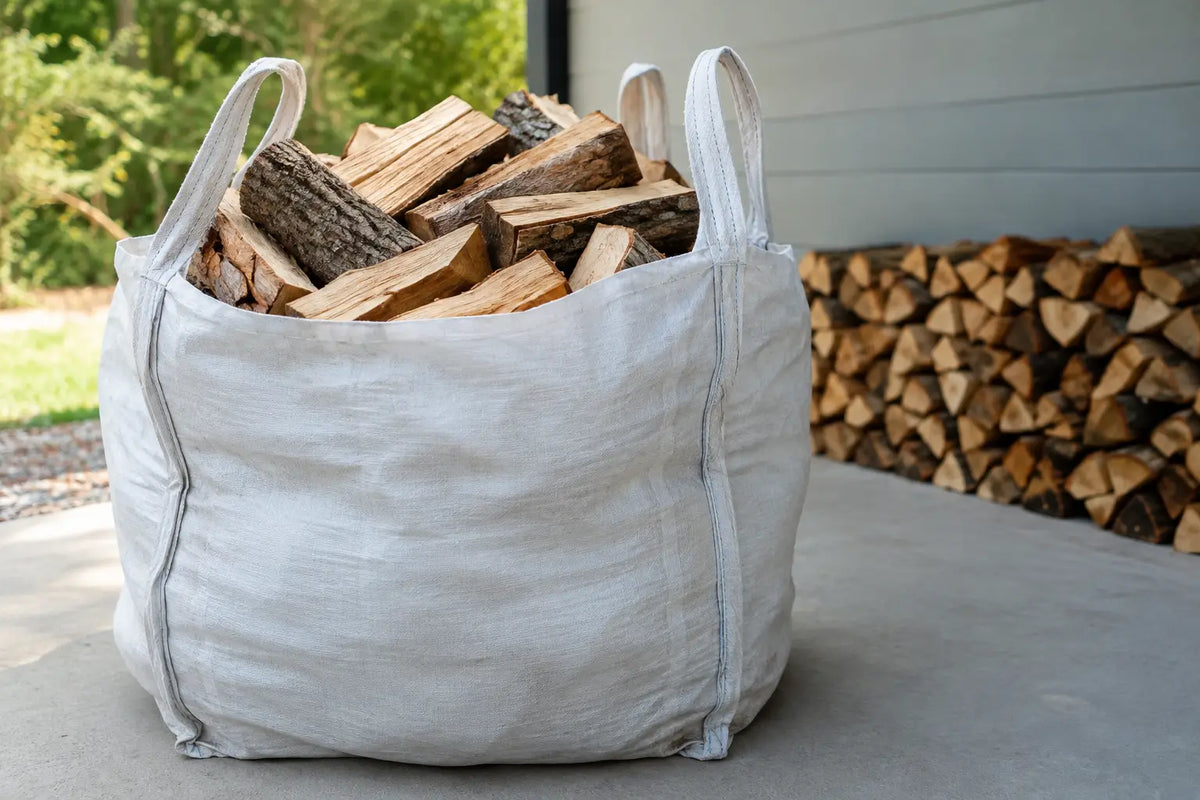
A builders bag of firewood can look like the simplest answer to a low fuel store: one large delivery, fewer repeat orders and enough logs to see you through a good stretch of cold weather. But the bag itself does not guarantee value. The useful comparison is not its outside dimensions or a tempting headline price. It is the amount of dry, usable wood inside it, how well it suits your appliance and whether you can keep it dry once delivered.
For households using a log burner, open fire or multi-fuel stove, buying in bulk can be practical and cost-effective. It also pays to understand what a builders bag means before ordering. The term is widely used, but it is not a fixed measure of firewood quality or volume.
What is a builders bag of firewood?
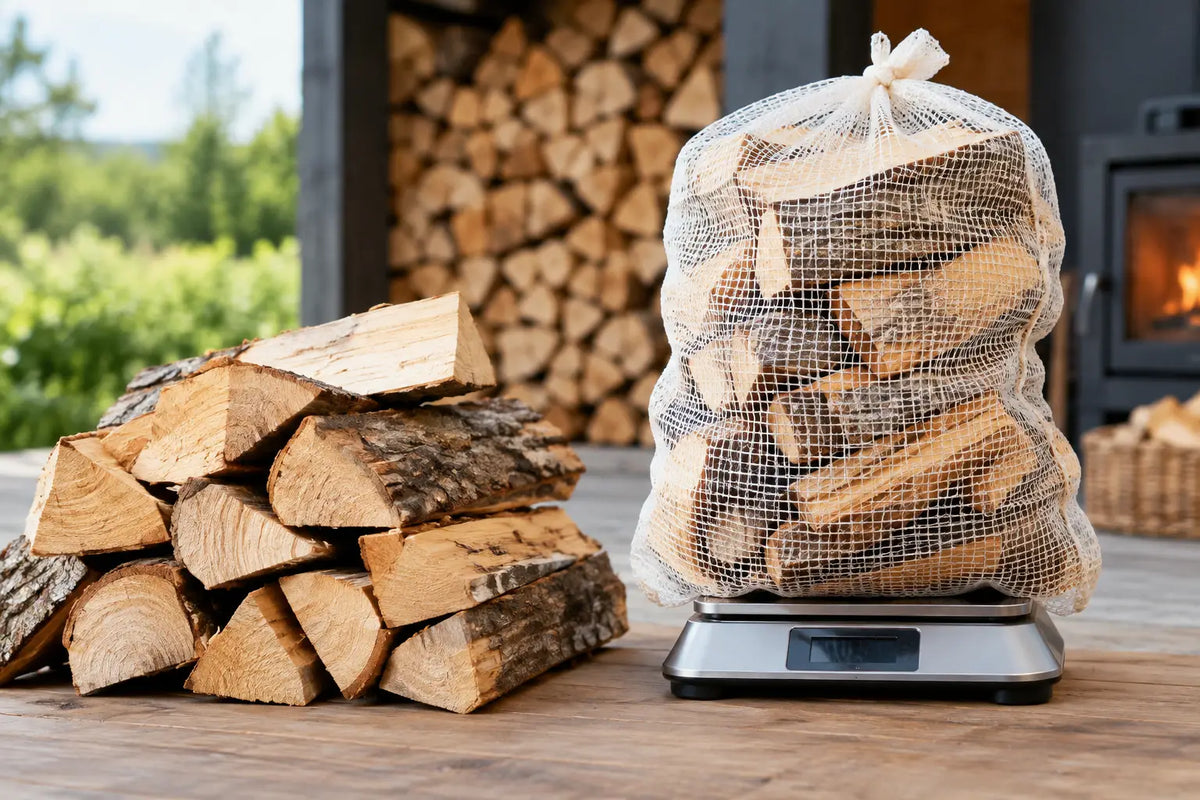
A builders bag is usually a large flexible bulk bag, similar to those used for sand, gravel or garden materials. In firewood, it normally contains loose-filled logs rather than neatly stacked wood. That distinction matters. Loose logs naturally leave air gaps, while stacked logs fit together more closely, so a cubic metre loose is not the same quantity as a cubic metre stacked.
Bag dimensions can vary between suppliers, as can the size and shape of the logs. One bag may hold a generous loose volume; another may be smaller, filled less fully or contain shorter pieces that settle differently. It is therefore sensible to look for a stated loose volume or equivalent measure rather than relying on the phrase “builders bag” alone.
Weight is not always the clearest guide either. Wetter wood weighs more, but the extra weight is water, not useful heat. Properly dried firewood can feel lighter than freshly cut logs while giving a cleaner, more efficient burn. For a household fuel purchase, dryness and volume tell a more useful story than weight alone.
When a builders bag of firewood offers good value
A bulk bag can make sense when you have regular demand and somewhere suitable to store it. It reduces the packaging and delivery frequency associated with small net bags, and it gives you a dependable reserve when cold weather arrives. This is particularly useful for rural homes, households without easy access to local fuel merchants and customers who prefer to plan their winter stock in advance.
The trade-off is convenience. A large bag is not something to leave on a damp driveway for months. You need clear access for delivery, a dry storage area and a willingness to move logs into a log store or covered rack. If space is tight, smaller bags or boxed firewood may be easier to manage, even if the price per unit of wood is higher.
Value also depends on how often you use your appliance. A stove lit most evenings from autumn to spring will make steady use of a bulk delivery. A decorative fireplace used only at weekends may not. Buying more than you can store dry can turn an apparent saving into wasted fuel.
Compare the price by volume, not by bag
The most reliable way to compare firewood is to calculate the price per cubic metre of loose logs, then consider what else is included. A lower bag price may reflect a smaller volume, mixed or lower-density species, or wood that has not been dried to a consistent standard.
Check whether the advertised volume is loose-filled, stacked or simply based on bag capacity. Clear product information should also state the log length, moisture level and wood type. These details help you establish whether the logs will fit your stove and whether you are comparing like with like.
At Candowe, transparent volumetric product information makes it easier to assess larger fuel formats alongside crates, nets and fire-box packs. That gives you a practical basis for choosing the quantity that fits your storage, appliance and budget.
Dry wood matters more than a full-looking bag
For domestic wood-burning appliances, kiln-dried logs with a moisture content below 20% are the straightforward choice. They light more readily, produce more usable heat and create less smoke than wet or poorly seasoned wood. Less moisture means the fire spends less energy evaporating water before the log can burn properly.
Ready to Burn certification provides useful reassurance for wood sold for immediate domestic use. It confirms that the fuel meets the required moisture standard, helping households use wood that is suitable for cleaner, more efficient burning. It is especially valuable when buying a large quantity, because you do not want to discover that a substantial delivery needs months of additional drying.
Wet logs often show their shortcomings quickly. They can hiss or bubble at the ends, struggle to establish a strong flame and blacken stove glass more rapidly. They also produce more smoke and deposits in the flue. While a builders bag of unseasoned wood may appear inexpensive, it asks you to provide time, covered storage and careful drying conditions before it becomes dependable fuel.
Choose a species that matches how you heat your home
Different hardwoods burn differently, so the right bag is not always the one containing the heaviest logs. Dense hardwoods such as oak, ash and hornbeam generally provide a longer, slower burn, making them well suited to keeping a stove going through a cold evening. They are a sensible choice where heat output and burn duration are the priority.
Birch lights easily and gives a bright, attractive flame, which many customers appreciate for quick warmth and fire-starting. Alder is another practical option for an easy-burning fire. In reality, a mixed hardwood bag can work well for many homes, provided the logs are genuinely dry and cut to a suitable length.
Your appliance manual should guide the final decision. Check the maximum log length and avoid forcing oversized logs into the firebox. A well-sized log allows better airflow and makes loading safer and easier. If you rely on a stove as a meaningful heat source, consistency in log size can be almost as useful as consistency in species.
Delivery access and storage need planning
Before arranging a bulk bag delivery, consider where the driver can safely place it. A palletised or large-bag delivery needs firm, level ground and reasonable access. Loose gravel, steep slopes, steps and narrow passageways can make placement difficult. If the bag must be left at the front of the property, allow time to move the logs to their final storage position.
The best place for firewood is off the ground, protected from rain above and open at the sides for airflow. A purpose-built log store is ideal, but a covered rack against a suitable wall can work well. Avoid wrapping logs tightly in plastic or storing them directly on soil, as trapped moisture can encourage mould and prevent the wood from staying dry.
A simple routine helps. Bring in only a few days' worth of logs at a time, keep the main supply ventilated and use older stock first. This keeps your fuel area tidy and means the wood nearest the stove is always dry and ready to burn.
How much firewood should you order?
There is no single answer because usage varies widely. A highly efficient stove used for a few evening hours will consume far less than a large appliance providing daily heat in a poorly insulated home. Outdoor temperature, room size, stove efficiency and whether wood is your main or supplementary heat source all change the calculation.
Start with what you used last winter, if you have a record. If not, buy a manageable quantity first and monitor how quickly it goes down during colder weeks. This provides a more useful guide than guessing from the size of your property alone. It also helps you decide whether a builders bag, a crate or regular smaller orders best suits your household.
For many customers, a bulk bag works best as part of a planned fuel supply rather than the entire solution. Keeping quality kindling on hand and choosing a suitable firelighter or briquette for quick, controlled starts can reduce frustration and help you get the most from each log.
The sensible checks before you buy
A builders bag is a practical format, but only when the product specification is clear. Confirm the loose volume, moisture content, wood species, typical log length and delivery arrangement before placing an order. Look for Ready to Burn certified kiln-dried firewood where you want fuel that can go straight into the stove, rather than wood that needs further seasoning.
It is also worth choosing a supplier that explains its pricing clearly and can deliver reliably to your postcode. Bulk fuel should save effort, not create uncertainty around quality, access or timing.
The best bag is not necessarily the largest one on the page. It is the one that arrives dry, fits your stove, stores well at home and gives you steady, clean heat when you need it most.