EMAIL US
 WhatsApp
 FREE DELIVERY TO 95% OF UK POST CODES


Are Log Nets Good Value for Home Heating?

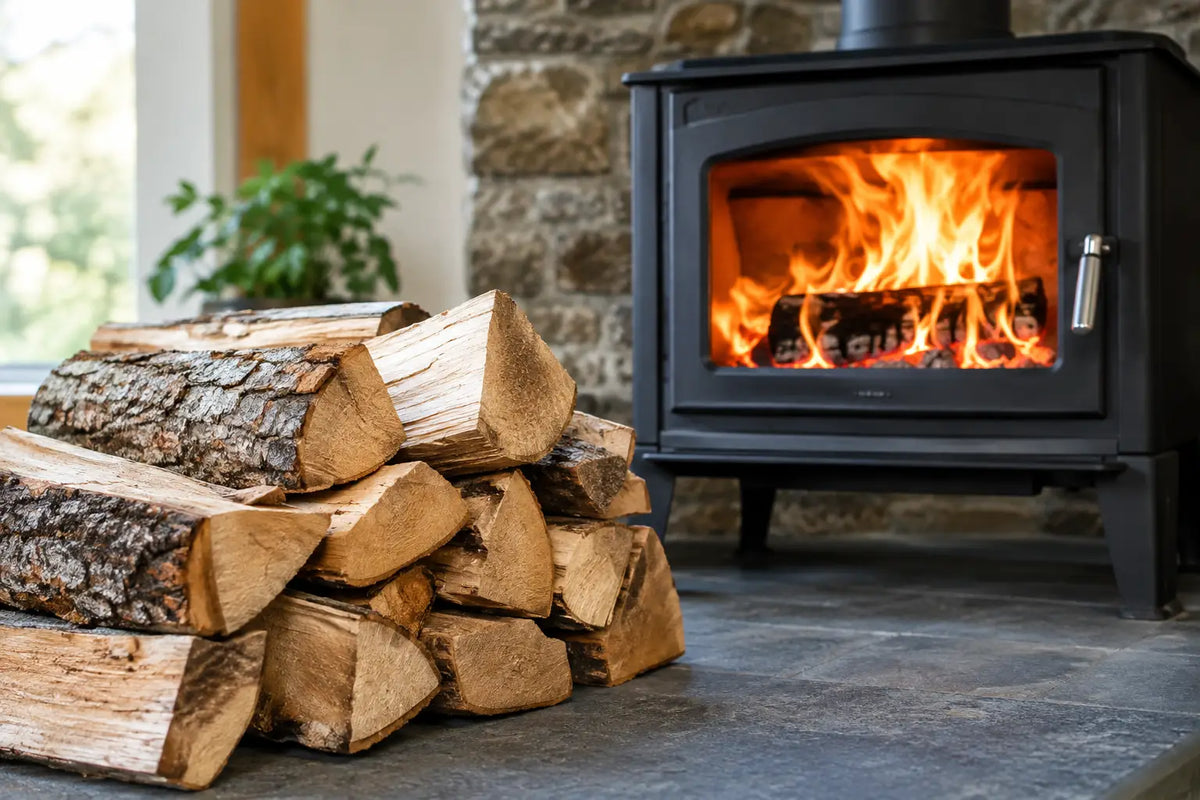
A damp load of firewood can turn an evening by the stove into a smoky, slow-burning disappointment. Log nets avoid much of that uncertainty by providing a manageable quantity of pre-packed logs that can be carried in, stacked neatly and used straight away - provided the wood has been properly dried.
For households topping up their stove fuel, log nets are often the most convenient format. They are not always the lowest-cost way to buy firewood by volume, however. The right choice depends on how often you burn wood, how much dry storage you have and whether you need a small supply now or a larger stock for the season.
What are log nets?
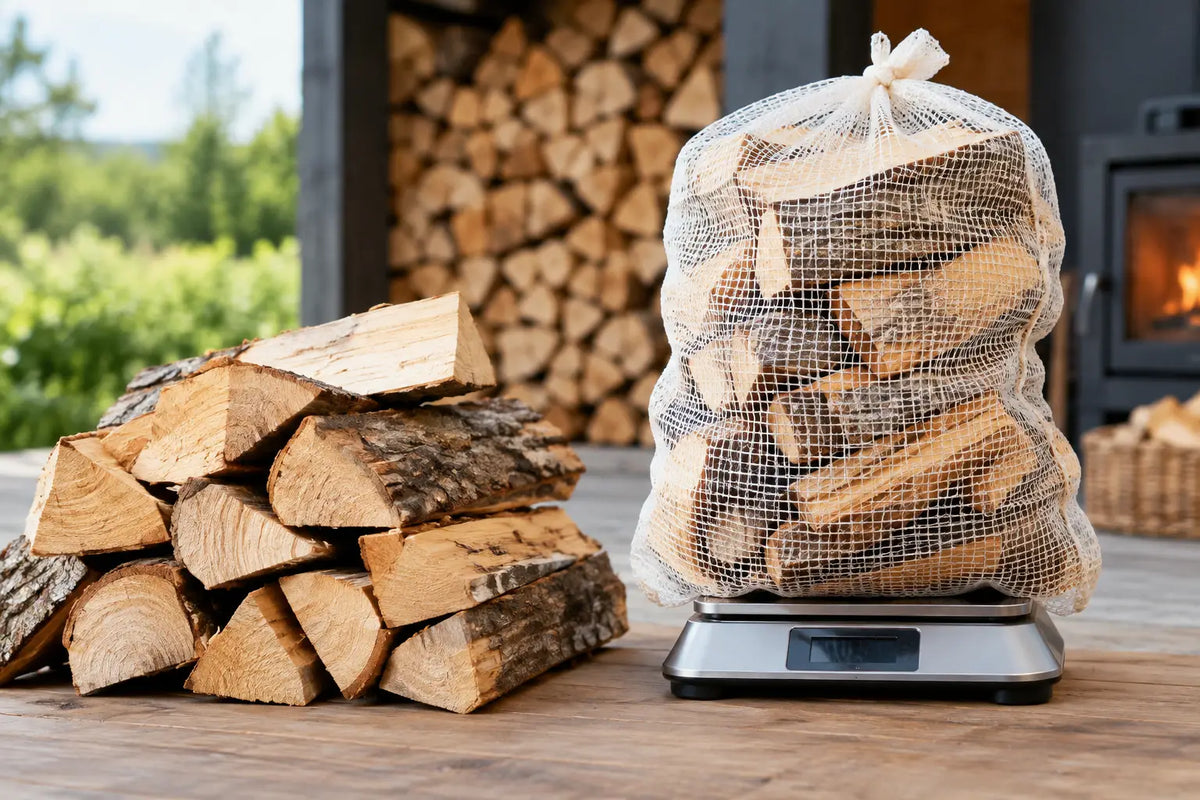
Log nets are mesh bags containing split firewood, usually in a convenient size for carrying from a delivery point to a shed, garage or log store. They suit occasional fires, weekend use and households that prefer not to handle a large crate or loose load of logs.
A net should contain logs that are cut to a practical stove length and split sufficiently for reliable lighting and burning. For domestic use, the most useful option is kiln-dried wood with a moisture content below 20%. In England, Ready to Burn certification is a clear sign that firewood sold in small quantities meets the required moisture standard.
Dry logs produce more useful heat because less energy is spent driving water out of the wood. They also tend to light more easily, give a cleaner flame and create less smoke and residue in the stove or chimney. That is why the quality of the logs matters more than how full a net appears.
When log nets are the right choice
Log nets work particularly well when convenience matters as much as volume. If you use your log burner a few evenings each week, a small number of nets lets you buy only what you can store properly. They are also useful for keeping a dry reserve indoors or under cover when your main wood store is running low.
They make sense for first-time stove owners too. Buying a few nets gives you an opportunity to see which log size and species suits your appliance before committing to a larger order. This can be useful where a stove has a compact firebox or where you are still learning how quickly your household gets through fuel in colder weather.
For a holiday cottage, garden room, occasional open fire or camping fire pit where permitted, nets are easier to transport and distribute than bulk firewood. Small commercial settings, such as pubs with a feature fire, may also value the tidy handling and predictable stock control.
The trade-off is cost per unit of wood. Packaging, handling and the convenience of smaller quantities can make nets more expensive than crates or palletised loads when compared by loose volume. If you burn every day from autumn to spring and have suitable storage, buying in bulk is usually better value.
How to judge the value of log nets
The price on the bag is only one part of the comparison. Net sizes are not always identical, and wood is naturally irregular, so comparing two products simply by the number of logs is unreliable. A net packed with large, dense hardwood pieces may contain fewer individual logs than one filled with lighter pieces, yet still provide longer burn time.
Look first for a stated bag size, net weight where available, or a clear equivalent volume. Suppliers that explain the format and contents make it easier to compare like for like. Be cautious of vague descriptions that promise a “large bag” without giving any useful measure.
Next, check the moisture claim. Logs described as seasoned are not automatically dry enough to burn efficiently. Properly kiln-dried, Ready to Burn firewood offers more certainty, especially when you need fuel that can go straight into the stove. A cheap net of wet wood is poor value if it is hard to light, wastes heat and leaves your glass blackened.
Species also affects performance. Birch lights readily and gives an attractive flame, making it popular for everyday use. Alder is easy to handle and useful for shorter fires. Ash is valued for a steady burn, while oak and hornbeam are denser hardwoods that can provide longer-lasting heat when fully dry. The best choice is not always the slowest-burning wood: smaller stoves and milder evenings may benefit from an easier-lighting, faster-burning log.
Buying nets or bulk logs: choose for your usage
If you use less than a few fires’ worth of wood each week, log nets are likely to be a sensible purchase. You can order a manageable amount, avoid filling valuable storage space and keep handling simple. This format is also useful as a top-up alongside a main bulk supply.
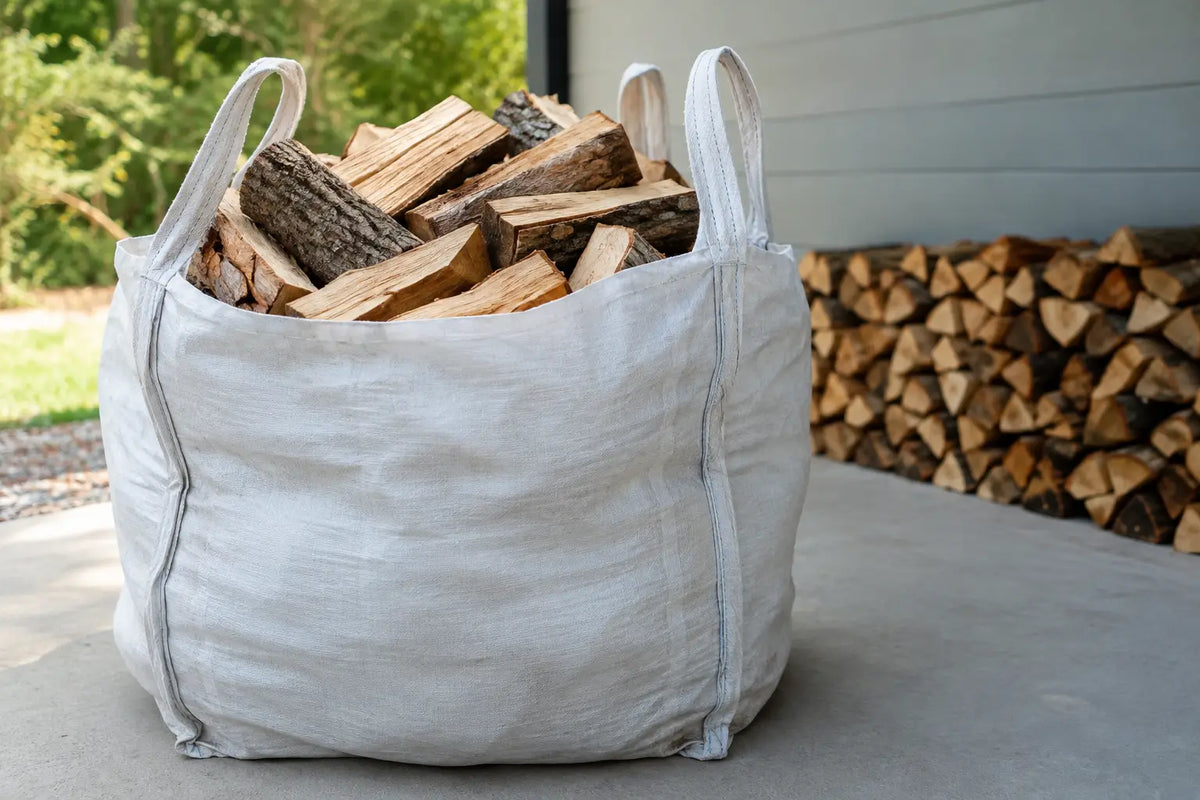
Regular stove users should calculate their likely seasonal demand. A crate or pallet of kiln-dried logs can reduce the cost per cubic metre and cut down on repeat orders. It does require a dry, ventilated place to store it, plus enough access for the delivery to be made safely. If those conditions are not available, several nets may still be the more practical option even if the unit price is higher.
There is a middle ground for many households: buy bulk logs for the main heating season, then keep a few log nets aside for convenience. The nets can be brought indoors in bad weather without disturbing the main stack, and they make an excellent emergency supply when a cold snap arrives.
Storing log nets without spoiling the fuel
Even quality kiln-dried logs can absorb moisture if they are left exposed to rain or placed directly on wet ground. Keep nets raised on a pallet, shelf or log rack and protect them from rainfall. A covered log store with open sides is ideal because it keeps water off while allowing air to move around the wood.
Avoid sealing the nets inside an airtight plastic container or putting them against a damp external wall. Wood needs ventilation. A garage or shed can work well if it is dry, but check for condensation and leave space around the bags rather than piling them tightly into a corner.
Bringing one net indoors at a time is usually enough. Place it beside, rather than directly against, the stove and keep it clear of any hot surface. This keeps the room tidy while allowing the logs to warm and remain dry before use.
Getting the best burn from netted logs
Start with dry kindling and a suitable firelighter, then add smaller split logs before moving to larger pieces once the firebox is hot. Overloading a cold stove with large logs can restrict airflow and lead to smoky combustion. The exact approach depends on your stove manufacturer’s instructions, but clean, dry fuel makes every method easier.
Do not close the air controls too early in an attempt to make logs last longer. Starving a fire of oxygen can create incomplete combustion, more deposits and less useful heat. A bright, controlled flame is generally a better sign than logs that smoulder for hours.
Empty ash as recommended for your appliance, keep the flue maintained and use only suitable untreated wood fuel. Painted, varnished or reclaimed timber has no place in a domestic stove. It can release harmful fumes and damage the appliance or chimney.
A practical way to buy with confidence
Before ordering, consider three questions: how often you burn, where the logs will be stored and whether you need convenience or the lowest cost per volume. Then choose dry, certified fuel from a supplier that clearly states what is included.
Candowe supplies kiln-dried, Ready to Burn logs in net bags as well as larger formats, making it easier to match your order to your stove use and available storage. A few well-stored nets can keep a fire simple, clean and dependable - especially when the weather turns before you have had time to replenish your main fuel supply.