EMAIL US
 WhatsApp
 FREE DELIVERY TO 95% OF UK POST CODES




Logs for Sale: Buy Firewood That Burns Well

A cheap load of wet wood is rarely a saving. It is harder to light, produces more smoke, leaves more residue in the stove and delivers less useful heat. When comparing logs for sale, the detail that matters most is not the size of the stack or the wording on the bag. It is whether the fuel is genuinely dry, clearly measured and suited to the way you heat your home.
For a wood burner, open fire or regular household stove, buying ready-to-use firewood removes the uncertainty of collecting and seasoning green logs yourself. The right choice should light reliably, burn cleanly and arrive in a format you can store safely and use with minimal fuss.
What to look for when buying logs for sale
Start with moisture content. Firewood with a moisture content of 20% or below is classed as Ready to Burn when sold in small quantities in England. Dry logs put more of their energy into heating the room rather than boiling off water from inside the wood. They are easier to light, give a steadier flame and help reduce smoke and soot in the appliance and flue.
Look for the Ready to Burn certification rather than assuming that words such as “seasoned” or “air dried” guarantee a suitable moisture level. Seasoned logs can still vary considerably depending on how long they have dried and how they have been stored. Kiln-dried logs are processed to reach a consistently low moisture content, making them a dependable option when you need fuel ready now.
The species of wood also affects the fire. Hardwood logs are generally denser than softwood and tend to burn for longer, which makes them a strong choice for maintaining heat in a stove. Birch lights readily and creates a bright flame. Alder is easy to handle and burns cleanly. Ash is well regarded for its reliable burn, while oak and hornbeam are dense woods that can provide a long, steady output once the fire is established.
There is no single best species for every household. A mix can work well: faster-lighting logs for getting the fire going, followed by dense hardwood for longer-lasting heat. What matters is buying dry, well-prepared wood from a supplier that states the product clearly.
Choose a format that matches your use
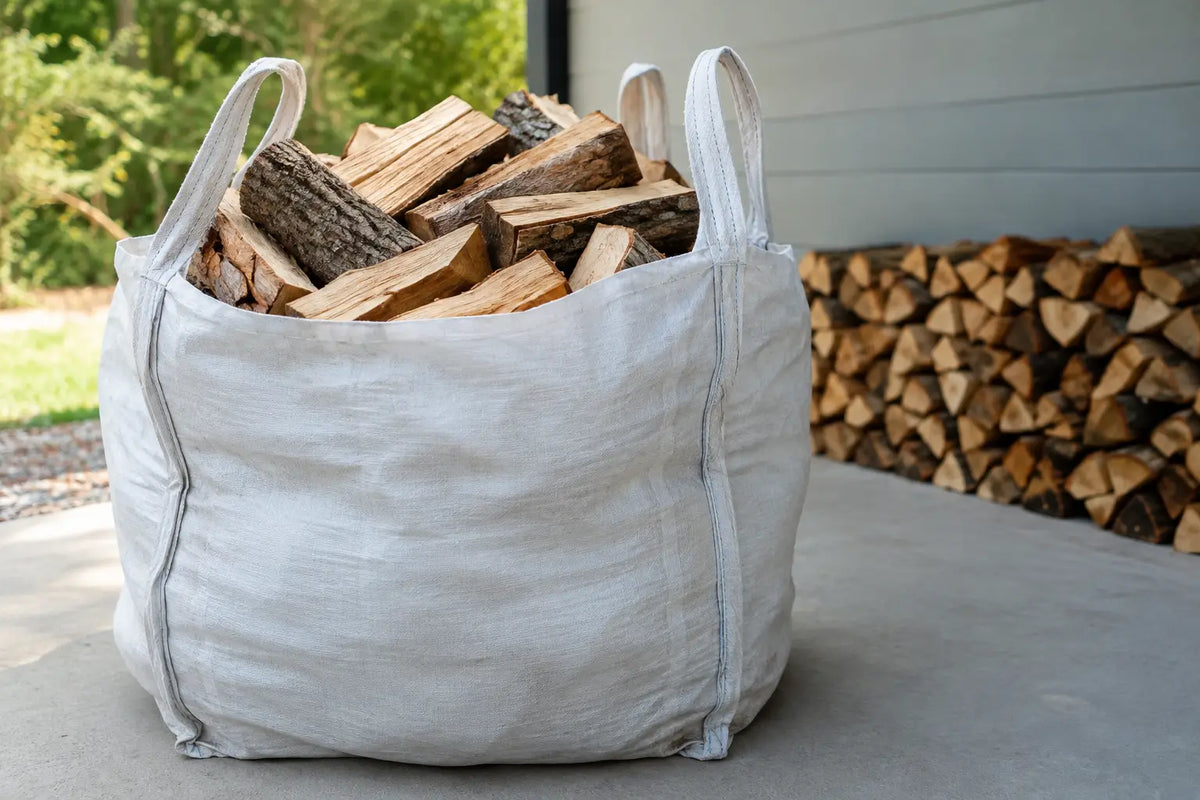
Firewood is sold in several formats, and comparing price alone can be misleading. A small bag may be convenient for occasional use, but it will usually cost more per cubic metre than a larger delivery. Crates and palletised loads often offer better value for households using a log burner regularly through autumn and winter.
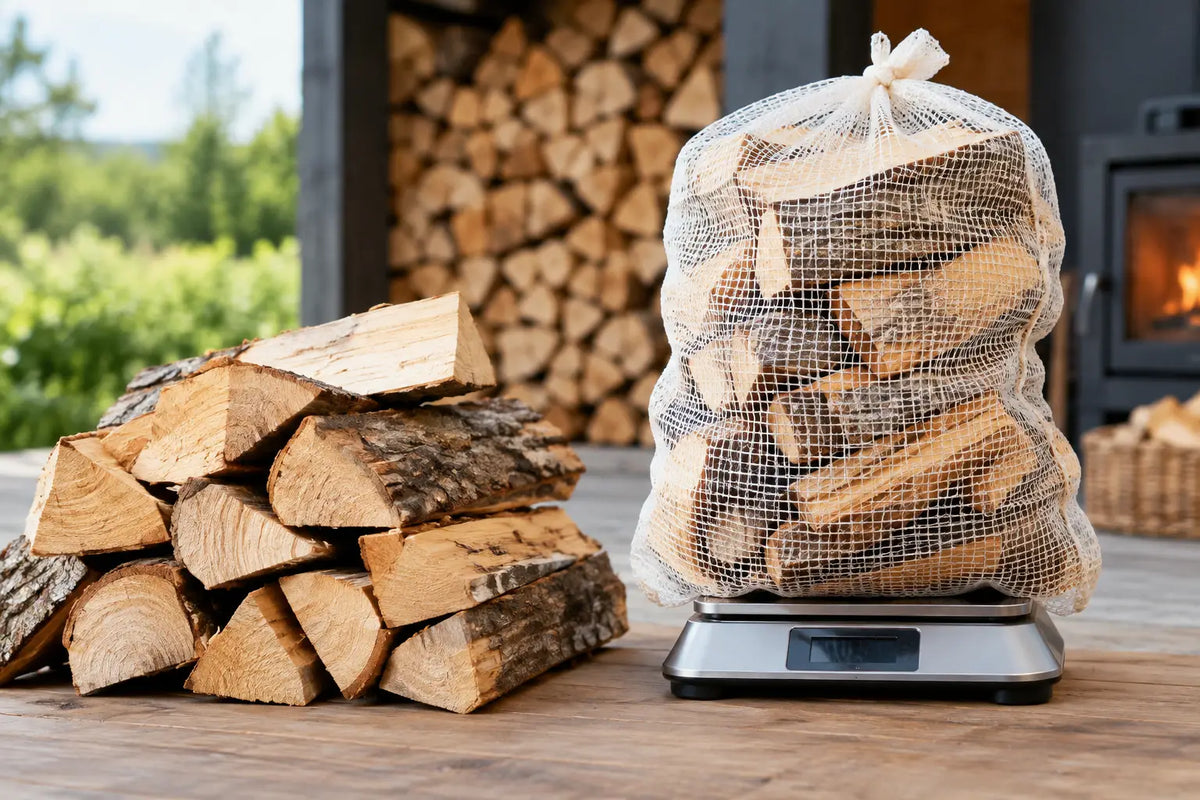
Net bags and plastic bags are practical where access is tight, storage space is limited or you want to carry fuel into a shed, garage or log store in manageable amounts. Fire-box packs can be especially useful for smaller homes, weekend fires or customers who prefer a clean, compact bundle of dry logs.
For regular stove users, hard crates are a straightforward option. They keep the load contained during transport, make the quantity easier to understand and provide a useful way to compare products by loose volume. If you are buying in bulk, check whether the advertised measurement is a crate size, bag weight, loose volume or stacked volume. These are not interchangeable.
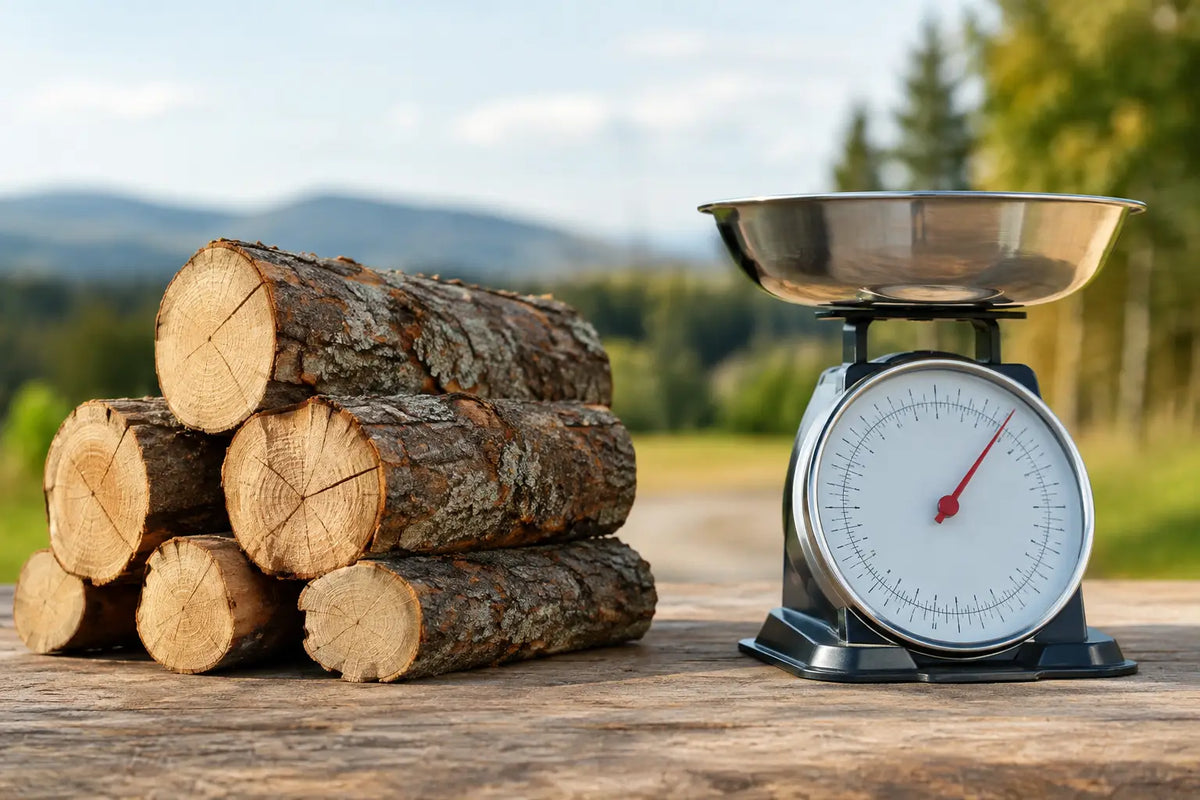
Transparent volumetric information helps you judge true value. A larger-looking stack of loosely packed wood may contain less fuel than a smaller, tightly filled crate. Compare like with like wherever possible, including the wood species, moisture standard, delivery charge and any included kindling.
Calculate how much firewood you need
Usage depends on the size and efficiency of your stove, how often it runs, insulation levels and whether wood is your main heat source or an occasional comfort fire. A household lighting the stove on a few evenings each week will need far less than a rural home relying on solid fuel throughout the heating season.
As a practical starting point, think about your current consumption rather than guessing from room size. Count how many bags or baskets you use in a typical week during cold weather, then allow for a longer heating period than expected. Buying enough for the season can reduce reordering, but only if you have a dry place to store it.
Avoid filling every available corner with fuel if airflow is poor. Logs should stay protected from rain while allowing moisture to escape. A purpose-built log store, covered side area or dry shed with ventilation is usually suitable. Keep wood raised off the ground where possible, and do not stack it directly against the house if this could restrict airflow or create a place for pests to shelter.
Good storage protects the quality you paid for
Kiln-dried logs arrive dry, but poor storage can undo that advantage. Cover the top of the stack, leave the sides open to air and bring a small supply indoors only when you are ready to use it. Storing large amounts beside a hot stove can make a room dusty and create an unnecessary fire risk.
If your delivery is arriving on a pallet, plan the drop point before ordering. Consider access for the delivery vehicle, slopes, gravel, narrow gates and the distance from the kerb to your storage area. Pallet deliveries are efficient for larger quantities, but they are not always suitable for every driveway. Smaller bags or boxes may be the better choice where access is restricted.
Do not overlook kindling and firelighting
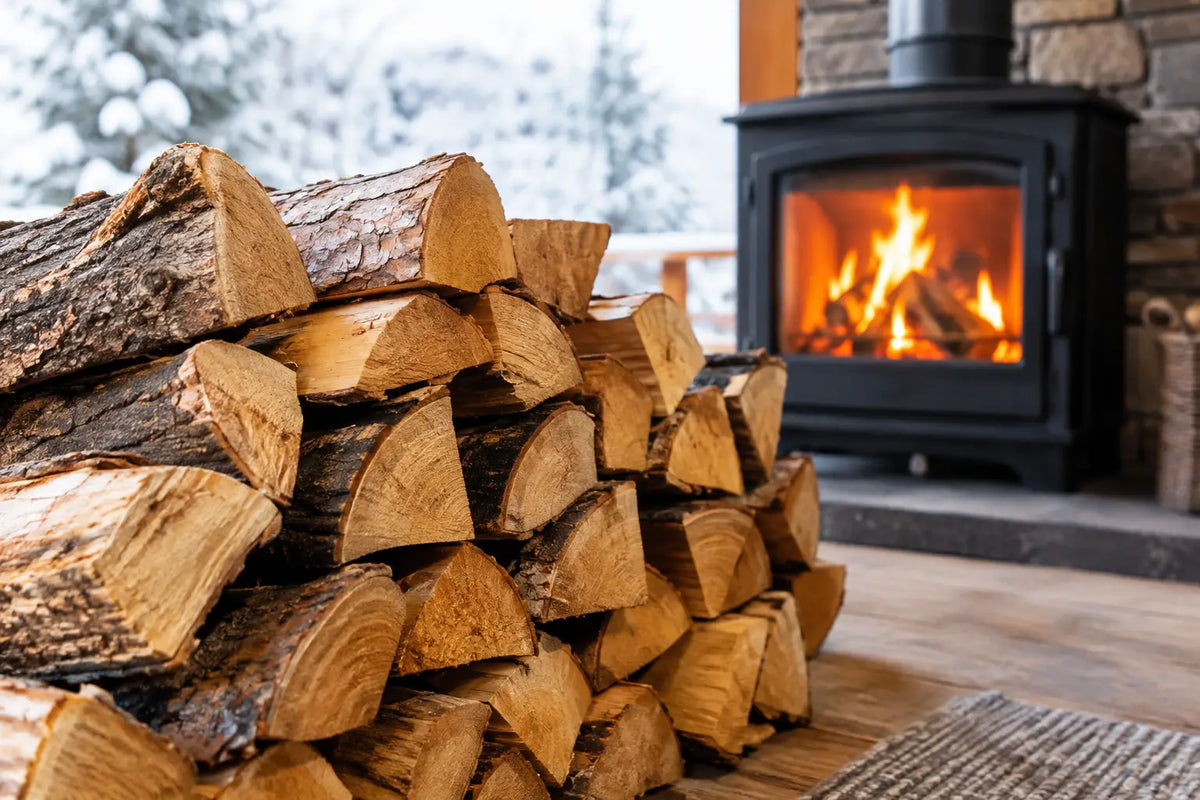
Dry logs perform best when the fire is built properly. Use dry kindling and an appropriate firelighter to establish a hot flame before adding larger pieces of hardwood. Putting large logs onto a weak fire often leads to smouldering, excess smoke and frustration.
Top-down lighting is worth trying in many modern stoves. Place the larger logs at the base, add smaller pieces above them and light the kindling at the top. The flame works down through the stack, helping the fire establish gradually with less smoke than a poorly built, overcrowded fire.
Keep the air controls open initially, following your stove manufacturer’s instructions. Once the fire is burning strongly, adjust them to maintain a clean flame. Running a stove too slowly for long periods can cause wood to smoulder, even when the logs are dry.
Buying online without the uncertainty
Ordering firewood online should make the process clearer, not less clear. Before checkout, confirm the wood type, whether it is Ready to Burn certified, the stated moisture level, the number and size of bags or crates, and whether delivery is included for your postcode.
It is also sensible to check expected fulfilment times, especially before a cold spell. A supplier with structured formats and straightforward product specifications makes it easier to order the same fuel again once you know what suits your appliance. Candowe offers kiln-dried hardwood logs in practical bag, box and crate options, alongside kindling and other solid fuels, so households can order around how they actually use their heating.
Price matters, particularly when buying in volume, but the lowest headline figure does not always mean the lowest cost per useful hour of heat. Wet wood, unclear quantities and delivery surcharges can quickly remove an apparent bargain. Dry, properly measured logs that arrive when expected are often the more economical choice over the season.
A well-stocked log store gives you more than fuel for the next fire. It gives you the confidence that, when the temperature drops, your stove will light cleanly and deliver the heat you expected.