EMAIL US
 WhatsApp
 FREE DELIVERY TO 95% OF UK POST CODES




Premium Log Crates for Reliable Home Heating

A wood burner is only as dependable as the fuel beside it. Premium log crates give households a substantial supply of consistently dry firewood, delivered in a format that is easy to compare, store and use. For anyone tired of damp logs, uncertain bag sizes or repeated trips to buy small quantities, a crate can make heating planning far more straightforward.
The best option depends on your stove, storage space and how often you light a fire. It is not simply a case of choosing the largest crate available. Wood species, moisture content, stated volume and delivery access all affect the value you receive and the experience you have at the stove.
Why choose premium log crates?
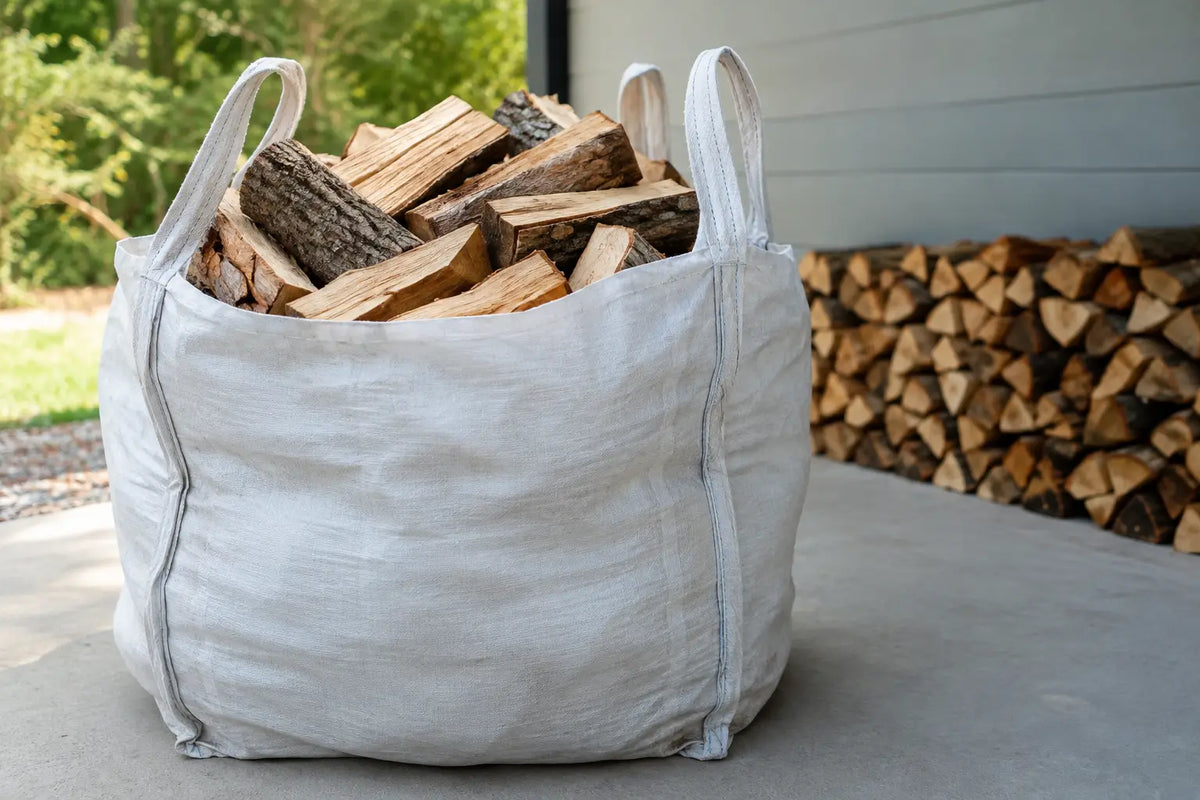
A crate is designed for customers who use their stove or fireplace regularly and want to buy firewood in a more economical quantity. Rather than handling a number of small bags over several weeks, you receive a palletised supply that can cover a meaningful part of the heating season.
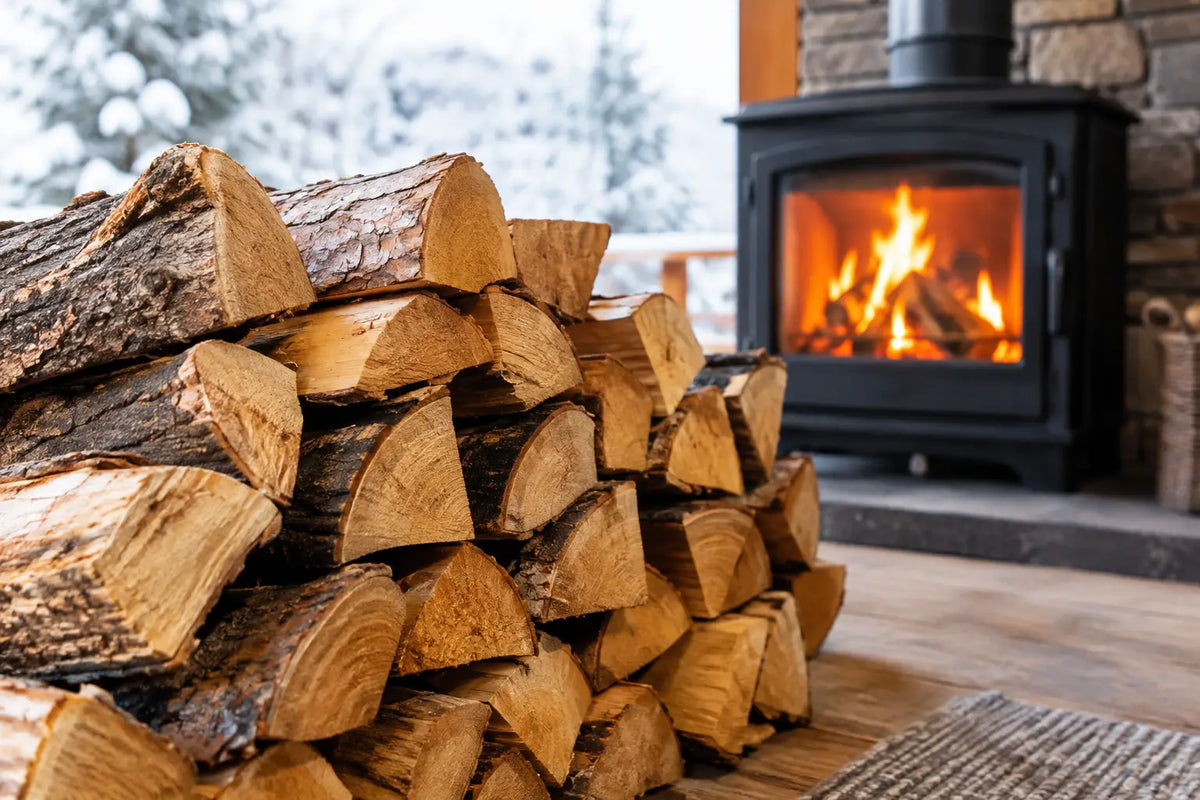
The chief benefit is consistency. Quality kiln-dried logs with moisture content below 20% are easier to light, produce more useful heat and create less smoke than wet or poorly seasoned wood. They also help keep the stove glass clearer and reduce the amount of soot and tar that can build up in the flue.
For domestic wood burners, Ready to Burn certified fuel provides welcome reassurance. It has been tested to meet the required moisture standard for small combustion appliances, so it arrives ready to use rather than needing months of drying at home. This matters especially where storage is limited or where a load of unseasoned timber could sit unused through winter.
A hard crate also makes comparison clearer. Reputable suppliers should state the crate dimensions, loose volume or equivalent volume, log length and wood type. These details are more useful than a vague promise of a "large load", because they allow you to assess price per cubic metre and compare like for like.
What makes a log crate premium?
The word premium should mean more than neatly stacked logs. In practical terms, it should point to dry, clean and responsibly sourced wood, accurately described volumes and a species selected for reliable burning performance.
Kiln-dried moisture content
Moisture content is the first specification to check. Freshly cut wood contains a high level of water, and every bit of heat used to evaporate that water is heat not warming your room. Kiln drying reduces the moisture content in a controlled environment, helping logs burn with a more stable flame and stronger heat output.
Look for fuel sold as Ready to Burn where it is intended for domestic use. This is particularly valuable for stove owners who want fewer lighting difficulties and less mess around the hearth. Very dry logs should still be stored correctly after delivery, as poor storage can undo the benefit of buying quality fuel.
The wood species
Different woods suit different priorities. Birch is popular because it lights readily and gives an attractive, lively flame. Alder is generally easy to light and can be a practical choice for frequent use. Ash offers dependable heat and is often valued for its straightforward burning characteristics.
Oak and hornbeam are denser hardwoods that tend to burn for longer, making them well suited to customers looking for sustained heat. Their density can mean they benefit from a well-established fire, rather than being used as the only log when lighting from cold. Many households find a mix works well: an easier-lighting wood to get the stove going, followed by dense hardwood logs to maintain the fire.
There is no single best species for every home. If you light the stove for a short evening fire, a quick-lighting option may suit you. If the appliance is used for several hours each day, a denser hardwood crate may offer better value over time.
Honest volume and useful log size
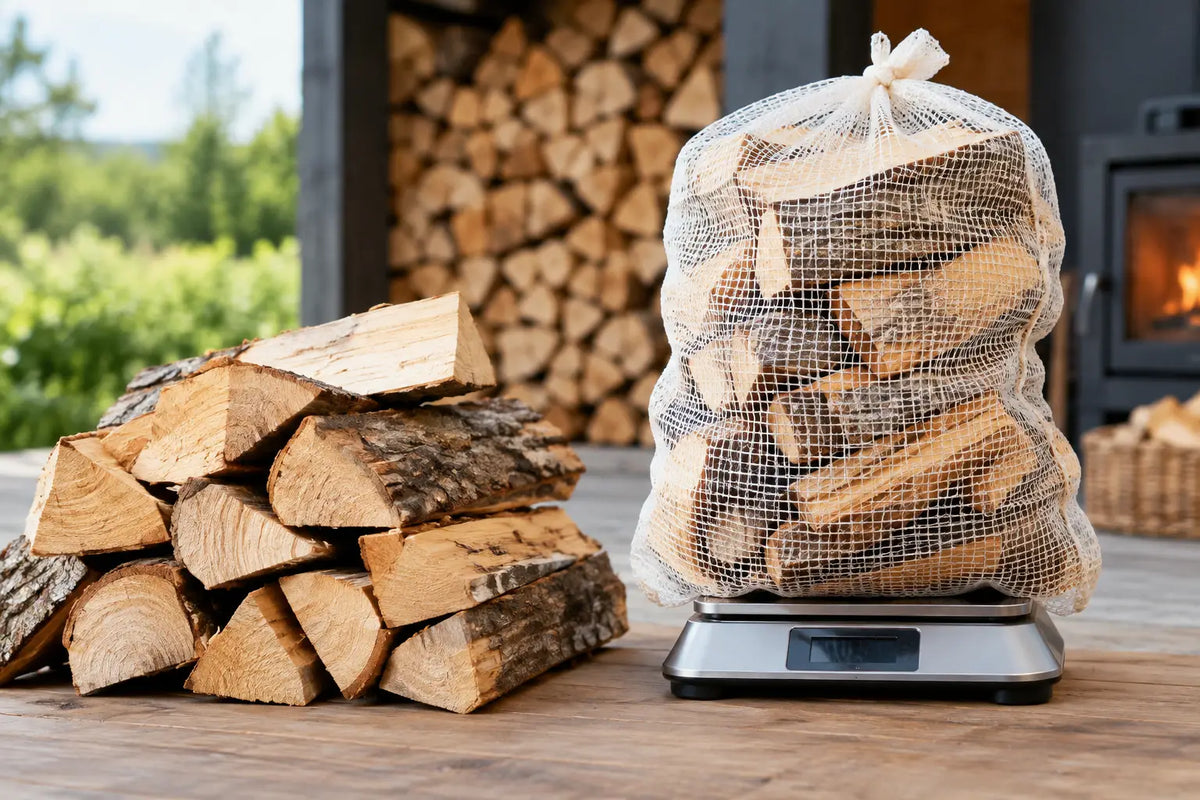
A crate may look generous in a photograph, but stated volume is what matters. Check whether the supplier provides loose volume, crate dimensions and the number of bags or packs included where relevant. Loose volume describes the space occupied by the logs, including natural air gaps, and is a helpful basis for comparing bulk firewood.
Log length matters too. Measure your firebox before ordering, allowing room for safe airflow around the fuel. Logs that are too long can be frustrating to use, while very short logs may burn through quickly. A typical domestic stove often suits logs around 25 cm, but appliance sizes vary, so it is worth checking the manufacturer guidance.
How much firewood does a household need?
Usage can vary widely. A household that lights a stove at weekends will use far less than one relying on it as a daily heat source from October to March. The insulation of the property, room size, stove efficiency and your preferred indoor temperature all play a part.
As a starting point, think about your current routine rather than guessing from the size of the crate. If you usually use two small bags a week, calculate how that pattern changes during colder periods and compare the total with the supplier's stated loose volume. Buying in bulk is often better value, but only if you can store the fuel dry and access it comfortably.
For a regular stove user, ordering before the coldest weather helps avoid last-minute decisions. It also gives you time to stack and organise the delivery properly. Many buyers choose a crate for their main supply, then keep a smaller amount of kindling and firelighters close to the stove for daily use.
Storing a crate after delivery
Even premium kiln-dried logs need protection from rain and ground moisture. The ideal location is outside in a covered, well-ventilated area, such as a log store, lean-to or sheltered side of a garage. Air needs to move around the wood, so avoid wrapping the entire crate in an airtight cover.
Keep logs raised off bare soil or paving where possible. The pallet base may provide some separation, but a firm, level and well-drained surface is still preferable. Cover the top and exposed sides from driving rain while leaving enough open space for ventilation.
Avoid storing a full crate indoors. Bringing a small basket of logs inside for immediate use is sensible, but large quantities of wood can introduce dust, bark debris and insects to living areas. Outdoor storage also keeps the fuel dry without taking up valuable household space.
Before ordering, consider the delivery route. A pallet delivery needs suitable access for the delivery vehicle and pallet equipment, normally a level, hard surface close to the intended storage area. Gravel, steep slopes, narrow passages and steps can make positioning difficult. Checking this in advance helps ensure a smooth delivery day.
Getting the best burn from kiln-dried logs
Good fuel performs best with good stove practice. Start with dry kindling and smaller logs, leaving enough space for air to circulate. Once the fire is established, add larger logs without overfilling the firebox. A crowded stove can restrict airflow and lead to smoky, inefficient burning.
Use the air controls according to your stove manufacturer's guidance. Closing them down too early can cause wood to smoulder, wasting fuel and creating more deposits in the appliance and flue. A bright, controlled flame is usually a better sign than a slow, smoky burn.
Regular chimney sweeping remains essential, even when using clean, dry fuel. The right sweeping interval depends on how often you use the appliance and the fuel burned, but frequent users should arrange maintenance as part of their annual heating routine.
Choosing a supplier with confidence
Price matters, but the lowest upfront figure is not always the lowest cost per useful fire. Compare the species, moisture standard, total stated volume and delivery terms before deciding. Free delivery across most mainland UK postcodes can make a noticeable difference to the final cost of a bulk order.
It is also worth choosing a supplier that clearly explains what is included. Details such as free kindling, practical delivery times and flexible payment options can make stocking up easier, particularly when buying a pallet quantity. Candowe supplies kiln-dried firewood in clearly described formats, helping customers choose fuel that matches both their appliance and their storage space.
A well-chosen crate should remove uncertainty from winter heating. Measure your storage area, check your stove's log length, choose a dry certified fuel and order before your existing supply runs low. Then the next cold evening calls for nothing more complicated than a dry log, a properly prepared fire and a warm room.